

 English

The Material Science of Aggressive Fluid Transfer
Chemical processing operations function at the absolute limits of material science. Transferring highly reactive compounds such as 98% sulfuric acid, boiling hydrochloric acid, wet chlorine gas, and halogenated solvents induces rapid metallurgical degradation in standard pumping equipment. Even high-grade duplex stainless steels and titanium alloys exhibit vulnerability to severe pitting, stress corrosion cracking, and galvanic oxidation under specific halide concentrations. To mitigate catastrophic equipment failure, the industrial fluid handling sector relies entirely on fluoropolymers.
However, specifying a "plastic pump" or a "Teflon pump" is an engineering oversimplification that frequently results in misapplication. The specific molecular structure of the chosen fluoropolymer dictates its maximum thermal tolerance, permeation resistance, mechanical tensile strength, and manufacturing viability. This technical analysis deconstructs the three primary fluoroplastics utilized in the manufacturing of heavy-duty chemical process pumps: Polytetrafluoroethylene (PTFE), Fluorinated Ethylene Propylene (FEP, widely known in industrial standards as F46), and Perfluoroalkoxy Alkane (PFA). Understanding the precise distinctions between these polymers provides plant engineers with the framework required for accurate material selection in aggressive fluid transfer infrastructure.
PTFE (Polytetrafluoroethylene): The Chemical Baseline
Polytetrafluoroethylene, originally discovered by DuPont and commercialized under the Teflon™ brand, serves as the baseline for chemical inertness. The polymer chain consists entirely of carbon and fluorine atoms. The carbon-fluorine bond is one of the strongest in organic chemistry, making the material almost completely non-reactive to all known industrial chemicals, with the exception of molten alkali metals and elemental fluorine at high temperatures.
Manufacturing Constraints in Pump Production
Despite its unparalleled chemical resistance and exceptionally wide operating temperature range (-200°C to +260°C), pure PTFE presents a severe manufacturing constraint for complex pump architectures: it is not truly melt-processable. The melt viscosity of PTFE is extraordinarily high; when heated above its melting point, it does not flow like a standard thermoplastic but instead forms a highly viscous, cohesive gel.
Consequently, PTFE cannot be injection-molded into the complex internal geometries of a centrifugal pump volute. It must be processed through compression molding, ram extrusion, or skiving, followed by high-temperature sintering. In heavy-duty chemical pumps, utilizing pure PTFE for the main casing lining introduces risks of "cold flow" (creep) under continuous mechanical load or negative suction pressures. Therefore, in the construction of advanced fluoroplastic lined pumps, pure PTFE is typically reserved for precision-machined static components, mechanical seal faces, O-ring encapsulation, and valve seat diaphragms, rather than the primary wetted casing armor.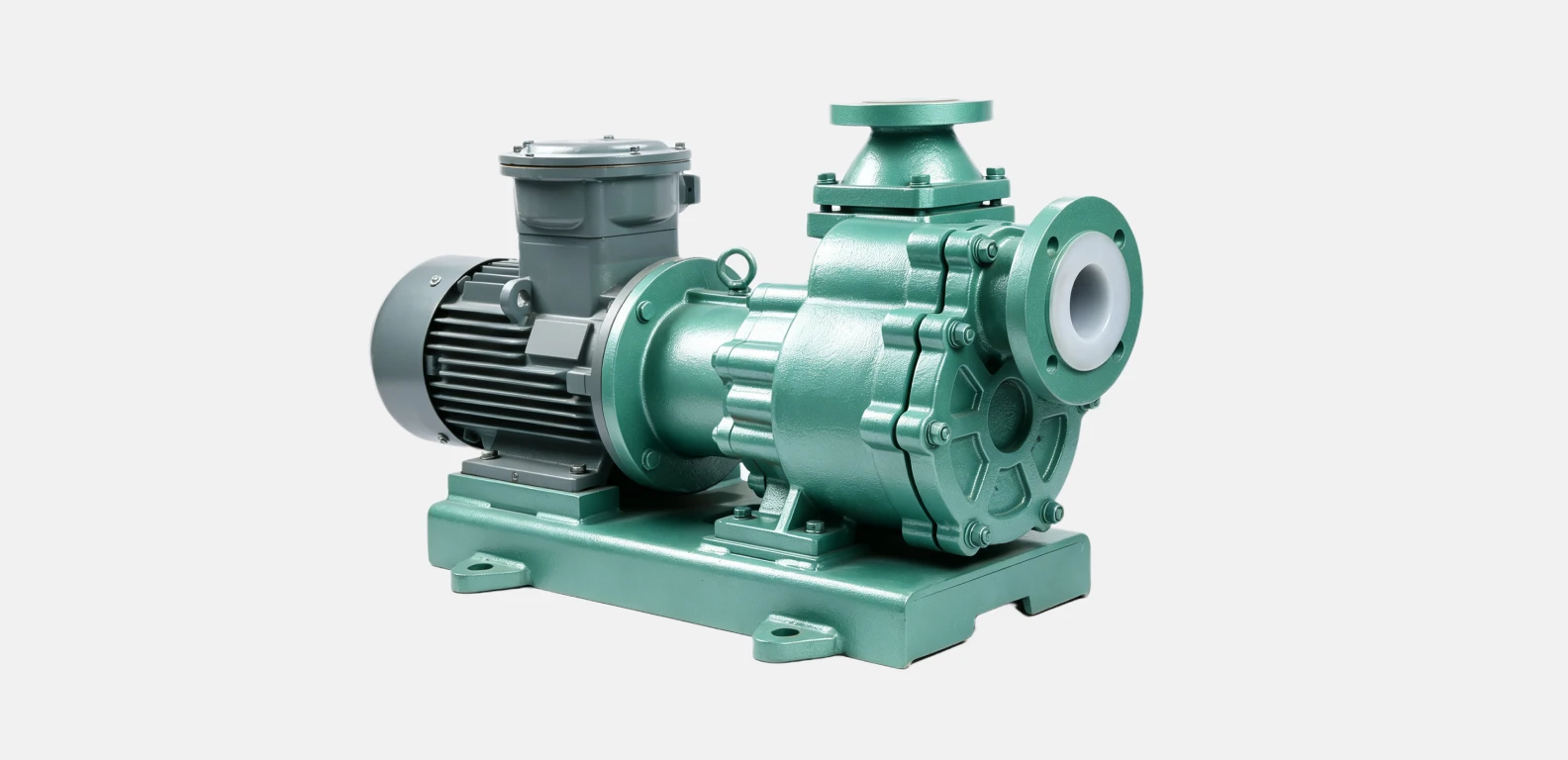
FEP / F46 (Fluorinated Ethylene Propylene): The Industry Workhorse
To overcome the manufacturing limitations of PTFE while preserving its chemical immunity, material scientists developed Fluorinated Ethylene Propylene. In Chinese and several international industrial standards, this material is designated as F46. FEP is a copolymer of hexafluoropropylene and tetrafluoroethylene.
Melt-Processability and Casing Integration
The introduction of the trifluoromethyl group into the polymer chain disrupts the crystallinity just enough to drastically lower the melt viscosity. This singular alteration makes F46 fully melt-processable. It behaves as a true thermoplastic, allowing it to be injection-molded, transfer-molded, and extruded into highly complex shapes with exact dimensional tolerances.
This melt-processability is the foundation of the modern lined chemical pump (such as the IHF and FSB series). During manufacturing, the F46 fluoroplastic is injected at high temperatures and pressures directly into a prepared cast-iron or cast-steel outer casing. The plastic flows into precision-machined dovetail grooves within the metal housing. Upon cooling, the F46 forms a thick, void-free internal lining that is mechanically locked to the heavy metallic substrate. This prevents the lining from blistering, peeling, or collapsing inward, even when subjected to vacuum conditions down to -0.09 MPa in the suction pipeline.
Operational Parameters of F46
F46 retains nearly identical chemical inertness to PTFE, safely handling concentrated sulfuric acid, strong alkalis, and organic solvents. The trade-off for its melt-processability is a slightly lower maximum continuous operating temperature, typically capped between 120°C and 150°C depending on the mechanical stress of the application. For the vast majority of chlor-alkali, electroplating, and general chemical transfer applications, F46 provides the optimal balance of manufacturability, cost-efficiency, and absolute corrosion resistance.
PFA (Perfluoroalkoxy Alkane): The High-Temperature Apex
When industrial processes exceed the thermal limits of F46, engineers specify Perfluoroalkoxy Alkane (PFA). PFA introduces a perfluoroalkoxy branch to the polymer chain. Like F46, PFA is fully melt-processable and can be injection-molded to create complex pump linings and magnetic drive isolation sleeves. However, PFA extends the thermal stability closer to that of pure PTFE.
High-Temperature Stability and Permeation Resistance
PFA is capable of continuous operation at fluid temperatures up to 260°C in pure material terms; in pump lining practice, continuous ratings are set lower, typically up to 200°C depending on mechanical load. Beyond thermal tolerance, PFA exhibits a significantly denser morphological structure than FEP. This density translates to superior permeation resistance. When pumping highly volatile, small-molecule chemicals such as hot bromine, wet chlorine gas, or semiconductor-grade hydrofluoric acid, these molecules can gradually permeate through micro-voids in standard plastics and attack the underlying metal casing. The dense matrix of PFA minimizes this permeation rate, drastically extending the lifespan of the pump in severe chemical synthesis applications. PFA also demonstrates exceptionally high flex life, making it highly resistant to stress-cracking under continuous vibration.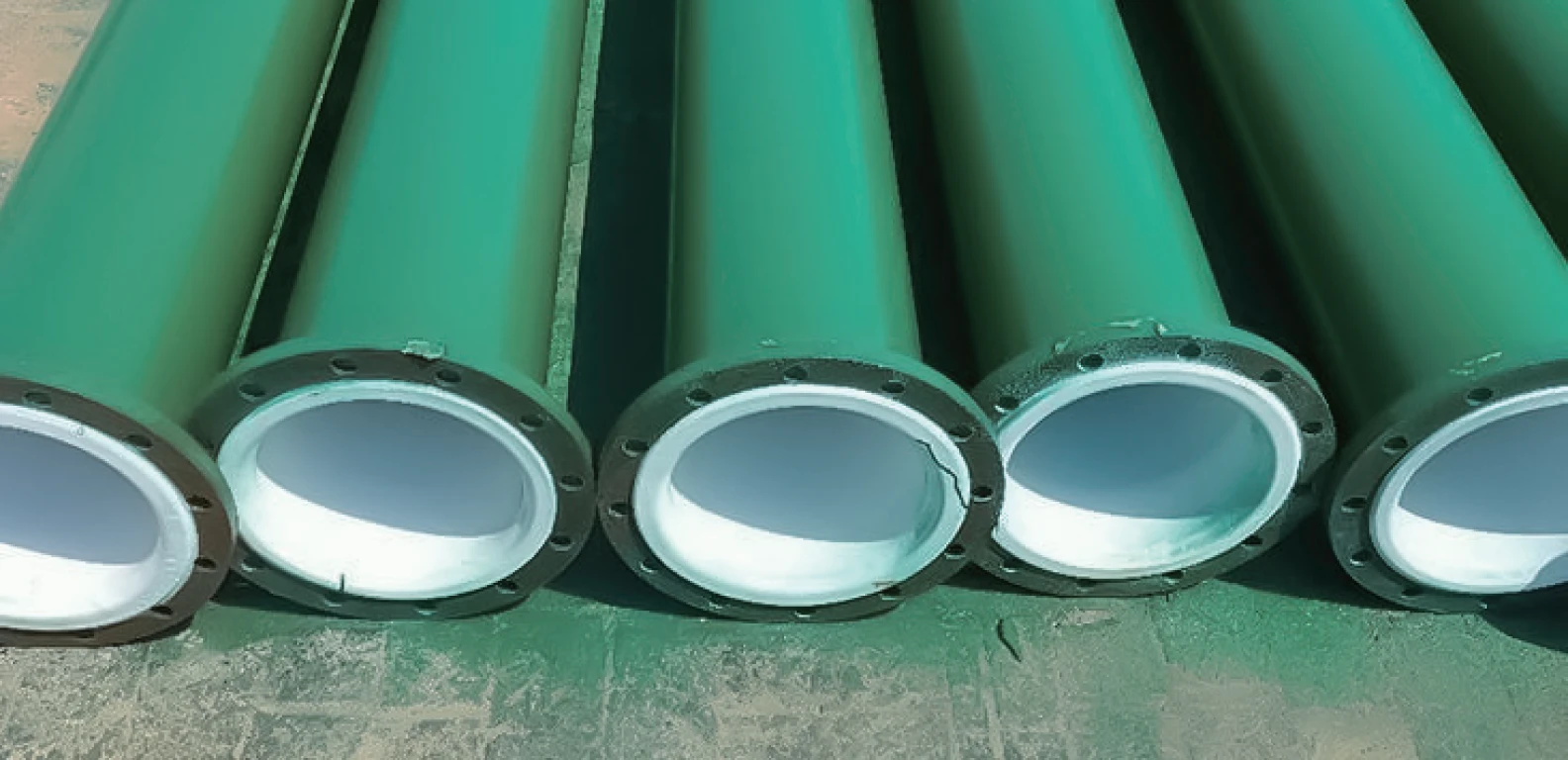
Structural Engineering: The Composite Armor Concept
Understanding the fluoropolymer is only half of the engineering equation; the structural integration of the material determines the pump's physical survival in the plant. Solid plastic pumps, while chemically inert, lack the mechanical tensile strength required to withstand heavy pipeline loads, external physical shocks, and high internal system pressures.
Industrial-grade fluid transfer requires a composite architecture. The outer exoskeleton of the pump is cast from high-strength iron (HT200) or carbon steel (WCB). This metallic armor absorbs all mechanical stress, allowing the pump to conform to ISO 2858 dimensional standards and withstand pipeline pressures up to 1.6 MPa (or 2.5 MPa for lined pipe networks). The internal fluoroplastic lining (whether F46 or PFA) acts exclusively as a chemical barrier. The aggressive fluid never contacts the metal, and the metal handles all the physical load. This composite strategy delivers the mechanical reliability of a heavy-duty steel pump combined with the chemical immunity of a specialized polymer.
Engineering the Rotating Assembly
The impeller transfers the rotational torque from the motor into the fluid. A solid plastic impeller would shear off the motor shaft under the immense torque required to accelerate heavy chemical fluids (such as 50% caustic soda). To solve this, the impeller utilizes an overmolding technique. A heavy-duty 45# steel core is precision-machined, and the fluoroplastic alloy is sintered directly over the metal insert. This securely transfers the mechanical torque while keeping the steel entirely isolated from the corrosive medium.
In sealless magnetic drive pumps, the isolation sleeve (containment shell) represents another critical application of advanced fluoroplastics. Utilizing a non-metallic F46 or PFA sleeve eliminates the generation of magnetic eddy currents. This prevents localized heating of the process fluid within the pump chamber, eradicates power losses associated with thermal generation, and prevents low-boiling-point solvents from vaporizing and inducing cavitation.
Conclusion and Material Specification Directives
Selecting the correct fluoropolymer for a chemical process pump requires a rigorous analysis of the fluid mechanics. Engineers must evaluate the specific chemical composition, maximum continuous operating temperature, fluid specific gravity, system pressure, and the potential for vacuum conditions in the suction line. F46 (FEP) remains the definitive workhorse for standard to high-temperature acid and alkali transfer. When temperatures exceed the limits of standard F46 constructions, or when handling highly permeating halogenated compounds, PFA becomes the appropriate specification. By matching the molecular strengths of these fluoropolymers to the exact operational parameters of the facility, plant managers can eliminate catastrophic mechanical seal failures, prevent fugitive emissions, and secure years of uninterrupted chemical processing.
If your facility is managing aggressive fluids and experiencing high failure rates with standard metallic or low-grade plastic pumps, precision material specification is required. Our technical department specializes in mapping your exact fluid dynamics and thermal profiles to the optimal fluoroplastic architecture. Contact our engineering team to request a comprehensive material compatibility audit and receive a customized pump specification tailored to your process lines.
Frequently Asked Questions (FAQ)
- What is the difference between F46 (FEP) and PTFE?
PTFE has the highest temperature resistance but cannot be injection-molded, making it difficult to use for complex pump linings. F46 (FEP) is a modified fluoropolymer that retains almost all the chemical resistance of PTFE but is melt-processable. This allows it to be molded directly into cast-iron pump casings to create a thick, mechanically secure anti-corrosion lining. - Can a fluoroplastic lined pump handle concentrated sulfuric acid?
Yes, absolutely. Both F46 and PFA linings are completely inert to 98% concentrated sulfuric acid. A fluoroplastic lined centrifugal pump or magnetic drive pump is the industry standard for handling highly concentrated mineral acids safely without suffering from the rapid galvanic corrosion that destroys standard stainless steel pumps. - Why do your lined pumps have a cast iron or steel outer casing?
While fluoroplastics are chemically immune, they possess low mechanical tensile strength. A solid plastic pump would deform or crack under the weight of connected heavy industrial piping or under high system pressure. By using a heavy cast-iron (HT200) outer shell, the pump gains the structural rigidity to withstand 1.6 MPa pipeline pressures and mechanical shocks, while the inner plastic lining provides the chemical barrier. - Is PFA better than FEP (F46)?
PFA is not necessarily "better" for every application, but it has a higher thermal tolerance. F46 is typically rated for continuous use up to 100°C in standard construction (150°C in special constructions) and is very cost-effective for the majority of industrial acids. PFA extends continuous service to around 200°C in lining applications and offers better resistance against highly permeating gases. PFA is specified when the process conditions exceed the limits of F46. - Can fluoroplastic pumps handle liquids containing solid particles?
Standard fluoroplastics (F46, PFA) have a relatively soft surface compared to hardened steel or ceramics. Pumping fluids with high concentrations of hard, abrasive particles will erode the plastic lining over time. For abrasive chemical slurries, we engineer pumps utilizing an Ultra-High-Molecular-Weight Polyethylene (UHMWPE) lining, which offers exceptional abrasion resistance specifically designed for particulate handling. - How do you ensure the plastic lining doesn't peel away from the metal casing under vacuum?
During manufacturing, the cast iron casing is machined with precise dovetail grooves or anchoring points. When the F46 is injected at high pressure and temperature, it flows into these anchors. Upon cooling, the plastic is mechanically locked into the metal matrix. This advanced lining technology prevents the plastic from blistering, creeping, or collapsing, allowing the pump to safely tolerate negative suction pressures down to -0.09 MPa.
-

YFTEL Pumps
Fluid Engineers & Technical Support, YFTEL Pump
YFTEL is a chemical pump manufacturer based in Hangzhou, China, with a 26,000 m² production base in Hangzhou, China, with a 26,000 m² production base in Anhui. Using the CAS-patented Fluoroplastic Alloy material, we produce 300+ models of corrosion-resistant pumps, valves and piping, exported to 30+ countries.












