

 English

The Fundamentals of Chemical Pump Metallurgy and Polymer Science
In industrial fluid transfer, the specification of wetted pump materials dictates the operational lifespan and safety of the entire chemical processing loop. Transferring benign municipal water allows for standard cast-iron or bronze constructions. However, introducing aggressive halogens, concentrated mineral acids, abrasive ore slurries, or high-temperature organic solvents radically alters the engineering calculus. Selecting an incorrect material results in rapid metallurgical degradation, fugitive emissions, catastrophic mechanical failure, and subsequent plant downtime. This technical whitepaper analyzes the three primary material classifications utilized in heavy-duty chemical pumps, namely fluoroplastics, Ultra-High-Molecular-Weight Polyethylene (UHMWPE), and austenitic stainless steel, evaluating their chemical inertness, tribological properties, and thermal limitations to guide precise industrial specification.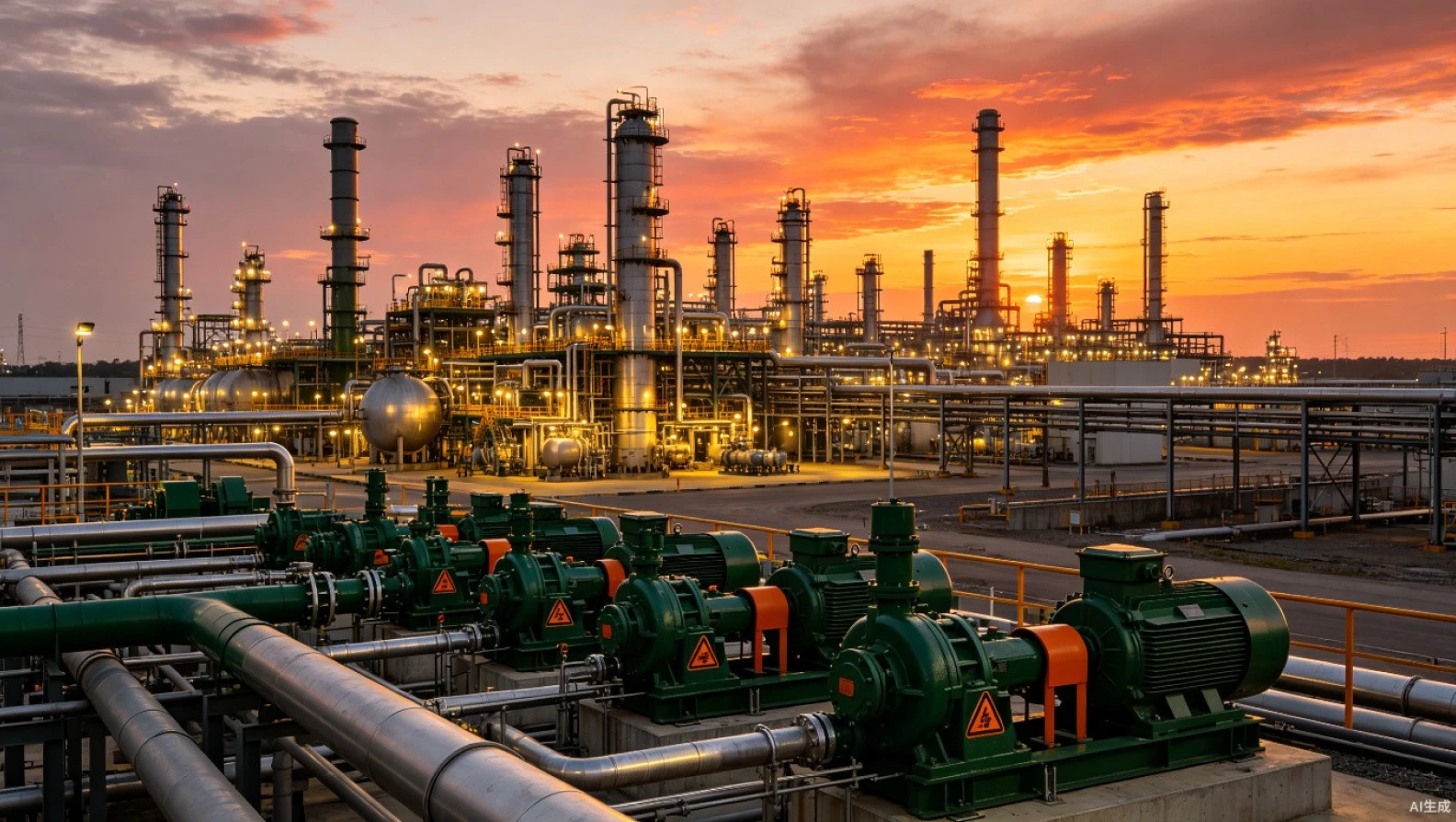
Fluoroplastics (F46 / FEP and PTFE): The Standard for Extreme Corrosives
When engineering systems to handle the most aggressive industrial chemicals such as 98% sulfuric acid, concentrated hydrochloric acid, hydrofluoric acid, and aqua regia, standard metallic alloys fail. The industry standard for these extreme environments is the application of fluoropolymers, specifically F46 (Fluorinated Ethylene Propylene, FEP) and PTFE (Polytetrafluoroethylene).
Chemical Inertness via Carbon-Fluorine Bonding
The exceptional chemical resistance of fluoroplastics is derived from their molecular structure. The carbon backbone of the polymer chain is completely shielded by strongly bonded fluorine atoms. The carbon-fluorine bond is one of the strongest in organic chemistry, rendering the material highly inert to oxidative and reductive chemical attack. F46 and PTFE will not dissolve, swell, or react when exposed to virtually any concentration of mineral acids, strong alkalis, or reactive organic solvents.
Composite Structural Architecture
While fluoroplastics provide broad chemical resistance within rated conditions, their pure mechanical tensile strength is insufficient to act as a standalone pressure vessel in high-capacity industrial pipe networks. To resolve this, chemical pump manufacturers utilize a composite armored structure. In pumps such as the IHF centrifugal series or the CQB magnetic drive series, the outer volute casing is cast from high-strength iron (HT200) or cast steel. The interior cavity is heavily lined with F46 through a high-temperature molding and sintering process. This composite design allows the pump to safely withstand pipeline stresses, mechanical shocks, and internal system pressures up to 1.6 MPa (and up to 2.5 MPa in lined piping), while ensuring the corrosive fluid never contacts the metallic substrate.
Thermal Operational Limits
F46 linings maintain their structural stability across a broad thermal range, typically rated for continuous operation from -20°C up to 100°C in standard construction, with special constructions extending service to 150°C. For process fluids exceeding these limits, alternative fluoropolymers such as PFA (Perfluoroalkoxy alkane) are specified, which offer the same universal chemical resistance but maintain rigidity at higher temperatures.
Ultra-High-Molecular-Weight Polyethylene (UHMWPE): Bridging Corrosion and Abrasion
While fluoroplastics excel in clear, highly corrosive liquids, their relatively soft surface makes them vulnerable in abrasive environments. In sectors such as non-ferrous hydrometallurgy, phosphate fertilizer production, and flue-gas desulfurization (FGD), the fluid stream often contains high concentrations of hard crystalline solids, ore particles, and lime. This combination of chemical corrosion and intense mechanical scouring requires a different polymeric approach.
Molecular Weight and Tribology
UHMWPE is a thermoplastic polyethylene with an extremely high molecular weight, typically ranging from 3 to 6 million Daltons. This unique molecular architecture grants the material phenomenal tribological properties. UHMWPE exhibits an exceptionally low coefficient of friction and an abrasion resistance that surpasses even hardened carbon steel. It effectively absorbs the impact of solid particulates without shedding material.
Sacrificial Wear Allowance Design
In slurry pump designs like the UHB-ZK series, the pump utilizes a cast-steel outer armor lined with a very thick layer of UHMWPE, ranging from 8 mm to 20 mm depending on the pump diameter. This extreme thickness acts as a substantial sacrificial wear allowance. When processing aggressive slurries containing up to 40% solids by volume, the UHMWPE lining provides a service life several times longer than standard thin-film plastic pumps or cast-iron slurry pumps.
Chemical and Thermal Constraints
While highly resistant to mechanical wear, UHMWPE possesses a narrower chemical and thermal envelope compared to fluoroplastics. It is highly effective for handling sulfuric acid up to 80% concentration and hydrochloric acid up to 50%. However, it is not suitable for highly oxidizing acids (like concentrated nitric acid) or strong organic solvents, which can cause the polymer to swell or degrade. Its continuous operational temperature limit is also capped at approximately 80°C. Exceeding this limit causes the material to soften and lose its abrasion-resistant properties.
Austenitic Stainless Steel (304 / 316L): Structural Rigidity and High Temperatures
In pharmaceutical processing, food-grade applications, and downstream petrochemical transfers involving non-corrosive organic solvents or high-temperature alkaline solutions, plastic-lined pumps are often unnecessary. Austenitic stainless steels, specifically grades 304 and 316L, provide high mechanical strength, excellent thermal resilience, and a hygienic surface finish.
The Passive Oxide Layer
The corrosion resistance of stainless steel is fundamentally different from the inertness of fluoroplastics. Stainless steel relies on a microscopic, self-repairing layer of chromium oxide that forms on its surface when exposed to oxygen. As long as this passive layer remains intact, the underlying iron is protected from oxidation (rust).
Vulnerability to Chloride Ion Pitting
The critical vulnerability of stainless steel lies in its interaction with halogens, specifically chloride ions. In environments containing high concentrations of chlorides (such as seawater, saturated brine, or hydrochloric acid), the chloride ions aggressively penetrate and destroy the chromium oxide passive layer. Because the attack is highly localized, it causes rapid and severe pitting corrosion or stress corrosion cracking. Therefore, while stainless steel pumps (like the IH or CQL series) are excellent for transferring hot caustic soda, pure water, and organic solvents up to 180°C, they must be strictly avoided when transferring fluids with high chloride concentrations.
Mechanical Superiority for Viscous Fluids
Due to its solid metallic construction, a stainless steel centrifugal impeller can handle significantly higher torque loads than a plastic-molded impeller. This makes stainless steel pumps highly suitable for transferring fluids with higher dynamic viscosities (up to 100 centipoise) or mild, non-abrasive pastes, where the fluid drag would otherwise warp or damage a plastic impeller.
Evaluating Total Cost of Ownership (TCO) in Material Selection
Specifying the correct material requires balancing the initial Capital Expenditure (CAPEX) against the long-term Operational Expenditure (OPEX). Historically, plant engineers relied on exotic alloys such as Titanium, Monel, or Hastelloy to combat severe corrosion. While effective, these alloys carry massive procurement costs and long manufacturing lead times.
The maturation of composite fluoroplastic-lined steel technology has disrupted this economic model. An F46-lined centrifugal or magnetic drive pump provides chemical resistance equal to or exceeding that of Hastelloy C-276, but at a fraction of the capital cost. By standardizing on fluoroplastic-lined steel for clear corrosives, UHMWPE for abrasive slurries, and 316L stainless steel for high-temperature solvents, chemical facilities can optimize their procurement budgets while eliminating the unplanned downtime associated with metallurgical degradation.
Conclusion and Engineering Support
There is no universal material for chemical fluid transfer. The long-term reliability of a pumping system is dictated entirely by mapping the specific gravity, dynamic viscosity, operational temperature, particulate content, and chemical composition of the process fluid to the correct pump metallurgy. Misapplication results in rapid failure. Our engineering department requires precise fluid data to guarantee pump integrity. Contact our technical team with your exact chemical parameters, and we will formulate a material specification and hydraulic selection tailored specifically to your plant infrastructure.
Frequently Asked Questions (FAQ)
- When should I choose a fluoroplastic (F46) lining over stainless steel?
Fluoroplastic (F46) linings must be specified whenever handling strong mineral acids (sulfuric, hydrochloric, nitric), highly oxidative chemicals, or fluids with high chloride concentrations (like saturated brine). These chemicals will rapidly destroy the passive oxide layer of stainless steel, causing severe pitting and failure. - Can UHMWPE handle higher temperatures than F46?
No. UHMWPE is constrained by a maximum continuous operating temperature of approximately 80°C. Exceeding this temperature causes the material to soften and lose its abrasion resistance. F46 fluoroplastics maintain their structural stability and chemical resistance at continuous temperatures up to 150°C. - Why not use fluoroplastic for abrasive slurries?
While fluoroplastics offer broad chemical resistance within rated conditions, their surface is relatively soft compared to hard crystalline particles or ore pulps. Continuous abrasive scouring will erode the fluoroplastic layer. UHMWPE has an exceptionally low friction coefficient and superior wear resistance, making it the required material for abrasive chemical sludges. - Why do stainless steel pumps fail in seawater or brine?
Seawater and brine contain high concentrations of chloride ions. Chlorides aggressively attack and penetrate the protective chromium oxide layer on standard 304 and 316L stainless steel. This leads to localized, highly destructive pitting corrosion and stress corrosion cracking. Fluoroplastic linings are completely immune to chloride attack. - Is there a difference in pressure tolerance between these materials?
Pure plastic pumps lack the tensile strength for high-pressure industrial pipelines. To solve this, our fluoroplastic (IHF) and UHMWPE (UHB-ZK) pumps utilize a composite structure: a heavy cast-iron or cast-steel outer casing provides the mechanical strength to withstand 1.6 MPa system pressures, while the internal plastic lining provides the chemical resistance. Solid stainless steel pumps (IH) also handle 1.6 MPa natively. - What information is required to verify material compatibility?
To guarantee the correct material selection, our engineering team requires the exact chemical name, concentration percentage, maximum operating temperature, fluid specific gravity (density), and the percentage and size of any suspended solid particles.
-

YFTEL Pumps
Fluid Engineers & Technical Support, YFTEL Pump
YFTEL is a chemical pump manufacturer based in Hangzhou, China, with a 26,000 m² production base in Hangzhou, China, with a 26,000 m² production base in Anhui. Using the CAS-patented Fluoroplastic Alloy material, we produce 300+ models of corrosion-resistant pumps, valves and piping, exported to 30+ countries.












