
 English

Why Seal Selection Makes or Breaks a Chemical Pump
The shaft seal is the most failure-prone component of a chemical pump and the most frequent source of leakage complaints. Corrosive fluids, suspended solids, negative suction pressure, frequent start-stop cycles, and toxic or flammable media all change the selection criteria fundamentally. Most wrong selections happen because the application boundaries of each seal type were never clarified: some seals are designed for process fluid containment, some only protect the bearing housing, some are built for gas service, and some are engineered specifically for slurry.
This guide systematically reviews the eight dynamic seal types used in chemical service, covering working principles, strengths, limitations, and chemical pump application boundaries. A configuration reference for six chemical pump series and a practical selection flow follow at the end.
Two boundary notes before the details. Lip seals (oil seals) serve only the bearing housing lubrication side, keeping lubricant in and dust and moisture out. They must never be used to seal corrosive process media, and misapplying them is one of the most common selection mistakes. Dry gas seals and labyrinth seals originate from gas-handling equipment; they are rarely adopted as primary fluid seals on standard liquid chemical pumps and appear only in custom pure-gas projects.
The 8 Dynamic Seal Types for Chemical Pumps
1. Packing Seal
A contact-type seal. Packing material fills the clearance between the shaft and the stuffing box, and the gland compresses it radially against the shaft surface to form a sealing barrier. Variants include soft packing, hard packing, and formed packing. Within soft packing, graphite grades withstand high temperature and pressure; aramid packing offers high tensile strength and is usually impregnated with PTFE and lubricants; pure PTFE packing serves clean, highly corrosive duties in fine chemical and pharmaceutical plants.
Strengths: simple structure, low cost, easy installation and replacement, and modest shaft machining requirements. Limitations: high friction and heat generation, continuous sleeve wear, regular tightening and replacement, and a relatively high leakage rate. In chemical pumps, packing suits low-pressure service with low-hazard media in cost-sensitive projects. Note that packing tends to draw in air under negative suction pressure, and solid particles accelerate packing and sleeve abrasion.
2. Mechanical Seal (Face Seal)
A face-type dynamic seal in which a rotating ring and a stationary ring, both perpendicular to the shaft axis, run in intimate contact. Fluid pressure plus spring or magnetic loading keeps the faces closed, while auxiliary O-rings close secondary leakage paths. Single and double configurations exist; double mechanical seals can be pressurized with barrier fluid for hazardous media.
Strengths: extremely low leakage approaching zero emission, service life far beyond packing, and minimal shaft wear. Limitations: precision construction with strict machining and installation requirements, higher purchase cost, and full assembly replacement once the faces are damaged. This is the most widely adopted primary seal for liquid chemical pumps, covering acids, alkalis, brine, electroplating solutions, fine chemical fluids, and wastewater. Particle-laden fluids demand a flush plan, otherwise the faces wear out rapidly.
3. Dry Gas Seal
A non-contact face seal. Hydrodynamic grooves machined into the rotating ring generate a stable gas film between the mating rings as the shaft spins, separating the friction pair completely. Strengths: excellent sealing performance, long life, no oil supply system, low power consumption and maintenance. Limitations: sensitive to gas cleanliness and stable operating conditions; the gas film cannot form at low speed or during start-stop, creating dry-running contact risk. Its mainstream home is the centrifugal compressor, and it is not recommended for standard liquid chemical pumps; custom versions serve only special pumps handling purely gaseous media.
4. Labyrinth Seal
A non-contact throttling seal. Multiple teeth on the rotating shaft form a series of throttling gaps and expansion chambers with the housing, so fluid loses pressure step by step along the tortuous path and leakage is reduced. Smooth, staggered, stepped, and honeycomb variants exist. Strengths: tolerates high temperature and high rotating speed, no contact friction, extremely long life. Limitations: zero leakage is unachievable; continuous minor leakage occurs and a gas extraction system is often required. In chemical pumps it rarely stands alone as a liquid-side primary seal, appearing mostly as inter-stage sealing on compressors or as an auxiliary element in special gas service.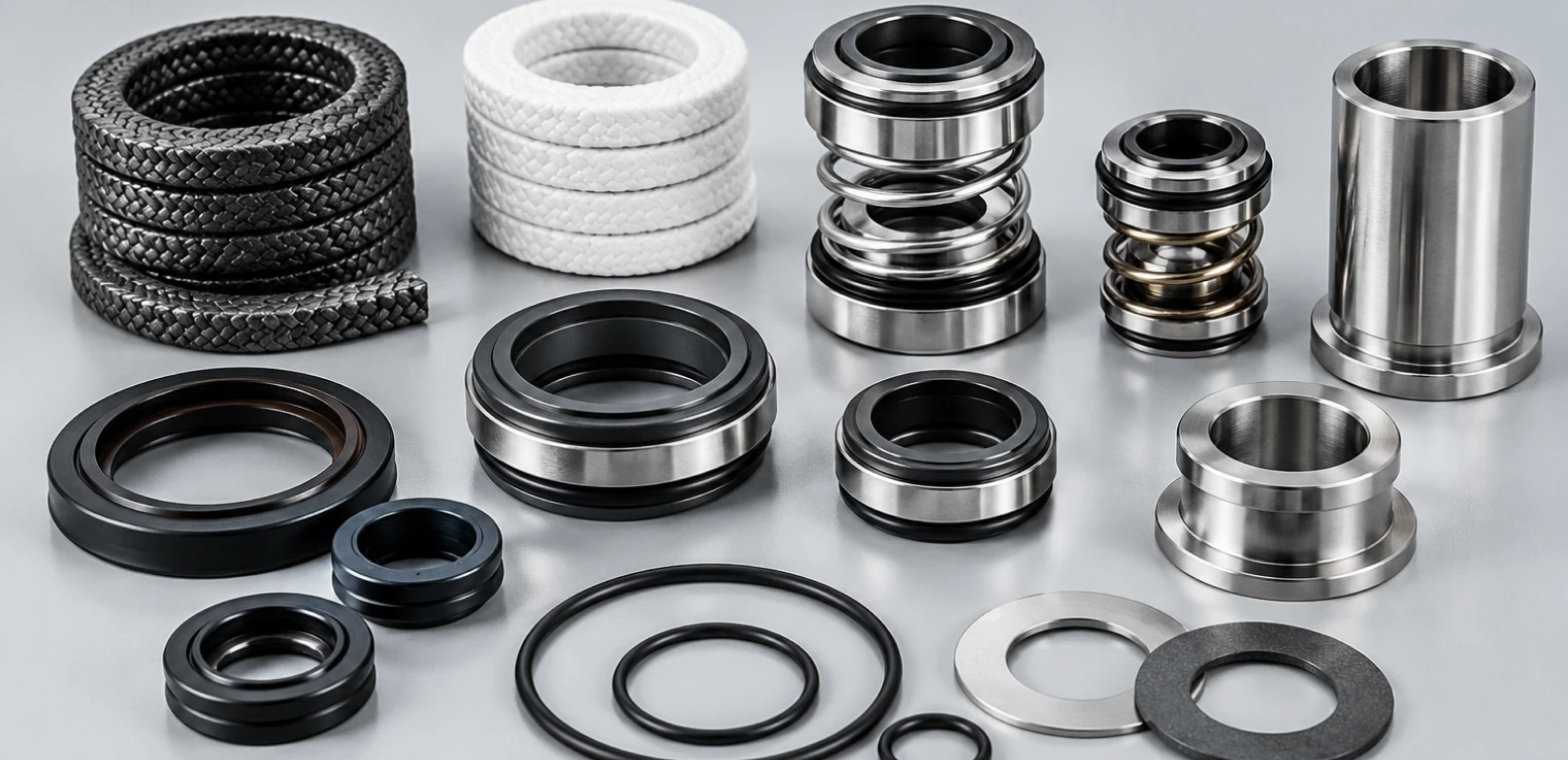
5. Lip Seal (Oil Seal)
A self-energized lip-style seal whose elastic lip clamps against the shaft surface. Strengths: compact, inexpensive, simple to install, and effective at retaining lubricant while blocking dust and water. Limitations: low pressure rating and age-related lip failure over time. Application boundary: bearing housing protection only, isolated from the process fluid. It is never a process-side seal.
6. Power Seal (Auxiliary Impeller Seal)
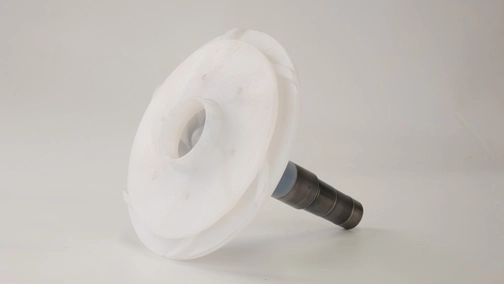
A hydrodynamic seal that suppresses leakage with fluid power. While the pump runs, an auxiliary impeller generates back pressure that counterbalances main-impeller pressure and stops outward fluid migration. At standstill the auxiliary impeller produces no pressure, so an independent shut-off seal is compulsory. Strengths: zero leakage during running, no precision friction faces, and excellent resistance to particle erosion. Limitations: reliance on the shut-off seal at standstill, additional shaft power consumption, and higher shut-off seal failure rates under frequent start-stop duty. This is the preferred sealing option for slurry pumps handling particle-laden slurry, leaching waste liquid, and corrosive wastewater with solids, as used on the UHB-ZK slurry pump series.
7. Screw Seal
A non-contact hydrodynamic seal. Helical grooves machined on the shaft sleeve or sealing housing create a pumping effect as the shaft rotates, pushing escaping fluid back into the pump chamber. Sealing efficiency depends on pitch, helix angle, clearance, and effective sealing length. Strengths: no contact friction, low wear, long life. Limitations: limited sealing capacity, performance drops significantly at reduced speed, and screw length is constrained by pump cavity geometry. It rarely works as a standalone primary seal and is commonly paired with a mechanical seal as an auxiliary pressure-reducing stage for low-pressure clean corrosive fluids.
8. Magnetic Fluid Seal
Nano-scale magnetic particles dispersed in a carrier liquid form a magnetic fluid. Permanent magnets create a high-gradient field between pole teeth and the shaft, trapping the magnetic fluid in the clearance as a liquid sealing ring. Strengths: theoretically zero leakage, no solid friction, low torque, suitability for vacuum and ultra-clean service, long life. Limitations: limited pressure capacity (multi-stage pole teeth needed for high differential pressure), performance degradation at elevated temperature, vulnerability to strong corrosion and solid contaminants, and high procurement cost. It is seldom specified on conventional corrosive chemical pumps and reserved for niche custom projects such as vacuum transfer and ultra-clean particle-free delivery.
Supplementary Solution: The Seal-Free Magnetic Drive Structure
Beyond the eight dynamic seals stands a structurally different answer. Magnetic drive pumps transmit torque through a magnetic coupling, so the pump shaft never penetrates the casing. A containment can isolates the process fluid from the drive end, with PTFE or fluoroelastomer O-rings providing the static seals. This removes the dynamic shaft seal as a leak path entirely.
The structure suits highly corrosive, toxic, flammable, or high-value fluids with zero-leakage requirements, such as lithium wet-process electrolyte, pharmaceutical intermediates, and hazardous waste chemicals. Its boundaries are equally clear: media carrying large solid particles are unsuitable, and the main failure risks are eddy-current heating and containment can wear.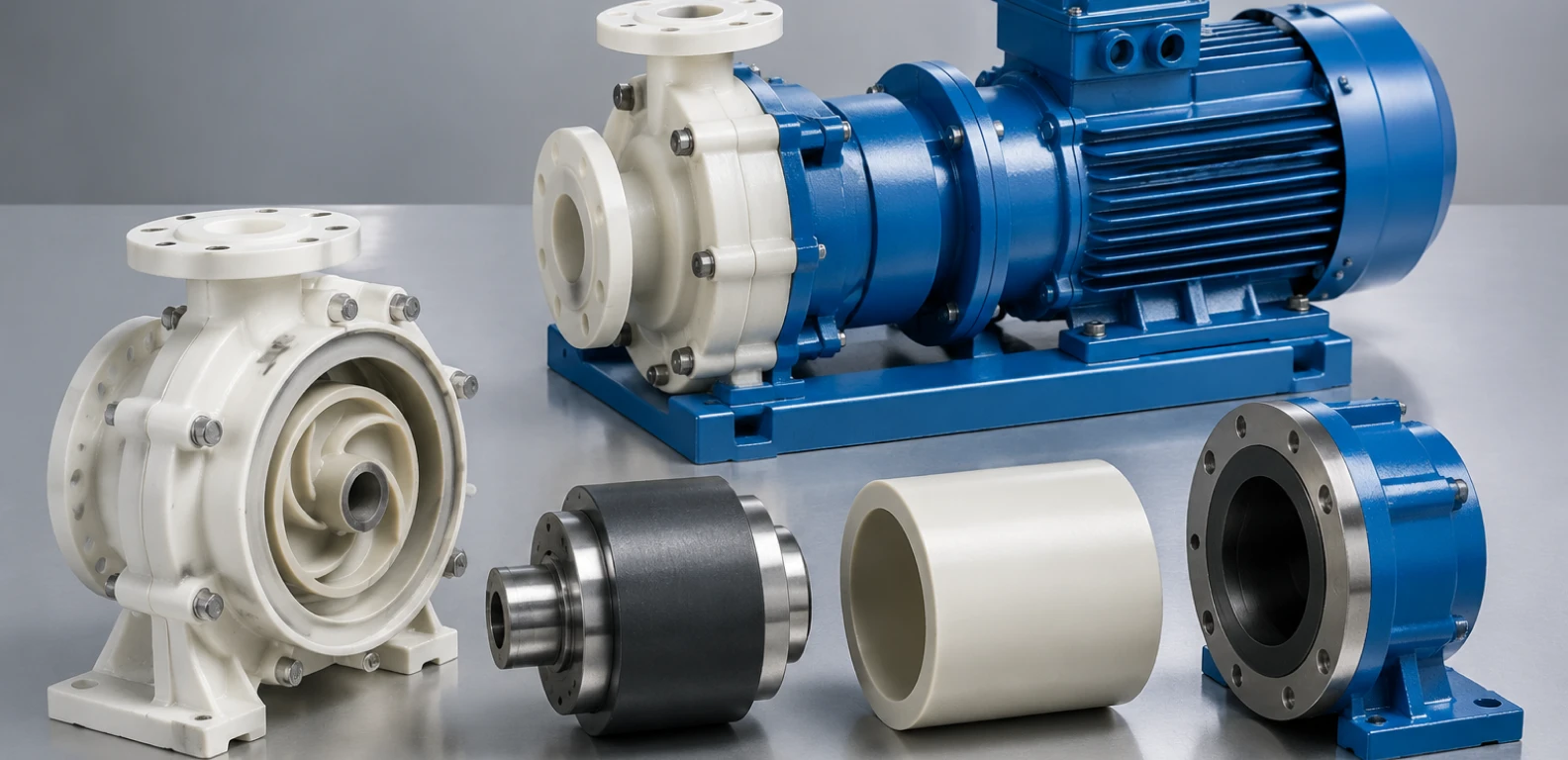
Seal Configuration Reference for Six Chemical Pump Series
Lip seals may be fitted on the bearing side of every model for bearing protection and are not repeated in the table.
| Pump Type | Primary Process-Side Seal | Optional Process-Side Seal | Use With Caution (Custom Only) | Not Recommended as Primary Seal |
|---|---|---|---|---|
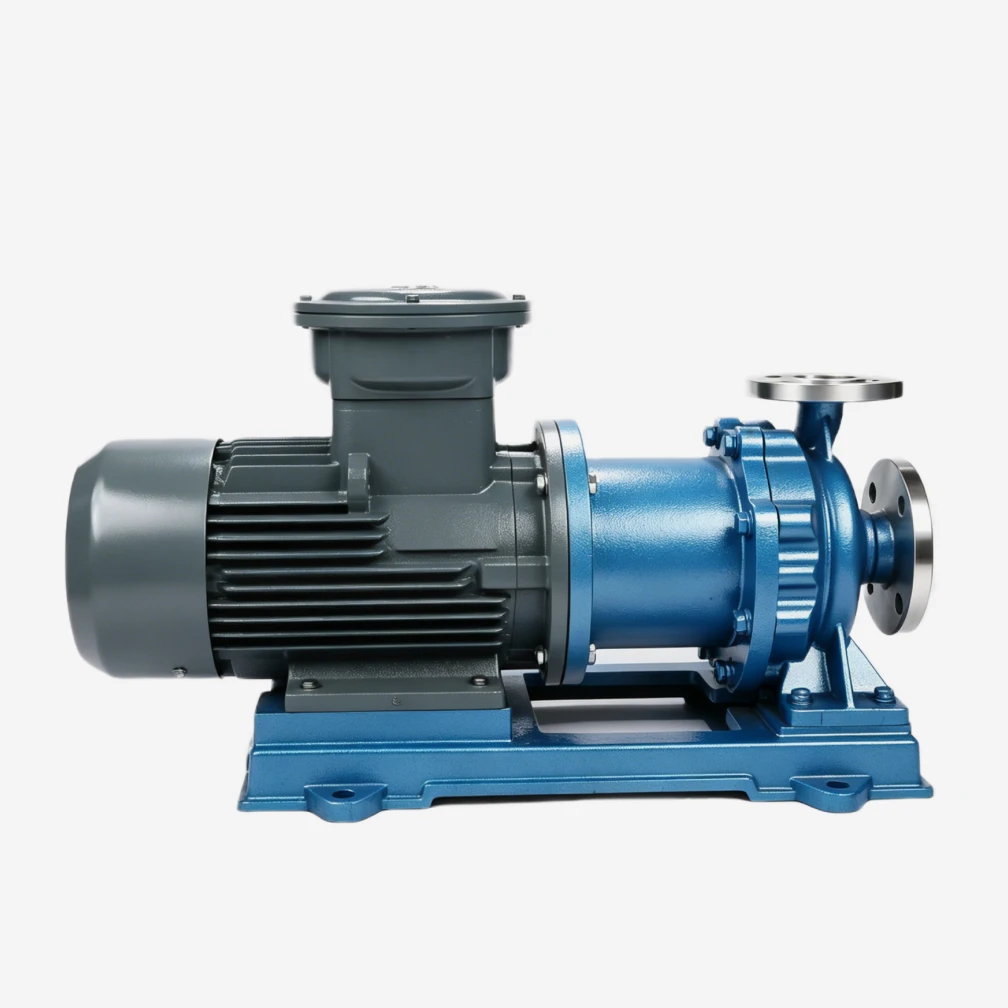
| Magnetic Drive Pump | Containment can assembly + O-ring static seal | - | - | Packing, mechanical, power, screw and all other shaft-penetrating dynamic seals |
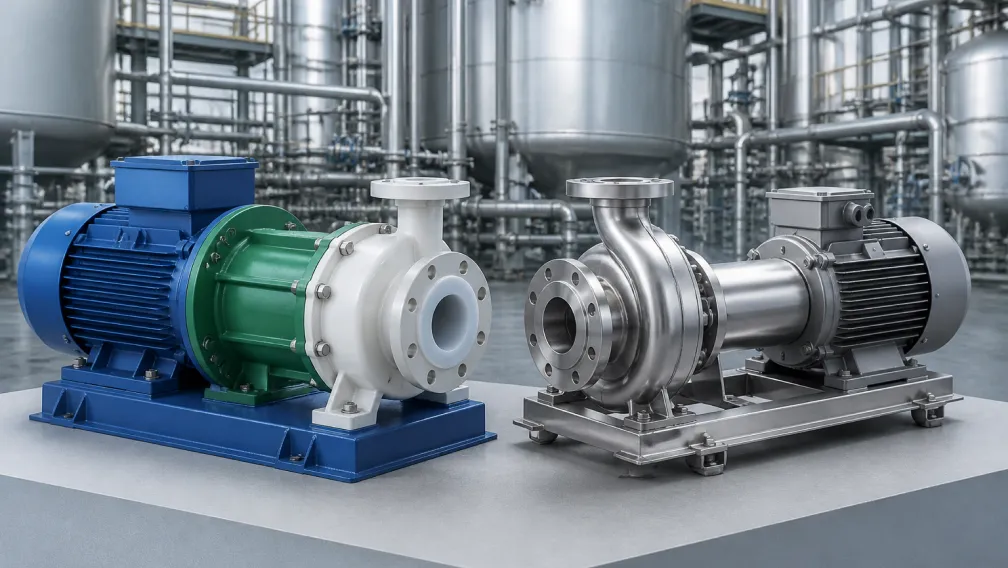
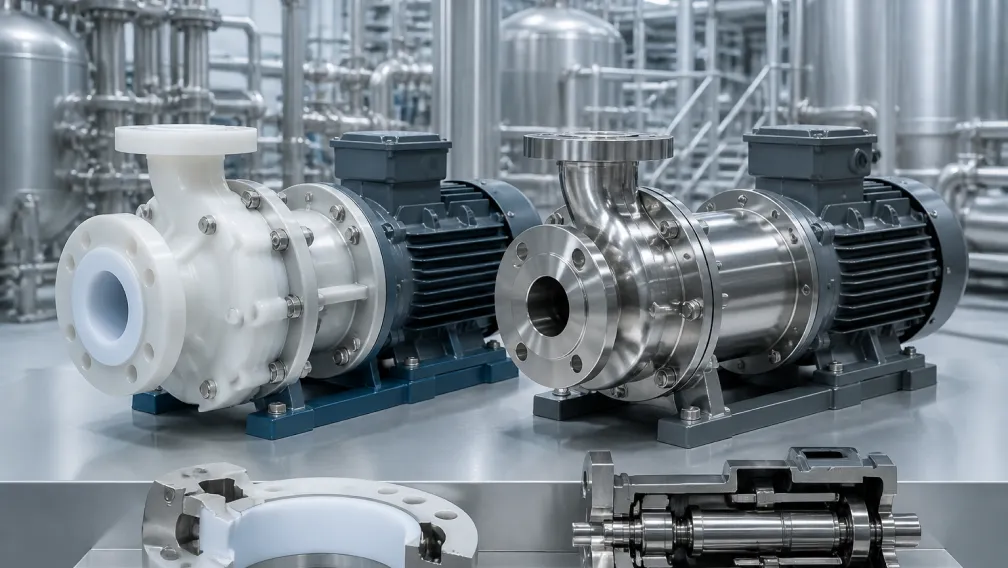
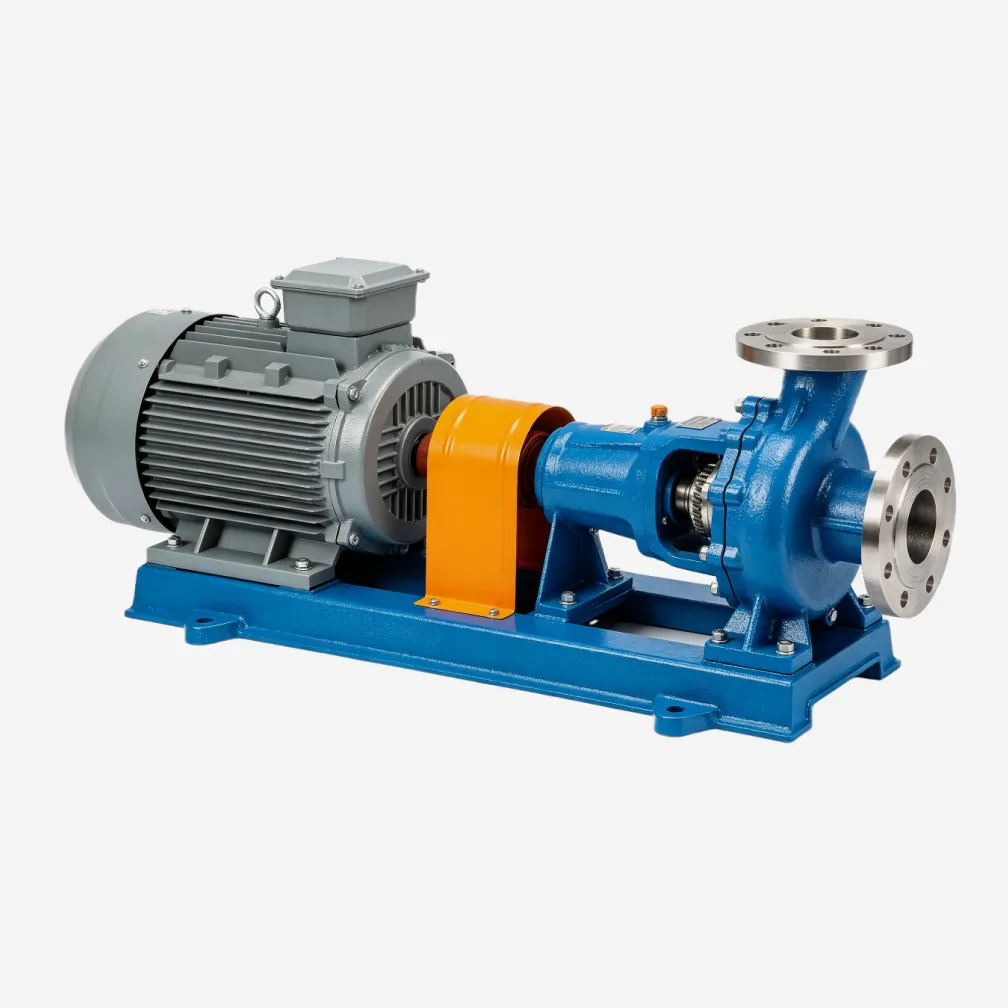
| Chemical Centrifugal Pump | Mechanical seal (single / double) | Packing seal, power seal, screw seal | Magnetic fluid seal | Dry gas seal, labyrinth seal |
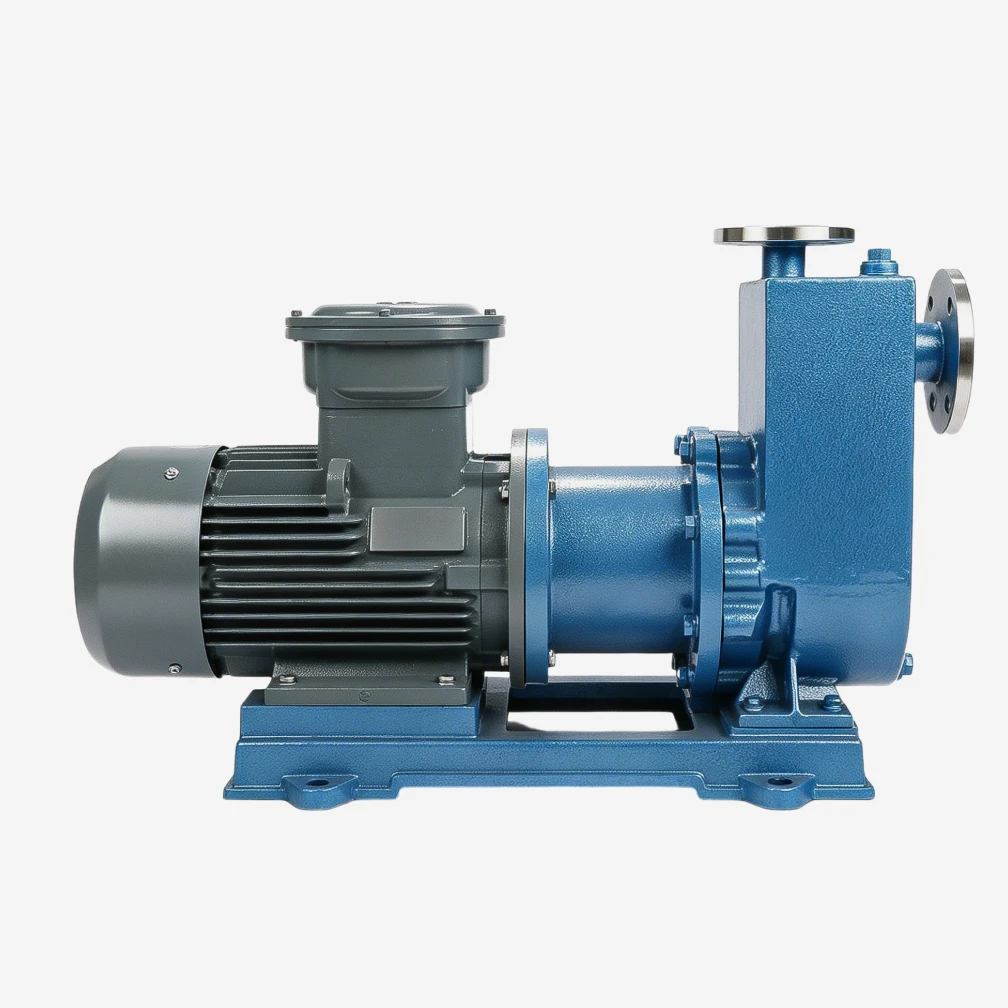
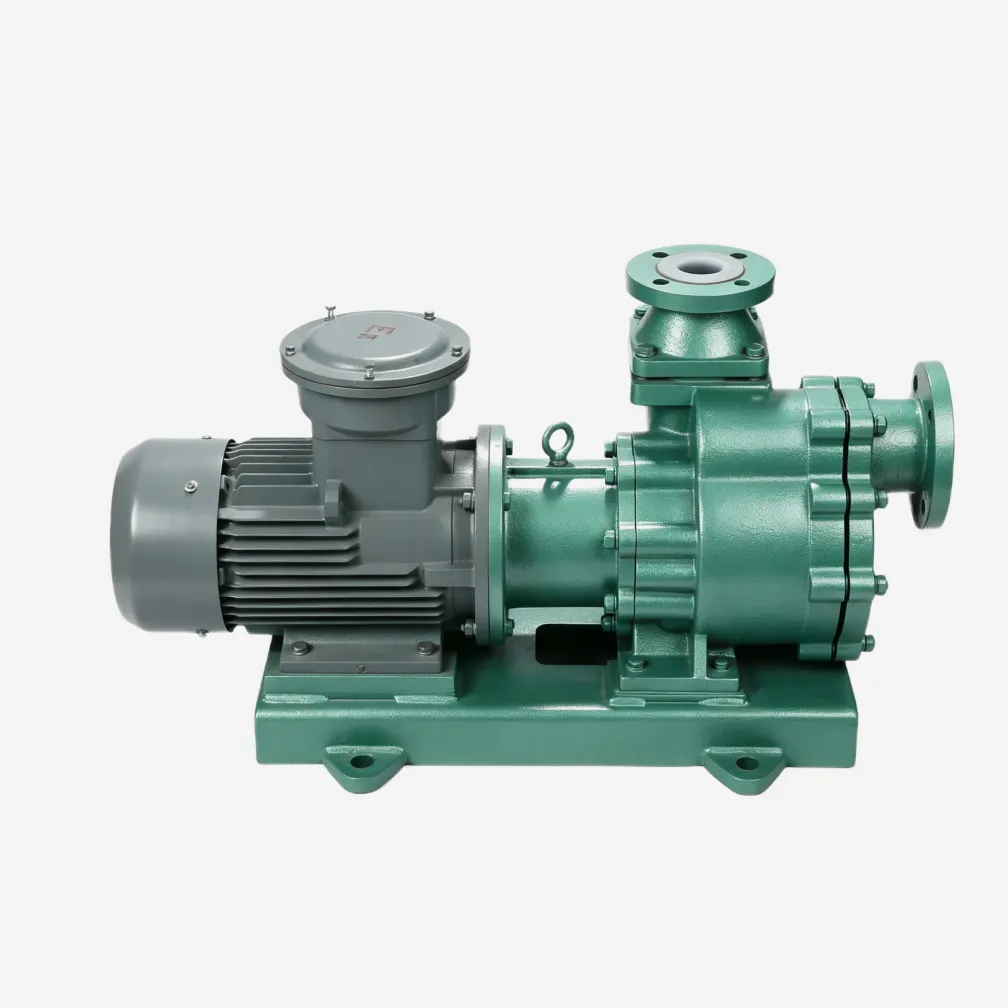
| Chemical Self-Priming Pump | Double mechanical seal | Packing seal | Power seal, screw seal | Dry gas seal, labyrinth seal, magnetic fluid seal |
| Slurry Pump | Power seal (auxiliary impeller) | Wear-resistant packing seal | Standard mechanical seal without flush plan | Screw seal, magnetic fluid seal, dry gas seal, labyrinth seal |
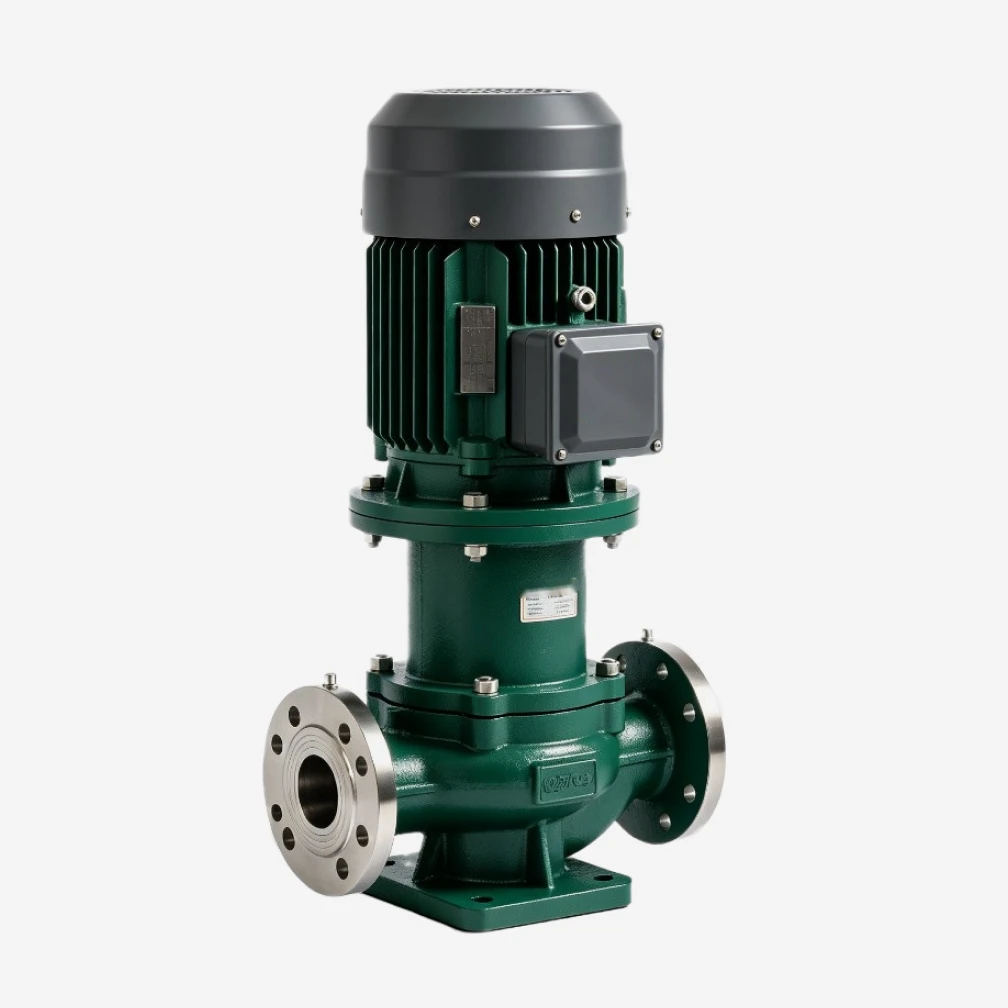
| Inline Pump | Mechanical seal | Packing seal | Screw seal (auxiliary pressure reduction) | Magnetic fluid seal, dry gas seal, labyrinth seal |
| Clamp Pump | PTFE-lined mechanical seal | PTFE packing seal | Magnetic fluid seal (vacuum clean service) | Dry gas seal, labyrinth seal |
Seal Selection Decision Flow
Evaluate operating conditions in this priority sequence before committing to a seal:
- Fluid properties: corrosivity, solid particle content, toxicity, flammability.
- Operating parameters: pressure, temperature, negative pressure, continuous operation or frequent cycling.
- Constraints: allowable leakage rate, maintenance frequency, budget, fluid cleanliness.
Quick reference:
- Clean corrosive fluid with low emission requirements → mechanical seal, with a double seal preferred for hazardous media.
- Slurry containing solid particles → power seal; if a mechanical seal is selected, a flush plan is mandatory.
- Low-pressure, low-hazard fluid under budget pressure with minor leakage acceptable → packing seal.
- Hazardous, high-value media with a zero-leakage requirement → magnetic drive pump with the seal-free containment structure.
- Vacuum or ultra-clean niche service → custom magnetic fluid seal.
There is no universal seal for all services. Reliability comes from matching the seal design to actual working conditions. Send our engineering team your fluid properties, operating parameters, and leakage tolerance, and we will specify the seal configuration and pump series that fit your process.
Frequently Asked Questions (FAQ)
- What is the most widely used seal on chemical pumps?
The mechanical seal. It offers extremely low leakage, long service life, and minimal shaft wear, covering acids, alkalis, brine, electroplating solutions, and general corrosive fluids. For hazardous media, a double mechanical seal with barrier fluid is the standard upgrade. - Why should packing seals be avoided under negative suction pressure?
Packing is a contact seal with a measurable leakage path. Under negative pressure it tends to draw air into the pump, which breaks prime, aerates the process fluid, and accelerates wear. Negative-pressure duties call for a mechanical seal or a seal-free magnetic drive structure. - Which seal is best for slurry with solid particles?
The power seal (auxiliary impeller seal). It has no precision friction faces, so particles cannot score sealing surfaces, and it achieves zero leakage while running. If a mechanical seal must be used on slurry, a flush plan is mandatory to keep solids away from the faces. - Can lip seals be used to seal corrosive process fluids?
No. Lip seals (oil seals) protect only the bearing housing, retaining lubricant and blocking dust and moisture. Their pressure rating and material compatibility are insufficient for process media. Using one on the process side is among the most common and most damaging selection mistakes. - Are dry gas seals suitable for liquid chemical pumps?
Not as a primary seal. Dry gas seals need a stable gas film that only forms at speed in clean gas service; liquid pumps cannot maintain that film, and start-stop cycles risk dry-running contact. Their mainstream application is centrifugal compressors. - When does a magnetic drive pump make more sense than any shaft seal?
When the fluid is highly corrosive, toxic, flammable, or high-value and the leakage tolerance is effectively zero. The containment can removes the dynamic shaft seal as a leak path entirely. The boundary is solids: media with large particles are unsuitable, and eddy-current heating must be managed.
-

YFTEL Pumps
Fluid Engineers & Technical Support, YFTEL Pump
YFTEL is a chemical pump manufacturer based in Hangzhou, China, with a 26,000 m² production base in Hangzhou, China, with a 26,000 m² production base in Anhui. Using the CAS-patented Fluoroplastic Alloy material, we produce 300+ models of corrosion-resistant pumps, valves and piping, exported to 30+ countries.