
 English

Sodium hydroxide (NaOH), commonly known as caustic soda, is one of the highest-volume basic chemicals transferred in chlor-alkali plants, alumina refineries, pulp and paper mills, textile processing, and industrial wastewater neutralization. Although engineers often treat alkalis as less aggressive than mineral acids, concentrated caustic soda presents a distinct combination of metallurgical, hydraulic, and sealing hazards. Standard 50% liquid caustic soda has a high specific gravity of 1.53, crystallizes at mild ambient temperatures around 12–15°C, induces caustic stress corrosion cracking in metals at elevated temperatures, and forms abrasive carbonate crusts on mechanical seal faces upon contact with atmospheric carbon dioxide. Reliable pump specification for NaOH requires addressing all four factors simultaneously.
Key Physical and Chemical Properties Affecting Pump Design
Industrial liquid caustic soda is typically supplied and circulated at concentrations of 20% to 32% or as 50% commercial grade. Each physical property directly impacts hydraulic sizing and mechanical integrity:
- High specific gravity (SG): At 20°C, 50% NaOH has an SG of approximately 1.52–1.53. Because shaft power scales directly with fluid density, a motor sized for water will overload immediately on 50% caustic. Always calculate brake horsepower using the actual density, as detailed in our specific gravity pump selection guide.
- Elevated viscosity: At 20°C, 50% NaOH has a dynamic viscosity of roughly 70–80 cP, rising sharply as temperature drops toward its freezing point. Suction piping must be sized generously to preserve Net Positive Suction Head available (NPSHa).
- High freezing point: While 20% NaOH freezes near -26°C, 50% NaOH begins to crystallize at 12–15°C. Any unheated dead-leg or idle pump casing will solidify into a hard mass that locks the impeller.
- Carbonation on air exposure: Caustic soda absorbs atmospheric carbon dioxide (CO2) rapidly, forming hard, abrasive sodium carbonate (Na2CO3) crystals. Any trace weepage past a shaft seal turns into grinding paste on the atmospheric side.
Material Selection: Avoiding Caustic Embrittlement and Polymer Failure
Selecting wetted materials for caustic soda depends strictly on concentration, operating temperature, and product purity requirements (such as iron-free rayon-grade NaOH in chlor-alkali processing).
| Material | Suitable Service Range | Engineering Notes & Limits |
|---|---|---|
| PTFE / PFA Lining | All concentrations, up to 150°C | Chemically inert to NaOH; eliminates iron contamination in high-purity caustic |
| 316L / 304L Stainless Steel | Up to 50% NaOH, below 80–90°C | Standard metallic choice for clean, moderate-temperature transfer; susceptible to caustic SCC above ~90°C |
| Carbon Steel / Ductile Iron | Up to 50% NaOH, below 50°C | Low-cost option for cold storage/transfer; requires post-weld stress relief above 50°C; introduces iron pickup |
| Nickel 200 / Alloy 600 | 50–73% NaOH, above 100°C | Required for hot concentrated evaporator bottoms where stainless steels crack |
| PVDF (Polyvinylidene Fluoride) | Prohibited for strong NaOH | Suffers dehydrofluorination and stress cracking in high-pH (>12) strong alkalis |
| EPDM / FFKM Elastomers | O-rings and static gaskets | Standard sealing elastomers; avoid standard FKM (Viton) in hot concentrated NaOH |
The Caustic Stress Corrosion Cracking (CSCC) Boundary
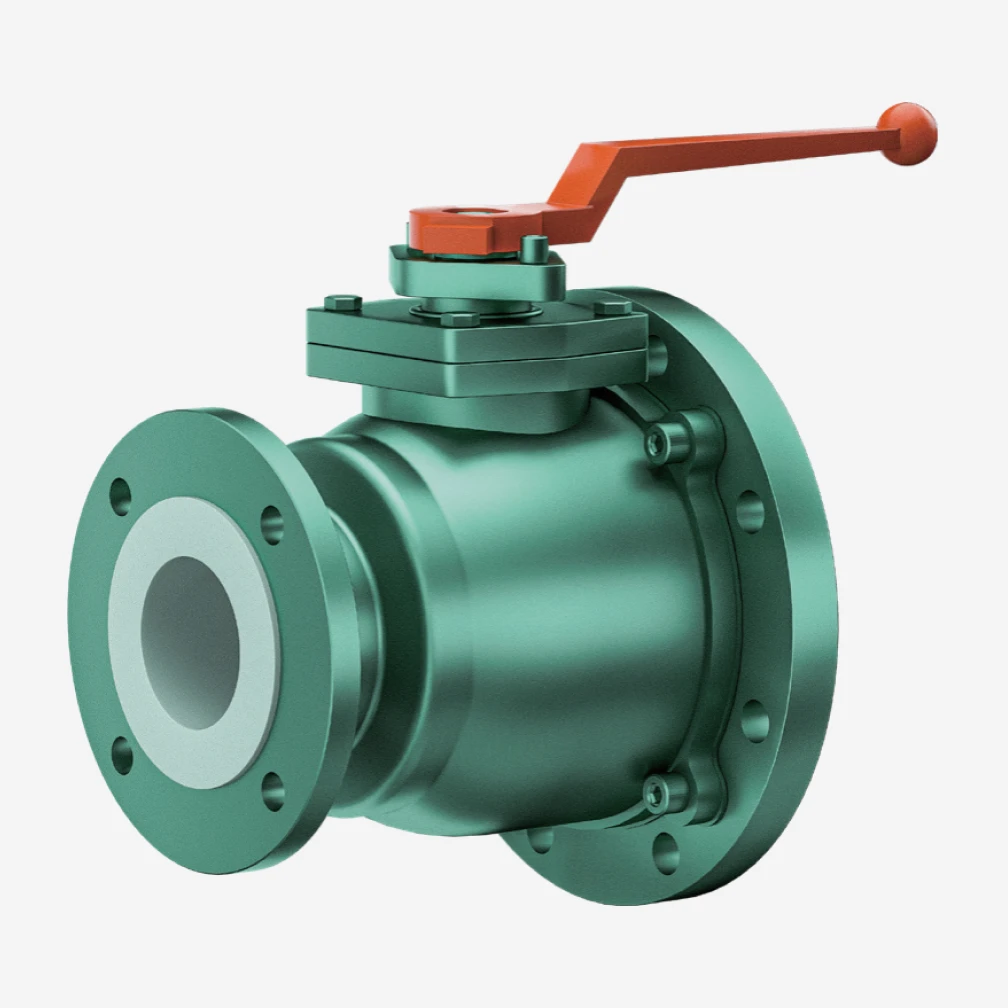
Caustic embrittlement occurs when tensile stress (from welding, casting, or piping strain) combines with hot, concentrated NaOH. Carbon steel enters the cracking zone above approximately 50–65°C depending on concentration. Austenitic stainless steels (304L and 316L) resist general corrosion in 50% NaOH well, but above 80–90°C they become vulnerable to transgranular and intergranular stress corrosion cracking. For hot caustic loops exceeding 90°C, engineers must specify either Nickel 200/201 alloys or armored fluoroplastic-lined pumps (PTFE/PFA), which are completely immune to metallic stress cracking.
Why PVDF Must Be Excluded from Caustic Service
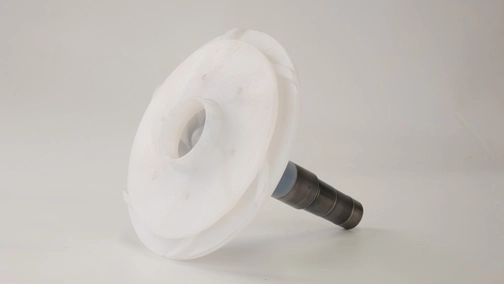
A frequent specification error is substituting PVDF for PTFE or PFA in strong alkali lines. Although PVDF is a fluoropolymer with strong acid resistance, strong bases (pH > 12) attack its polymer chain through dehydrofluorination, causing rapid embrittlement and cracking. Always specify PTFE, PFA, or FEP linings for non-metallic caustic pumps.
Sealing Strategies: Solving Crystallization and Carbonation
The primary cause of premature failure on caustic soda pumps is shaft seal destruction. When a single mechanical seal weeps microscopic amounts of 50% NaOH into the atmosphere, water evaporates and the remaining alkali reacts with ambient CO2 to form hard sodium carbonate crystals. These crystals build up under the sliding seal face, hang up the springs, and score the silicon carbide or carbon rings.
Sealless Magnetic Drive Architecture
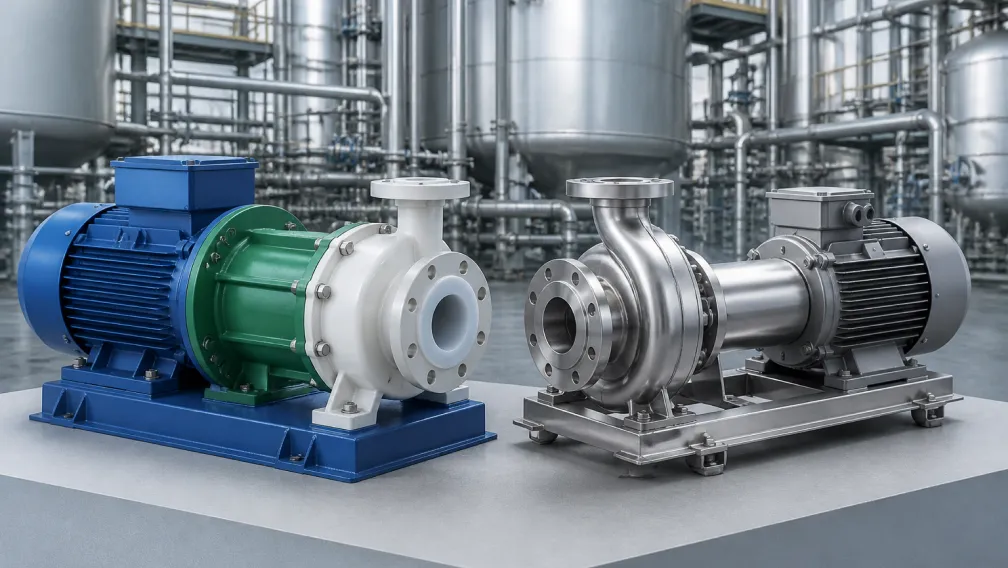
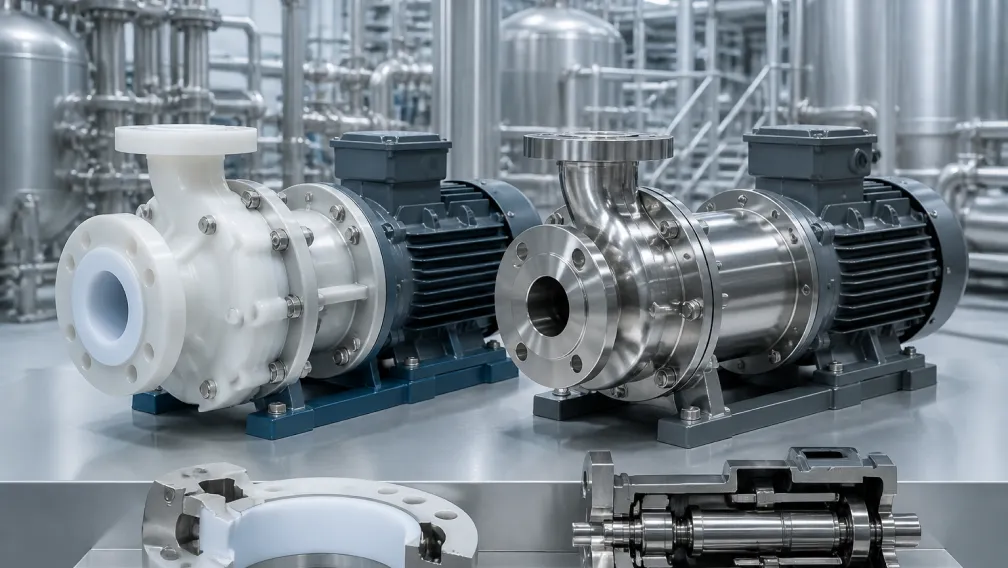
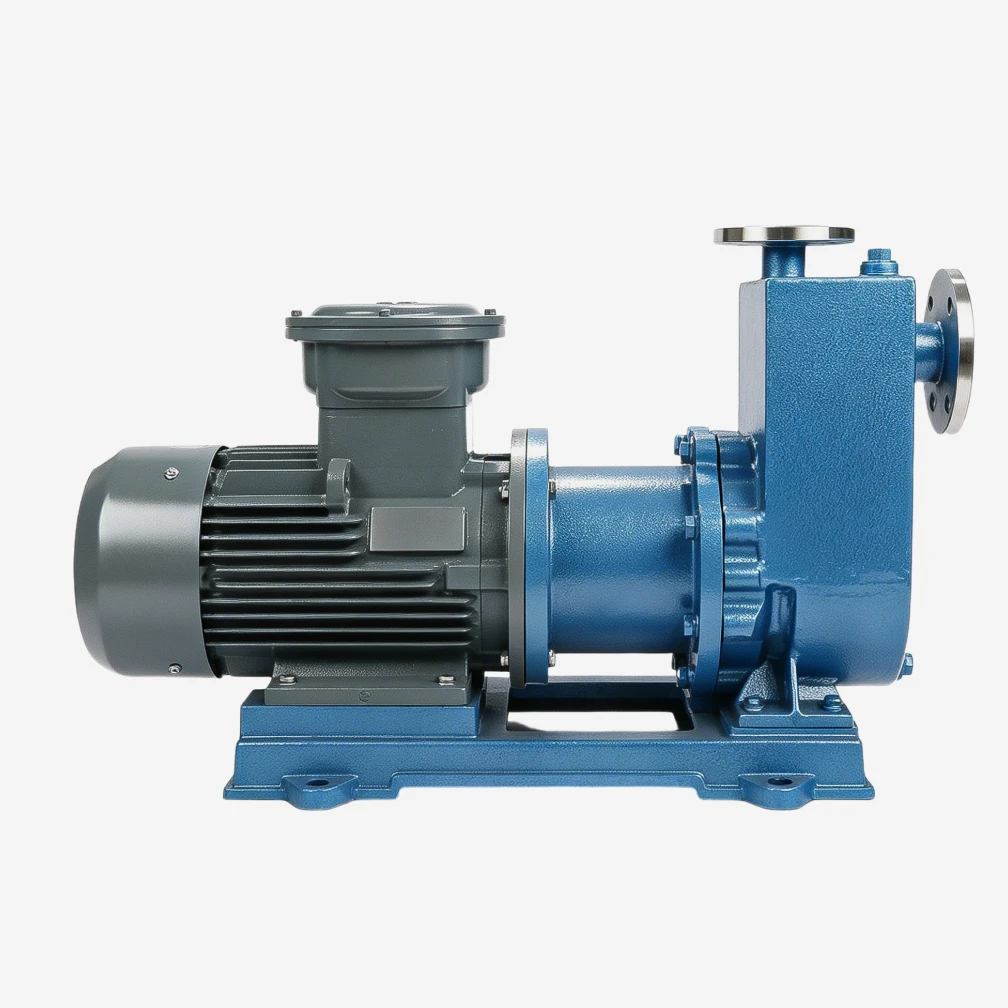
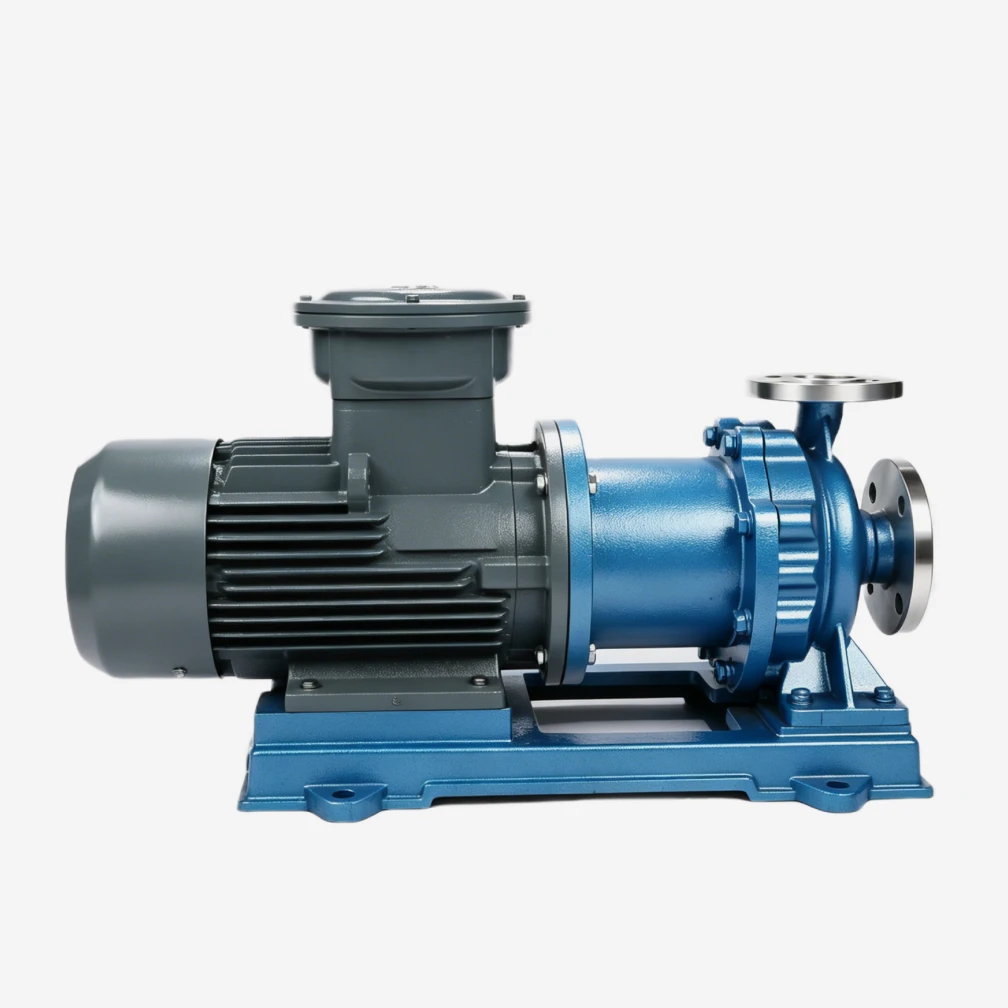
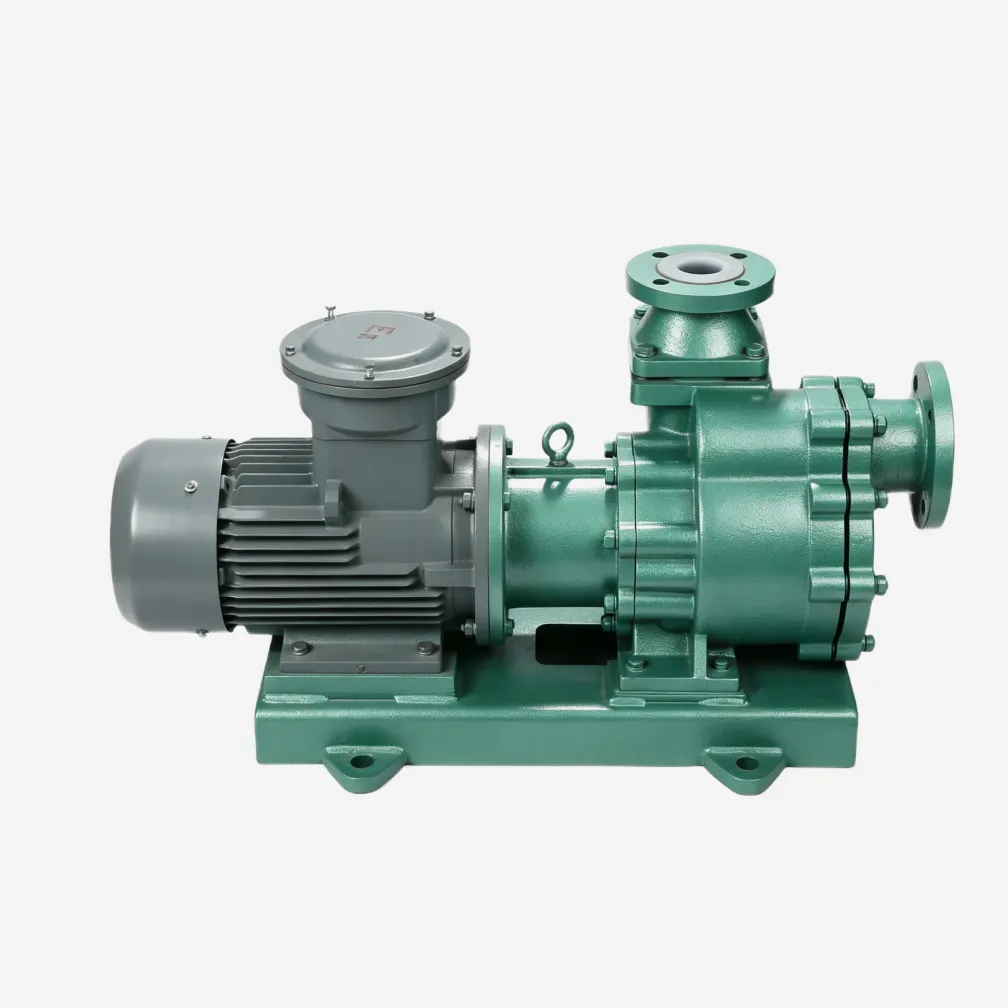
Eliminating the dynamic shaft seal removes the crystallization interface entirely. A CQL stainless steel magnetic drive pump handles clean 50% NaOH up to 80–90°C with zero atmospheric exposure, while a CQB fluoroplastic-lined magnetic drive pump covers higher temperatures (up to 150°C) and iron-free high-purity grades. Because magnetic drive pumps rely on internal fluid circulation for bearing lubrication, operators must maintain fluid temperature well above 20°C to prevent viscosity spikes or crystallization inside the narrow silicon carbide bearing clearances.
Mechanical Seal Configurations for Centrifugal Pumps
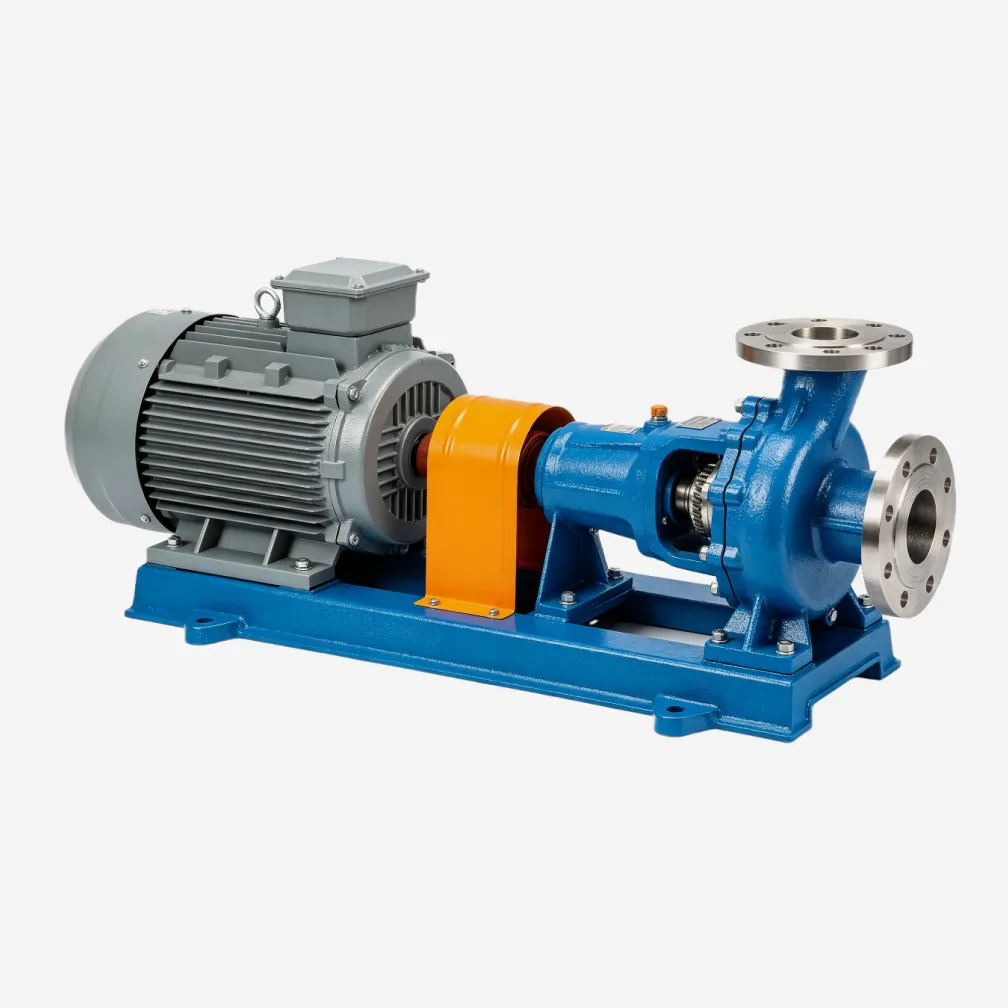
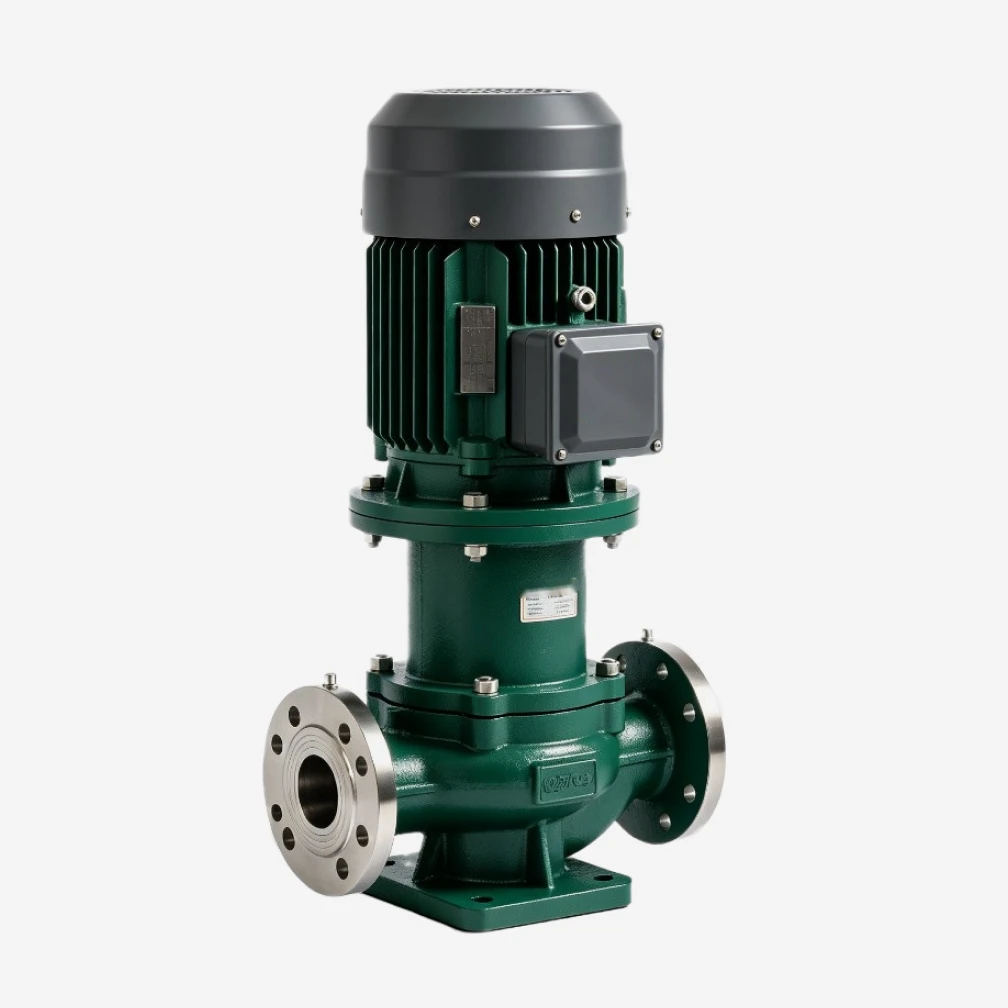
Where high flow rates, elevated head, or trace suspended solids favor a sealed centrifugal pump—such as the IH stainless steel centrifugal pump or the IHF fluoroplastic-lined centrifugal pump—the seal arrangement must isolate the faces from air:
- Double mechanical seal (API Plan 52/53A): The preferred sealed configuration for 50% NaOH. Pressurized barrier fluid (typically water/glycol or compatible synthetic oil) prevents caustic from reaching the atmospheric side.
- Single mechanical seal with steam or water quench (API Plan 62): Acceptable for dilute or moderate-temperature caustic. A low-pressure steam or clean water quench on the atmospheric side dissolves carbonate crystals before they can score the faces.
- Elastomer and face selection: Specify EPDM or FFKM O-rings and hard-to-hard silicon carbide (SiC vs. SiC) faces to resist residual crystal abrasion.
Thermal Management and Winterization for 50% NaOH
Because 50% caustic soda crystallizes at 12–15°C, thermal management is mandatory in any plant where ambient temperatures can drop below 20°C. Electric heat tracing (EHT) or steam jacketing must maintain the pump casing and suction/discharge piping between 25°C and 45°C—warm enough to keep viscosity low and prevent freezing, yet cool enough to stay safely below the caustic embrittlement threshold of metallic components.
Idle standby pumps require either a continuous low-flow warm-up bypass or immediate draining and warm-water flushing upon shutdown. For detailed jacketing and tracing layouts, refer to our chemical pump winterization and heat tracing guide.
Selection Checklist: Data Required for Caustic Pump Sizing
Before finalizing a pump specification, compile the complete operating envelope using our chemical pump duty data sheet. For caustic soda specifically, verify:
- Exact NaOH concentration (e.g., 20%, 32%, 50%, or 73%) and whether iron-free purity is required.
- Normal, minimum, and maximum operating temperatures, plus lowest site ambient temperature.
- Specific gravity and viscosity at the lowest expected pumping temperature (for motor power and NPSHa sizing).
- Presence of trace solids, salt crystals, or chlorates (common in diaphragm-cell caustic).
- Site sealing standard: sealless magnetic drive, dual pressurized mechanical seal, or quenched single seal.
- Availability of heat tracing, steam jacketing, or warm-water flush lines for shutdowns.
Conclusion
Caustic soda pump reliability depends on matching metallurgy to the caustic embrittlement temperature curve, excluding incompatible polymers like PVDF, sizing motors for 1.53 specific gravity, and preventing atmospheric carbonation at the shaft seal. For clean, iron-free, or zero-leakage duties, PTFE/PFA-lined or 316L magnetic drive pumps eliminate seal crystallization altogether; for higher-capacity centrifugal duties, dual mechanical seals or quenched single seals with EPDM/FFKM elastomers provide stable service. Contact our engineering team with your concentration, temperature range, and duty point to receive a verified caustic soda pump specification.
-

YFTEL Pumps
Fluid Engineers & Technical Support, YFTEL Pump
YFTEL is a chemical pump manufacturer based in Hangzhou, China, with a 26,000 m² production base in Hangzhou, China, with a 26,000 m² production base in Anhui. Using the CAS-patented Fluoroplastic Alloy material, we produce 300+ models of corrosion-resistant pumps, valves and piping, exported to 30+ countries.