
 English

Factory Acceptance Testing (FAT) is the final engineering verification conducted before a chemical pump leaves the manufacturing facility. In industrial chemical processing, discovering a hydraulic shortfall, a casting porosity defect, or a microscopic pinhole in a fluoropolymer lining after site installation triggers costly plant delays, crane mobilization, and hazardous commissioning failures. A structured FAT protocol validates pressure containment, hydraulic accuracy, lining continuity, and mechanical stability under controlled test-bed conditions. This guide outlines the core inspection stages—hydrostatic pressure testing, ISO 9906 hydraulic performance verification, high-voltage lining spark testing, and mechanical running checks—that EPC contractors and plant engineers should specify in procurement documents.
Hydrostatic Pressure Testing: Verifying Containment Integrity
Every pressure-retaining component of a chemical pump must undergo hydrostatic testing prior to assembly or final painting. The test confirms that cast or machined volutes, rear covers, and magnetic drive containment shells can safely withstand system pressures without weeping, sweating, or permanent structural deformation.
Test Pressure and Holding Duration
Under international standards such as ISO 5199, ASME B73.1, and API 685, the standard hydrostatic test pressure is 1.5 times the Maximum Allowable Working Pressure (MAWP) at ambient temperature. For a standard PN16 (1.6 MPa) chemical pump, the casing is pressurized with clean water to 2.4 MPa. Once stabilized, pressure is held for a minimum of 10 to 30 minutes depending on the governing standard and casing wall thickness. Acceptance criteria are absolute: zero visible leakage through the casing walls or static joints, and zero pressure drop on calibrated gauges.
Special Requirements for Magnetic Drive Containment Shells
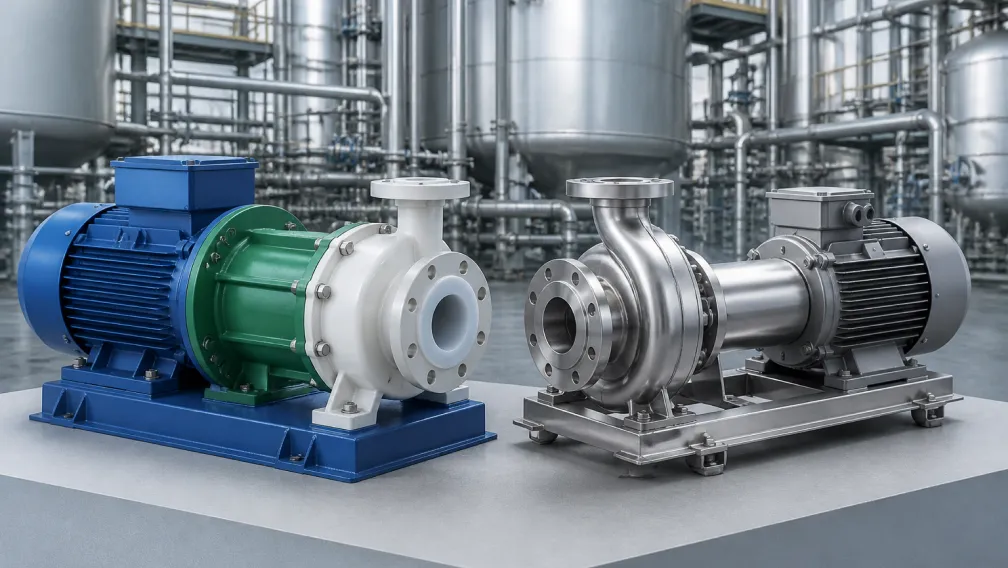
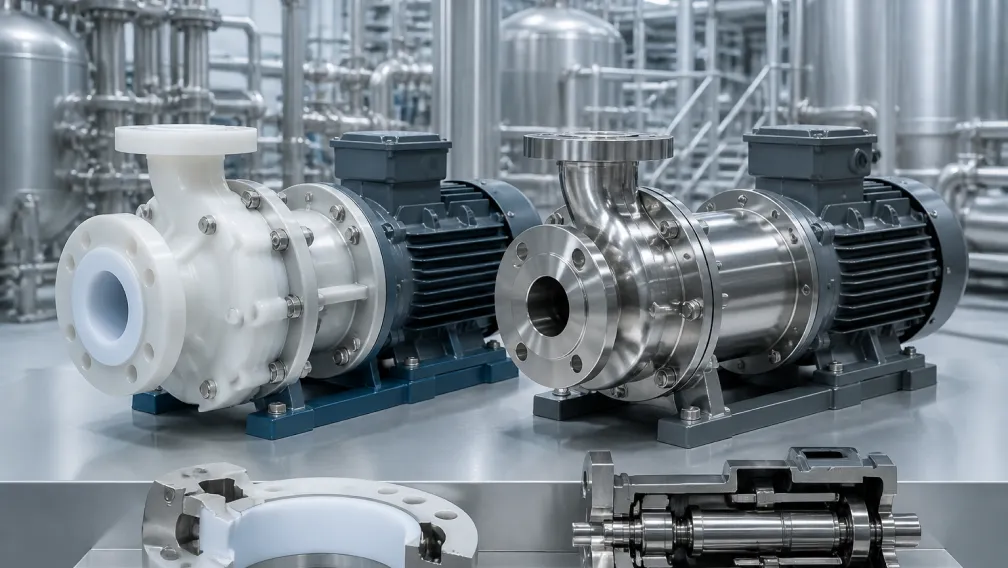
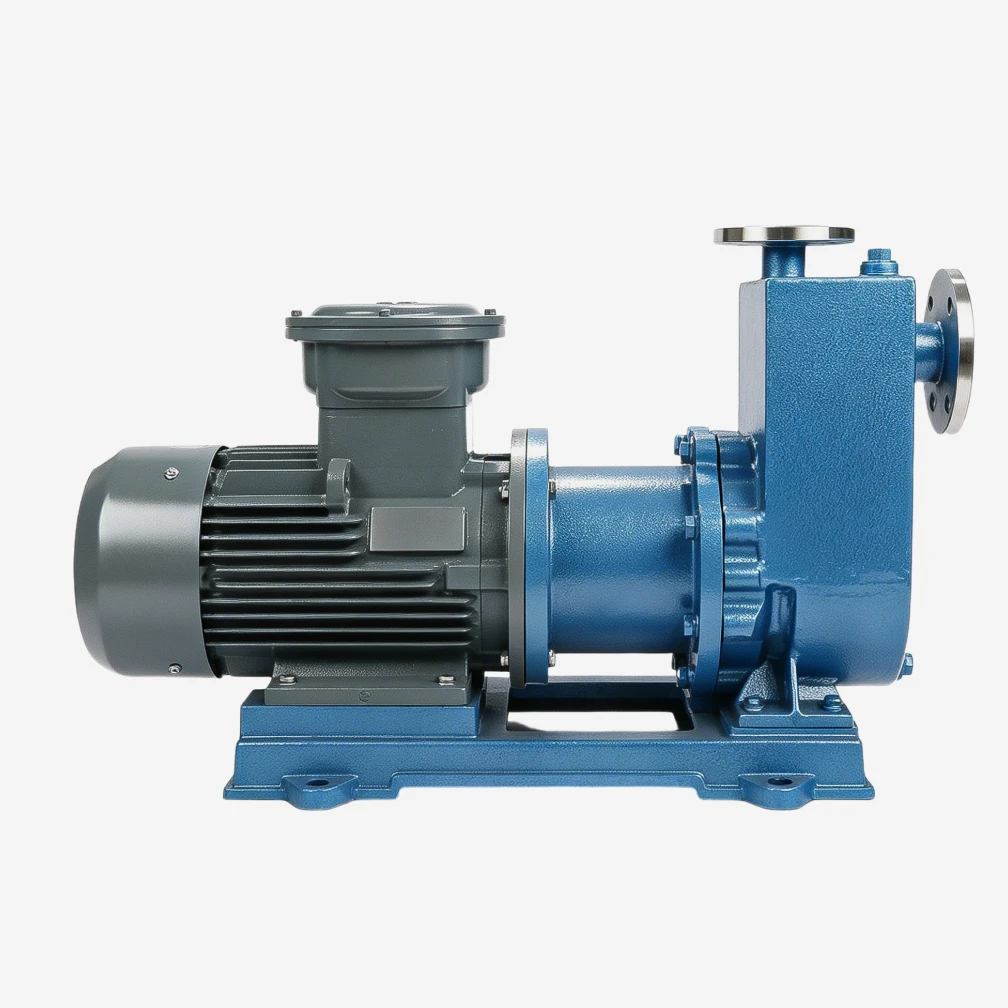
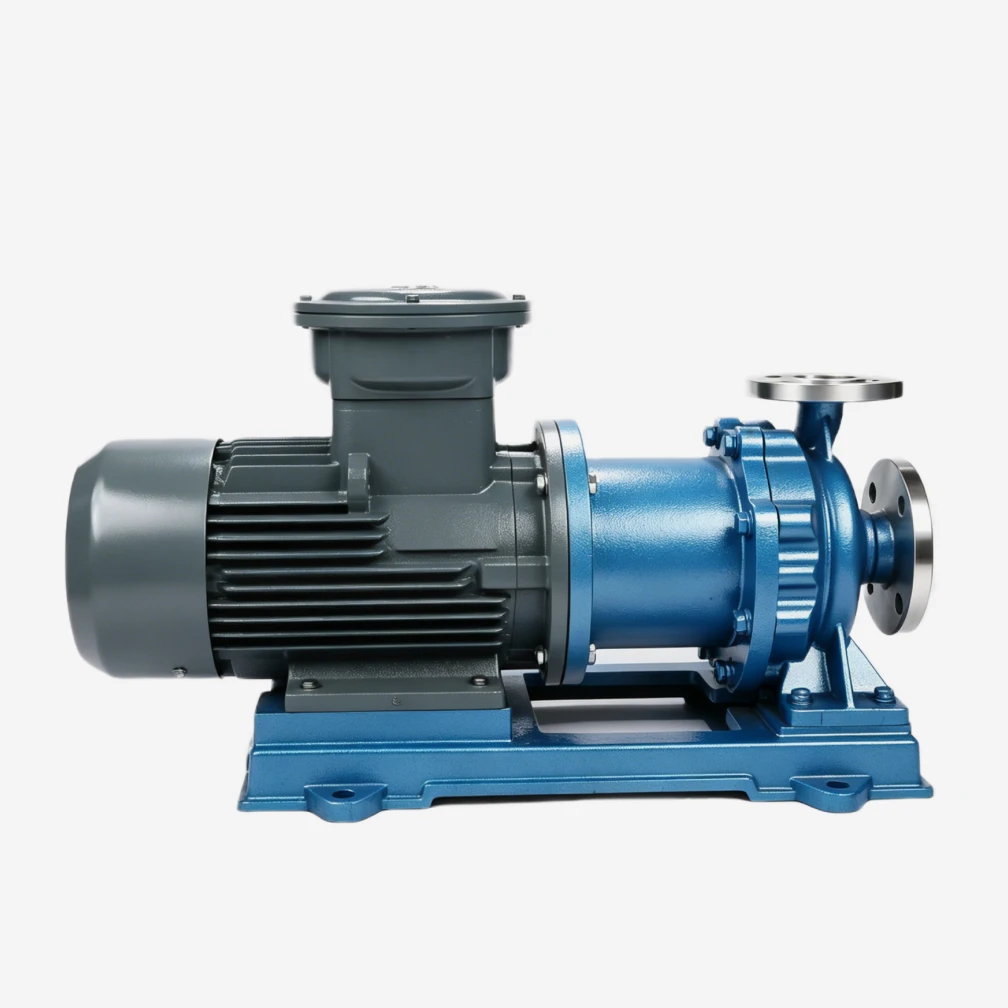
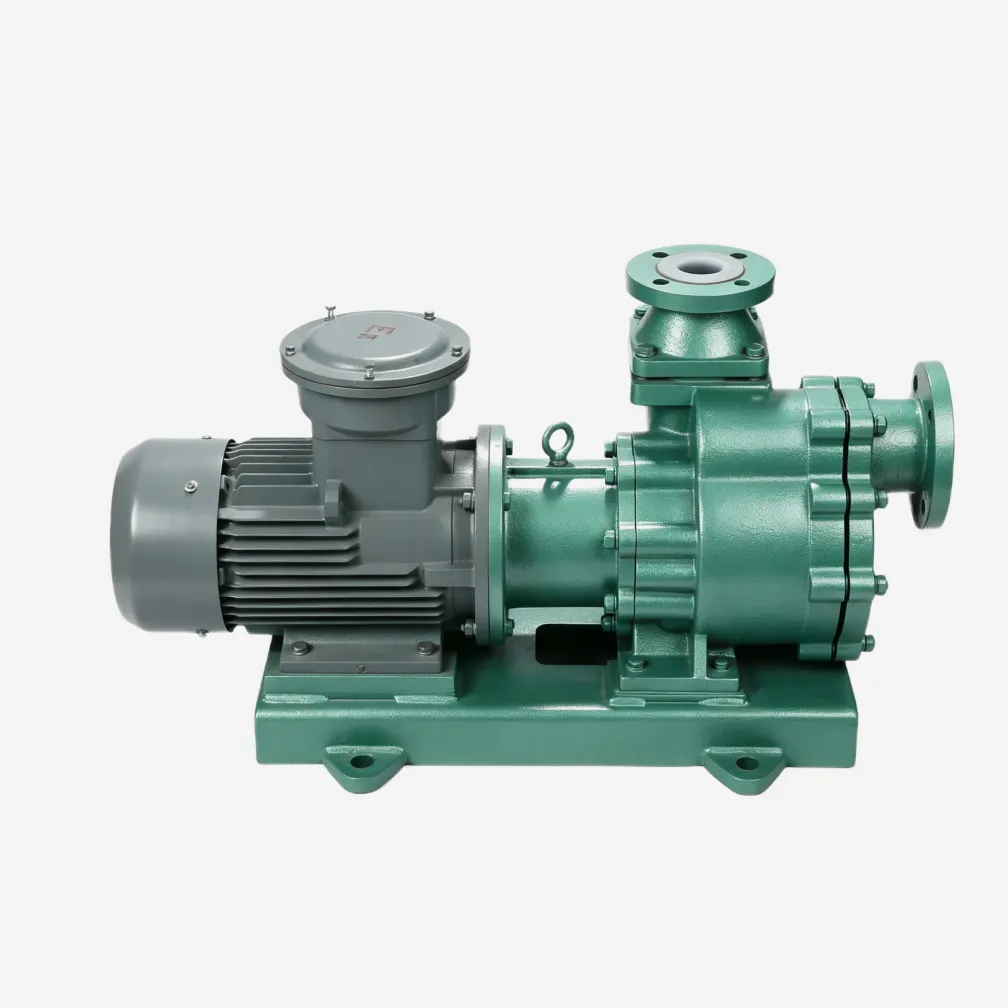
On sealless units such as the CQB fluoroplastic-lined magnetic drive pump, the stationary containment shell (rear casing) forms the primary pressure boundary separating toxic process fluid from the atmosphere. Both the composite outer reinforcement and the internal fluoropolymer liner must be hydrostatically verified to confirm structural integrity before magnetic rotor assembly.
ISO 9906 Hydraulic Performance Testing and Acceptance Grades
Hydraulic performance testing verifies that the manufactured pump matches the guaranteed duty point (flow rate, total dynamic head, power draw, and efficiency) on the published curve. The global benchmark for rotodynamic pump testing is ISO 9906:2012. Understanding how test curves align with system requirements is covered in our guide on how to read a pump performance curve.
ISO 9906 Acceptance Grades Explained
ISO 9906 defines three primary tolerance classes—Grade 1 (strictest, used for high-precision or high-power pumps), Grade 2 (standard industrial chemical process pumps), and Grade 3 (general utility pumps). Each grade is further split into bilateral tolerances (B) or unilateral tolerances (U, no negative tolerance allowed on flow or head).
| ISO 9906 Grade | Flow Tolerance (tQ) | Head Tolerance (tH) | Power Tolerance (tP) | Typical Application |
|---|---|---|---|---|
| Grade 1B | ±5% | ±3% | +4% | High-power critical process pumps, strict EPC contracts |
| Grade 1U | +10% / 0% | +6% / 0% | +10% | Critical duties where zero shortfall on head/flow is permitted |
| Grade 2B | ±8% | ±5% | +8% | Standard chemical centrifugal and magnetic drive pumps |
| Grade 2U | +16% / 0% | +10% / 0% | +16% | Chemical transfer requiring guaranteed minimum output |
| Grade 3B | ±9% | ±7% | +9% | General water circulation and non-critical utility duties |
During a standard performance test, the pump is run with clean ambient water across a minimum of five operating points: shut-off (zero flow, brief duration), minimum continuous stable flow, rated duty point (100% flow), and run-out (typically 120% of rated flow). If the plant fluid has a higher specific gravity or viscosity than water, test-bed power and head figures are mathematically corrected to the actual process conditions. For more on how dimensional and testing standards intersect, see our comparison of ASME B73.1, ISO 2858, and API 685.
NPSHr Verification (3% Head Drop Test)
For low-NPSHa installations—such as vacuum tower bottoms or volatile solvent transfer—buyers should specify an optional Net Positive Suction Head Required (NPSHr) test. Conducted in a closed-loop vacuum test tank, suction pressure is gradually lowered at constant flow until the total dynamic head drops by exactly 3%, establishing the verified NPSHr curve. Refer to our NPSH and cavitation prevention guide for system margin calculations.
High-Voltage Spark Testing for Fluoroplastic and UHMWPE Linings
On lined chemical pumps, hydraulic performance means nothing if a microscopic pinhole allows concentrated acid to reach the ductile iron or cast steel outer armor. Once acid penetrates the lining, rapid under-film corrosion delaminates the polymer and breaches the casing.
How the Holiday (Spark) Test Works
High-voltage spark testing (holiday detection) is mandatory for all wetted polymer surfaces on units such as the IHF fluoroplastic-lined centrifugal pump and the UHB-ZK UHMWPE slurry pump. The metallic outer casing is grounded, and a calibrated high-voltage probe is swept slowly across the entire internal lining surface, paying close attention to flange sealing faces, volute tongues, and drain ports. Test voltage is calibrated to lining thickness—typically 10 kV to 20 kV for standard 3–5 mm PTFE/PFA linings. Because fluoropolymers and UHMWPE are strong electrical insulators, an intact lining blocks current flow completely. Any pinhole, void, or thin spot triggers an immediate electrical arc and audible alarm, resulting in automatic rejection of the component. Further inspection criteria are detailed in our pump lining inspection guide.
Mechanical Running, Vibration, and Dynamic Balancing Verification
A pump that hits its hydraulic duty point can still fail prematurely if mechanical tolerances are loose. FAT must include quantitative mechanical checks:
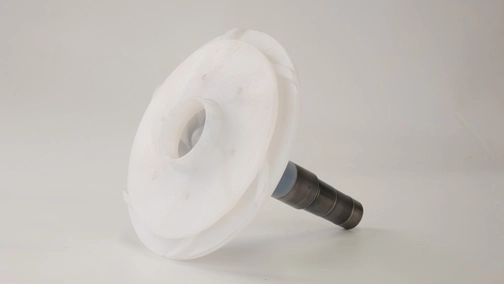
- Impeller dynamic balancing: Every metallic and lined impeller must be dynamically balanced prior to assembly, typically to ISO 1940-1 Grade G6.3 (or Grade G2.5 for high-speed 2900/3500 RPM and vertical inline pumps). Unbalanced impellers are the primary driver of premature bearing and seal failure.
- Vibration measurement: During the performance run at the rated duty point, triaxial vibration velocity (mm/s RMS) is measured at the bearing housing in horizontal, vertical, and axial planes per ISO 10816 / ISO 20816. Standard industrial chemical pumps should operate well below 2.8 to 4.5 mm/s RMS depending on motor power and mounting rigidity.
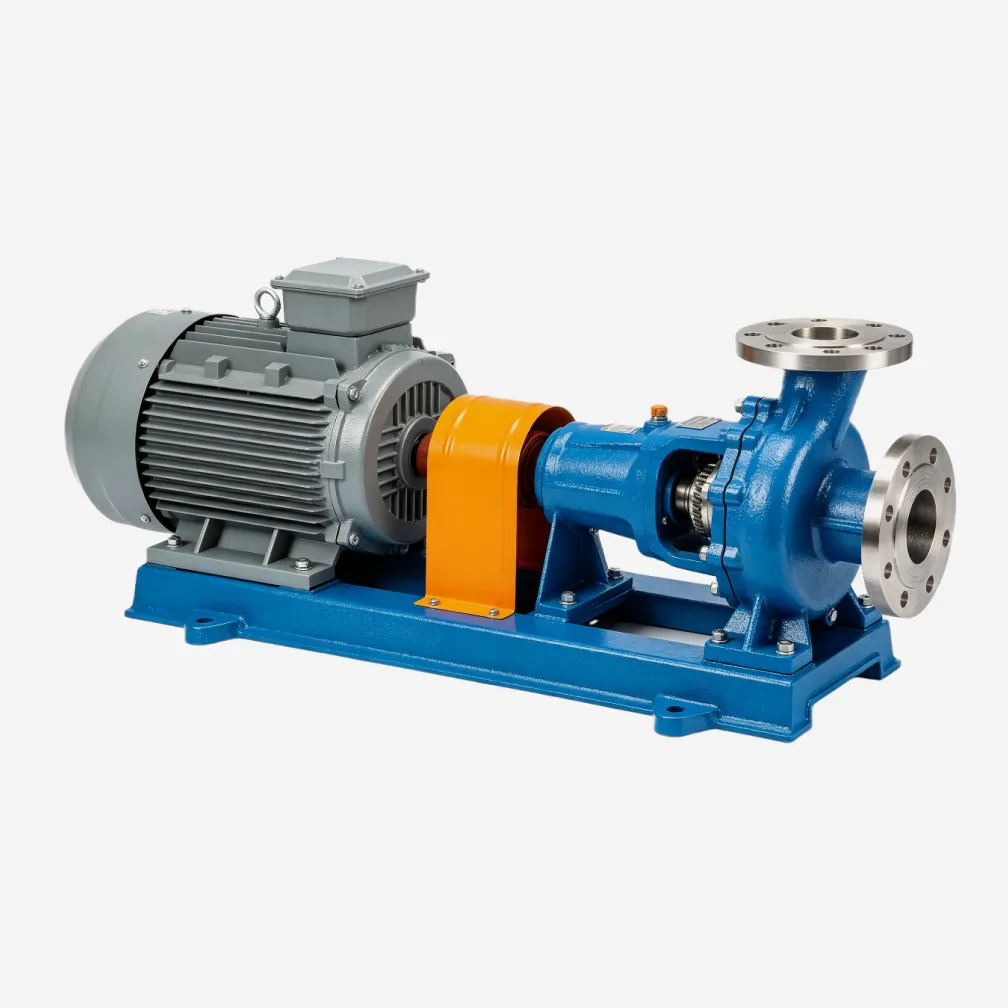
- Bearing temperature and seal check: On mechanically sealed pumps like the IH stainless steel centrifugal pump, bearing housing temperature rise is monitored until thermal stabilization, and the mechanical seal is inspected for zero visible liquid leakage during the run.
Material Traceability and Witnessed vs. Non-Witnessed FAT
Documentation is as critical as the physical test itself. For regulated chemical, pharmaceutical, and refinery projects, purchase orders should specify:
- EN 10204 3.1 Material Test Certificates (MTC): Providing heat-number traceability and chemical/mechanical analysis for wetted metallic parts (316L, Duplex 2205, Hastelloy) and virgin resin batch certificates for PFA/PTFE linings.
- Positive Material Identification (PMI): Handheld XRF alloy verification on finished metallic impellers, shafts, and casings to prevent alloy mix-ups.
- Non-Witnessed vs. Witnessed FAT: Standard orders typically require a non-witnessed FAT with certified test curves and signed inspection reports. High-value or critical-service orders often designate the performance and hydrostatic tests as Hold Points, witnessed either on-site or via live video by the client's engineer or a third-party agency (SGS, TUV, Bureau Veritas).
FAT Specification Checklist for Procurement
Include clear inspection requirements alongside your chemical pump duty data sheet before issuing a purchase order:
- Hydrostatic test pressure (1.5x MAWP) and minimum holding time.
- Required ISO 9906 acceptance grade (e.g., Grade 2B or Grade 1B) and whether NPSHr testing is required.
- High-voltage spark test voltage (kV) and lining thickness verification for all fluoroplastic or UHMWPE-lined pumps.
- Impeller dynamic balancing certificate (ISO 1940-1 G6.3) and vibration test limits.
- Material traceability level (EN 10204 3.1 MTC and PMI) and witness/third-party inspection hold points.
Conclusion
Factory Acceptance Testing transforms pump procurement from an assumption into verified engineering data. Confirming 1.5x MAWP pressure integrity, ISO 9906 hydraulic accuracy, 10–20 kV lining continuity, and low-vibration mechanical stability on the factory test bed eliminates commissioning risks and protects plant safety. Contact our engineering team to review our standard FAT procedures, request sample inspection dossiers, or schedule a witnessed test for your upcoming chemical pump order.
-

YFTEL Pumps
Fluid Engineers & Technical Support, YFTEL Pump
YFTEL is a chemical pump manufacturer based in Hangzhou, China, with a 26,000 m² production base in Hangzhou, China, with a 26,000 m² production base in Anhui. Using the CAS-patented Fluoroplastic Alloy material, we produce 300+ models of corrosion-resistant pumps, valves and piping, exported to 30+ countries.