
 English

Open a chemical pump data sheet from a North American EPC, a European contractor, and a Chinese OEM, and you will likely see three different standard references: ASME B73.1, ISO 2858 or ISO 5199, and API 685. These codes are the reason a replacement pump from a second supplier can drop onto an existing foundation without re-piping, and they define the minimum mechanical reliability a buyer can expect. They are also frequently misunderstood. A pump built to a standard is not automatically suitable for the fluid, and compliance with one standard never implies compliance with another. This guide explains what each standard actually specifies, where each applies, and how to reference them correctly in a purchase specification.
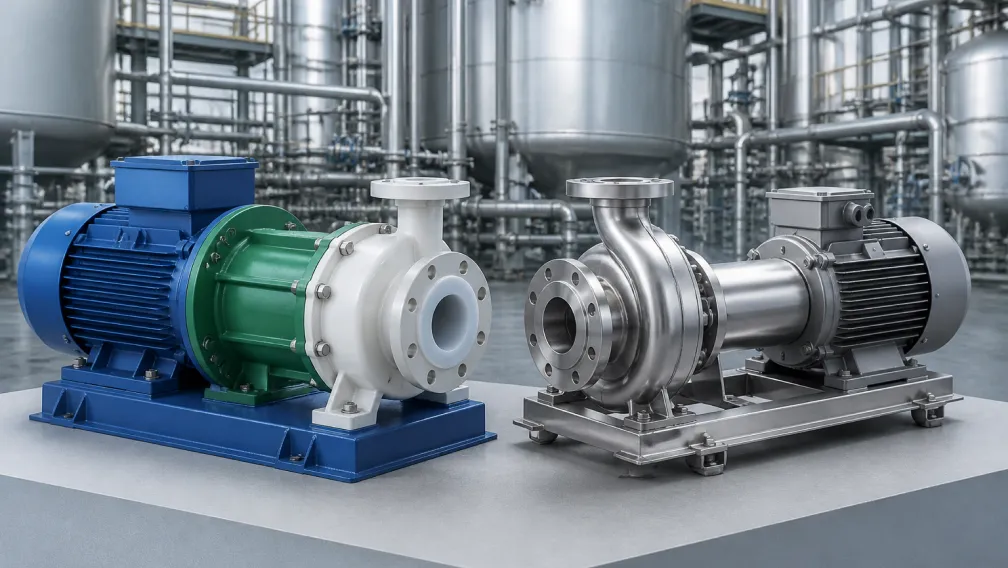
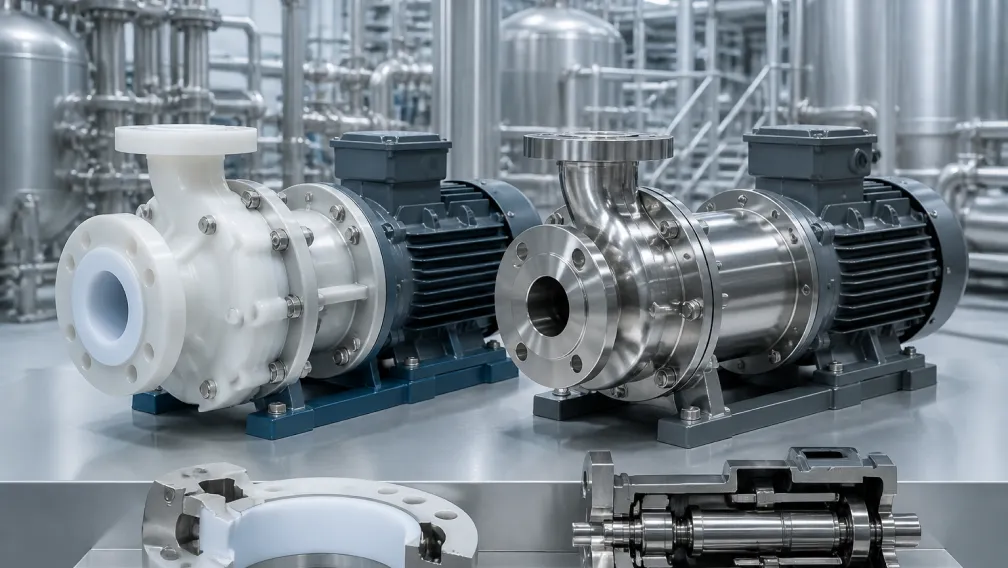
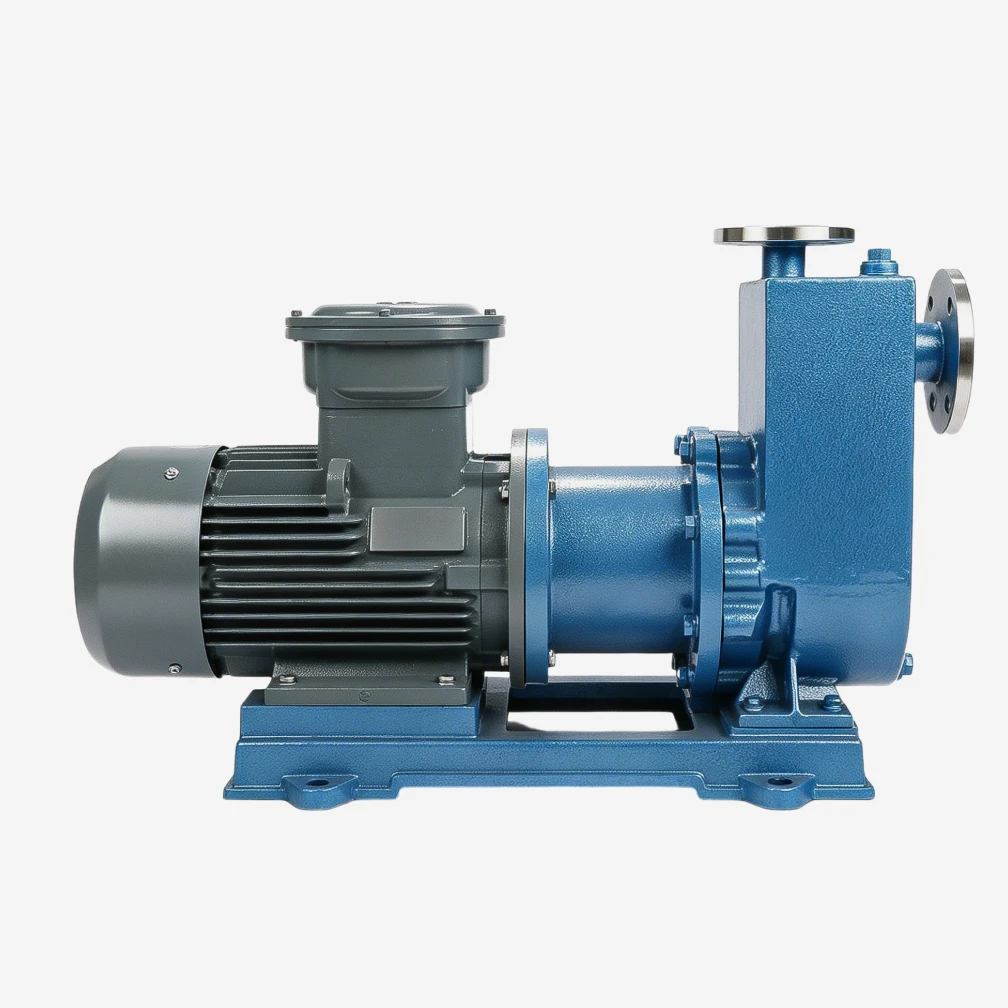
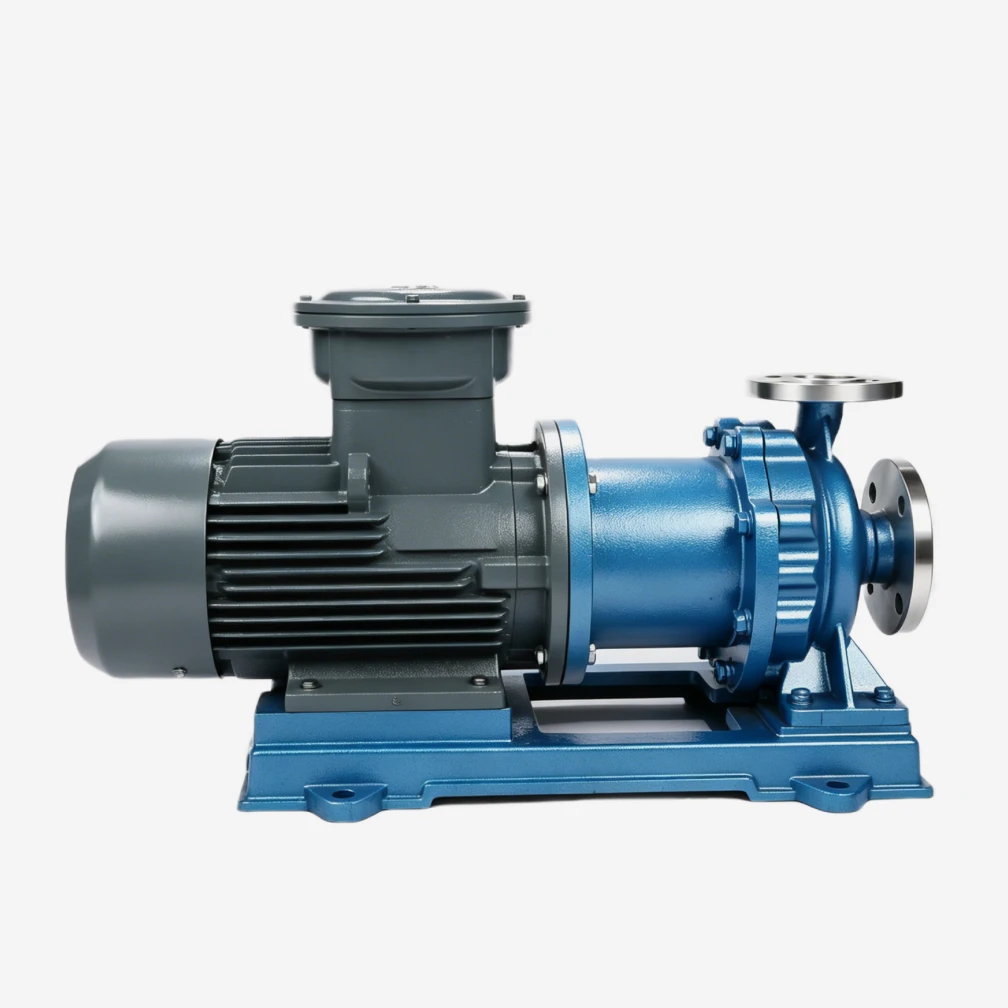
The short version: ASME B73.1 governs horizontal end-suction chemical process pumps in North American (ANSI) practice, ISO 2858 with ISO 5199 governs the equivalent metric pump family used across Europe, Asia, and most international projects, and API 685 is the dedicated standard for sealless magnetic drive and canned motor pumps in petroleum, petrochemical, and gas service. For general corrosive chemical transfer outside refinery battery limits, pumps built on the ISO 2858 dimensional envelope with ISO 5199 Class II technical requirements are the international default — a category that includes most fluoroplastic-lined centrifugal pumps in service today.
What a Pump Standard Actually Specifies
Process pump standards share a common scope. They fix the dimensions — foot mounting, shaft centerline height, flange positions and sizes — so pumps from different manufacturers are interchangeable on the same baseplate and piping. They define pressure ratings for the casing and flanges, minimum mechanical design requirements such as shaft deflection limits, bearing life, corrosion allowance and critical speed margins, and testing requirements including the hydrostatic test at 150% of maximum allowable working pressure. What they deliberately leave to the buyer and manufacturer is hydraulic selection for the actual duty point, material selection against the actual fluid, and the sealing system choice.
ASME B73.1: The North American Chemical Process Pump
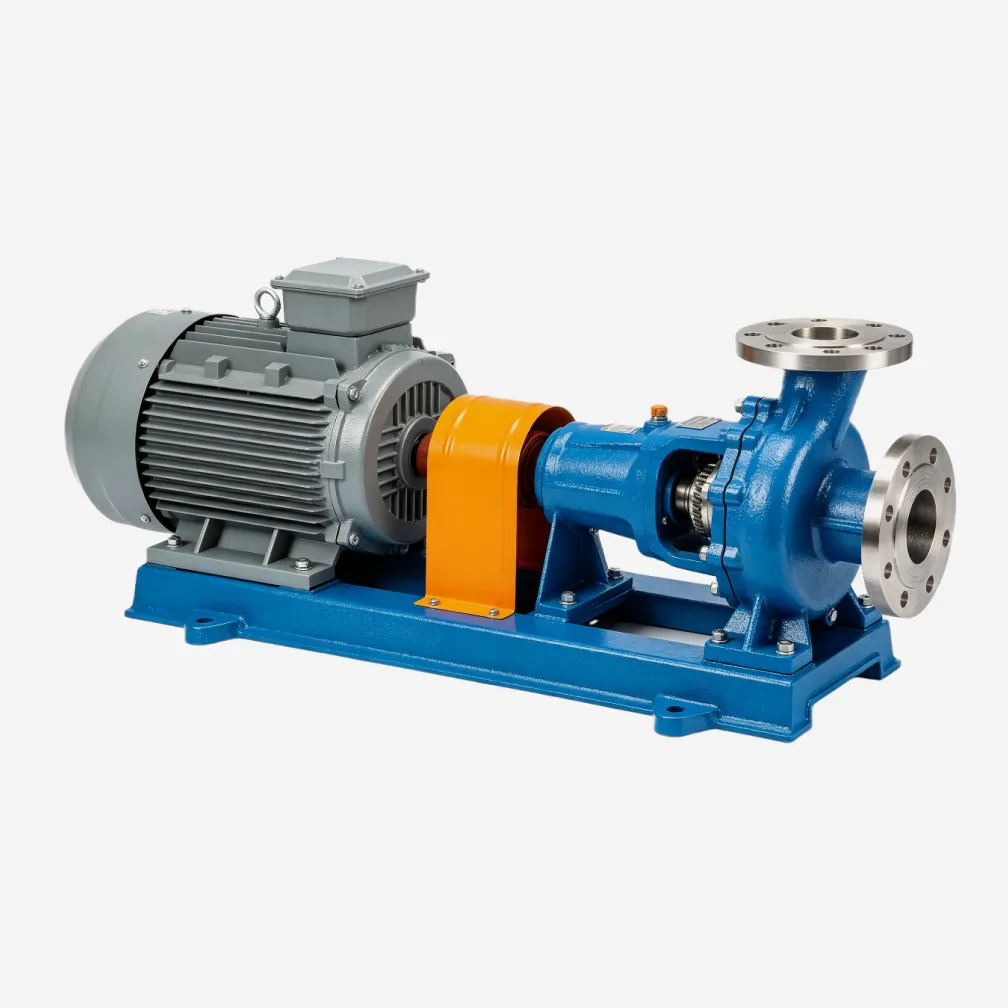
ASME B73.1, Specification for Horizontal End Suction Centrifugal Pumps for Chemical Process, descends from the original ANSI B73.1 standard and still appears in procurement documents under both designations. Its defining feature is complete dimensional interchangeability: compliant pumps from any manufacturer share the same envelope, so a plant can replace one ANSI pump with another without touching piping or foundations. The standard also mandates the back pull-out design, which lets maintenance crews remove the rotating assembly without disconnecting the casing from the line.
Key mechanical requirements include:
- Flanges rated to ASME B16.5 Class 150 minimum, with Class 300 for higher pressures, giving casing capability of roughly 19 bar at ambient temperature
- Maximum shaft deflection of 0.13 mm at the seal area under worst-case loads
- Rolling-element bearings rated for a minimum L10 life of 17,500 hours at rated conditions
- Minimum NPSH margin of 0.9 m and a critical speed margin of at least 20%
- A corrosion allowance of 3 mm on pressure-containing parts
ASME B73.1 pumps are engineered around 60 Hz speeds and imperial dimensions. For plants standardized on ANSI footprints, this interchangeability is the entire point of the standard.
ISO 2858 and ISO 5199: The Metric Standard System
International metric practice splits the same scope across two documents. ISO 2858 defines the dimensions and nominal duty points of end-suction centrifugal pumps rated at 16 bar with PN16 flanges, providing the same interchangeability logic as B73.1 for 50 Hz markets. ISO 5199 adds the technical specification — Class II requirements covering shaft deflection, bearing life, seal chamber dimensions, vibration limits, and testing. A correctly specified metric chemical pump references both: ISO 2858 for the envelope, ISO 5199 for construction quality.
The two families look equivalent on paper but differ in the details. ISO 5199 is tighter on shaft deflection (0.05 mm versus 0.13 mm in B73.1) and vibration (3.0 mm/s versus 4.8 mm/s), while ASME B73.1 demands larger NPSH margins (0.9 m versus 0.5 m) and critical speed margins (20% versus 10%). Neither standard is a metric translation of the other, and their footprints do not interchange. Chinese national standards GB/T 5662 and GB/T 5656 correspond to ISO 2858 and ISO 5199 respectively, so pumps from Chinese manufacturers — including the IH stainless steel and IHF lined series — follow the ISO dimensional envelope by design.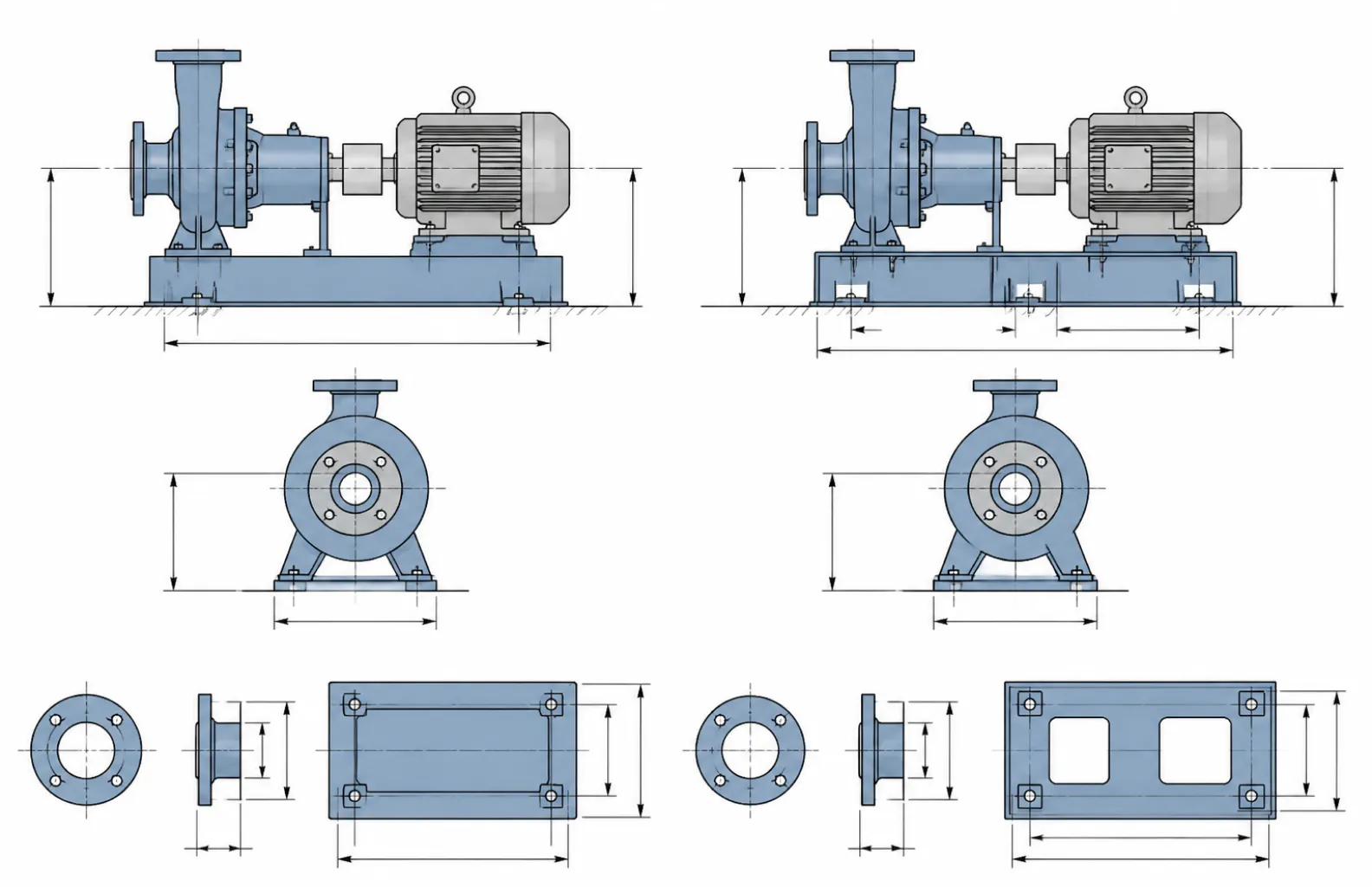
API 685: The Sealless Pump Standard
API 685 covers sealless centrifugal pumps — magnetic drive and canned motor designs — for petroleum, petrochemical, and natural gas process service. It is often described as API 610 for sealless pumps: heavy-duty construction, documented rotor dynamics, and mandatory attention to the failure modes unique to sealless machines, such as containment shell breach and magnetic coupling decoupling.
The feature that distinguishes API 685 from every general chemical pump standard is its treatment of the second barrier. A magnetic drive pump is hermetically sealed by a single static containment shell, and API 685 requires the purchaser and manufacturer to decide — guided by its Annex P — what happens if that shell ever fails:
- Secondary containment: a second pressure boundary, typically a double containment shell, with pressure and temperature monitoring, for lethal or highly toxic fluids
- Secondary control: a backup seal or throttle bush on the drive shaft with liquid or pressure detection in the coupling housing, for less severe duties
- Instrumentation: containment shell temperature monitoring and load or power monitoring as standard protection against dry running and decoupling
The ISO counterpart is ISO 15783, which sets equivalent requirements for sealless rotodynamic pumps in international projects. In practice, most magnetic drive chemical pumps sold for general chemical service — including fluoroplastic-lined magnetic drive pumps — are built on ISO 2858 hydraulic envelopes rather than full API 685 construction, because API 685 carries the cost structure of refinery-grade documentation and testing. Reserve API 685 for genuinely hazardous refinery and petrochemical duties where its secondary containment provisions and witnessed testing justify the premium.
Comparison at a Glance
| Item | ASME B73.1 | ISO 2858 + ISO 5199 | API 685 |
|---|---|---|---|
| Pump type | End-suction, mechanically sealed | End-suction, mechanically sealed | Sealless (magnetic drive, canned motor) |
| Typical market | North America, 60 Hz | International metric, 50 Hz | Global refinery and petrochemical |
| Flange rating | ASME B16.5 Class 150/300 | PN16 | Refinery class per casing design |
| Shaft deflection limit | 0.13 mm | 0.05 mm | Heavy-duty rotor requirements |
| Bearing L10 life | ≥17,500 h | ≥17,500 h | API-grade, higher margins |
| NPSH margin | ≥0.9 m | ≥0.5 m | Per API hydraulic requirements |
| Corrosion allowance | 3 mm | 3 mm | Per service severity |
| Second barrier | Not applicable | Not applicable | Secondary containment or control per Annex P |
Which Standard Belongs in Your Purchase Specification
Geography and existing plant practice decide most of this question. A plant built on ANSI footprints in Texas or Mexico specifies ASME B73.1 to protect interchangeability. A new chemical plant in Southeast Asia, the Middle East, or Europe will almost always receive ISO 2858/5199 pumps, and mixing the two families on one site creates a spare-parts problem that lasts for decades. API 685 enters the specification only when the fluid and the site risk assessment demand sealless construction with a defined second barrier.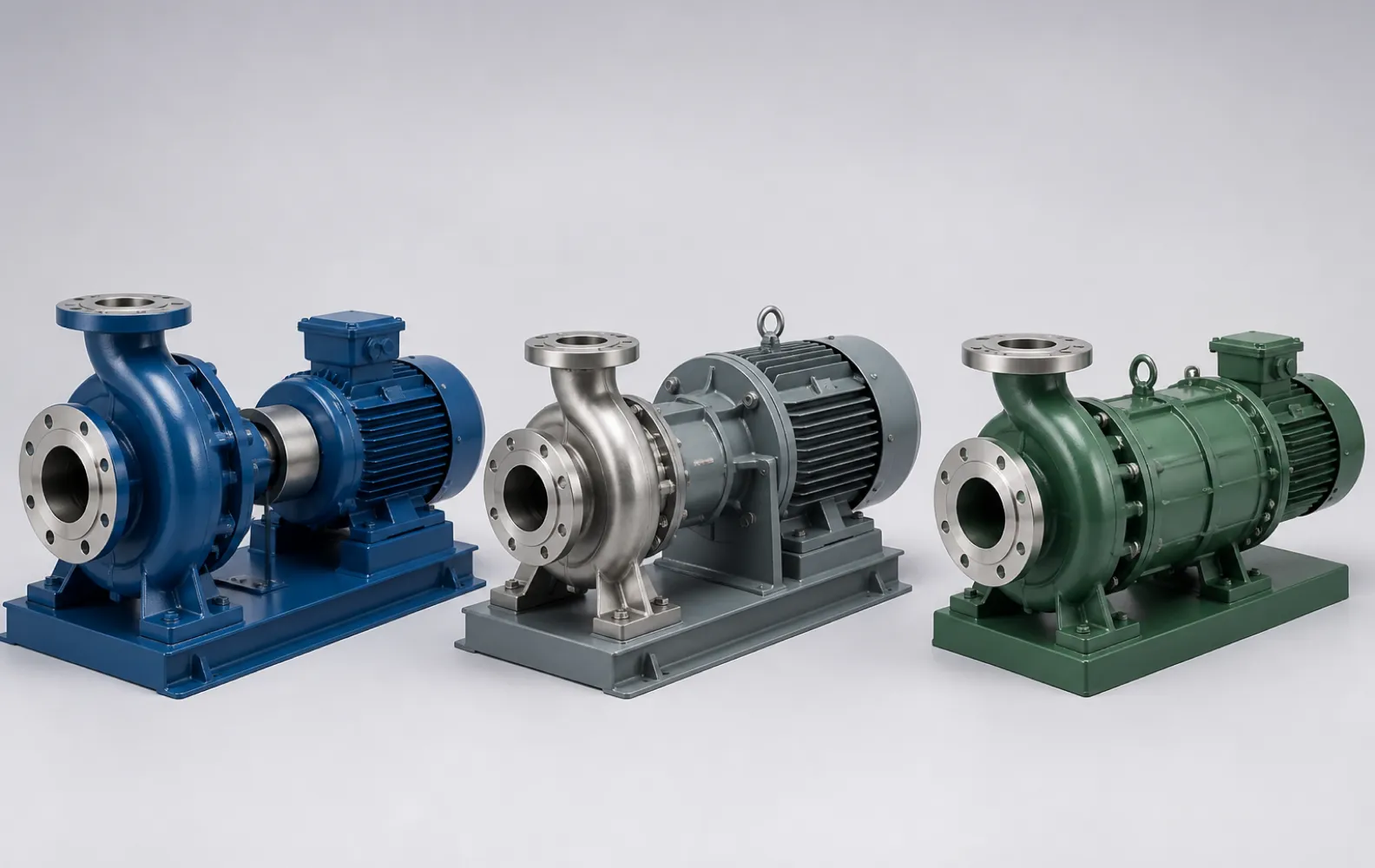
Three rules prevent the common mistakes:
- State the dimensional standard explicitly. A line item reading only "chemical process pump" invites bids on incompatible footprints.
- Do not demand API 685 for benign duties. For circulating dilute acid in a fertilizer plant, an ISO 5199 Class II lined pump delivers the required reliability at roughly half the cost and lead time.
- Match the design frequency to the site. A 50 Hz plant buying a pump sized for 60 Hz operation inherits incorrect duty points; confirm the design frequency with the supplier before ordering.
What These Standards Do Not Cover
Every one of these standards assumes the buyer has already solved the chemistry. None of them tells you whether the pump survives your fluid. A B73.1-compliant pump in bare stainless steel will still fail quickly in 40% sulfuric acid. An ISO 2858 dimension says nothing about the thickness or molding quality of a fluoroplastic lining. API 685 governs containment, not chemical compatibility. Material selection, lining technology, and hydraulic fit to the duty point remain engineering decisions documented in the pump duty data sheet, and they deserve as much attention in the specification as the standard reference itself. For corrosive media, the practical combination is an ISO 2858/5199 or ASME B73.1 dimensional base with PTFE or PFA lined wetted parts — dimensional interchangeability from the standard, corrosion resistance from the lining.
Specifying With Confidence
If you are preparing a pump specification for a chemical project, the fastest route to a correct standard reference is to send the fluid data, the plant location, and any existing pump tag information to our engineering team through the contact page. We will confirm whether ISO or ANSI dimensions fit your site, whether the duty justifies sealless construction, and which documentation package applies. You can also review the chemical pump range to see the dimensional standards behind each series.
-

YFTEL Pumps
Fluid Engineers & Technical Support, YFTEL Pump
YFTEL is a chemical pump manufacturer based in Hangzhou, China, with a 26,000 m² production base in Hangzhou, China, with a 26,000 m² production base in Anhui. Using the CAS-patented Fluoroplastic Alloy material, we produce 300+ models of corrosion-resistant pumps, valves and piping, exported to 30+ countries.