
 English

Why Wetted-Part Surface Finish Matters on Chemical Pumps
For chemical centrifugal pumps, the surface roughness of wetted parts such as impellers and volutes directly determines hydraulic efficiency, cavitation resistance, corrosion resistance, and operational stability. Chemical service media are demanding: acids, alkalis, and salts corrode; solid particles erode; high-viscosity fluids foul; and production runs intermittently or around the clock. The polishing process selected at manufacturing therefore shapes energy consumption, overhaul intervals, and service life at the same time.
At YFLK (Yftel), polishing schemes for chemical centrifugal pumps are differentiated by medium characteristics, pump geometry, material, and efficiency and anti-corrosion requirements. Our test results verify that properly polished impellers can improve the hydraulic efficiency of a centrifugal pump by approximately 5%, while reduced medium adhesion removes corrosion initiation points and supports long-term continuous operation. This guide reviews six mainstream polishing processes with their working principles, strengths, limitations, and application boundaries for chemical pumping.
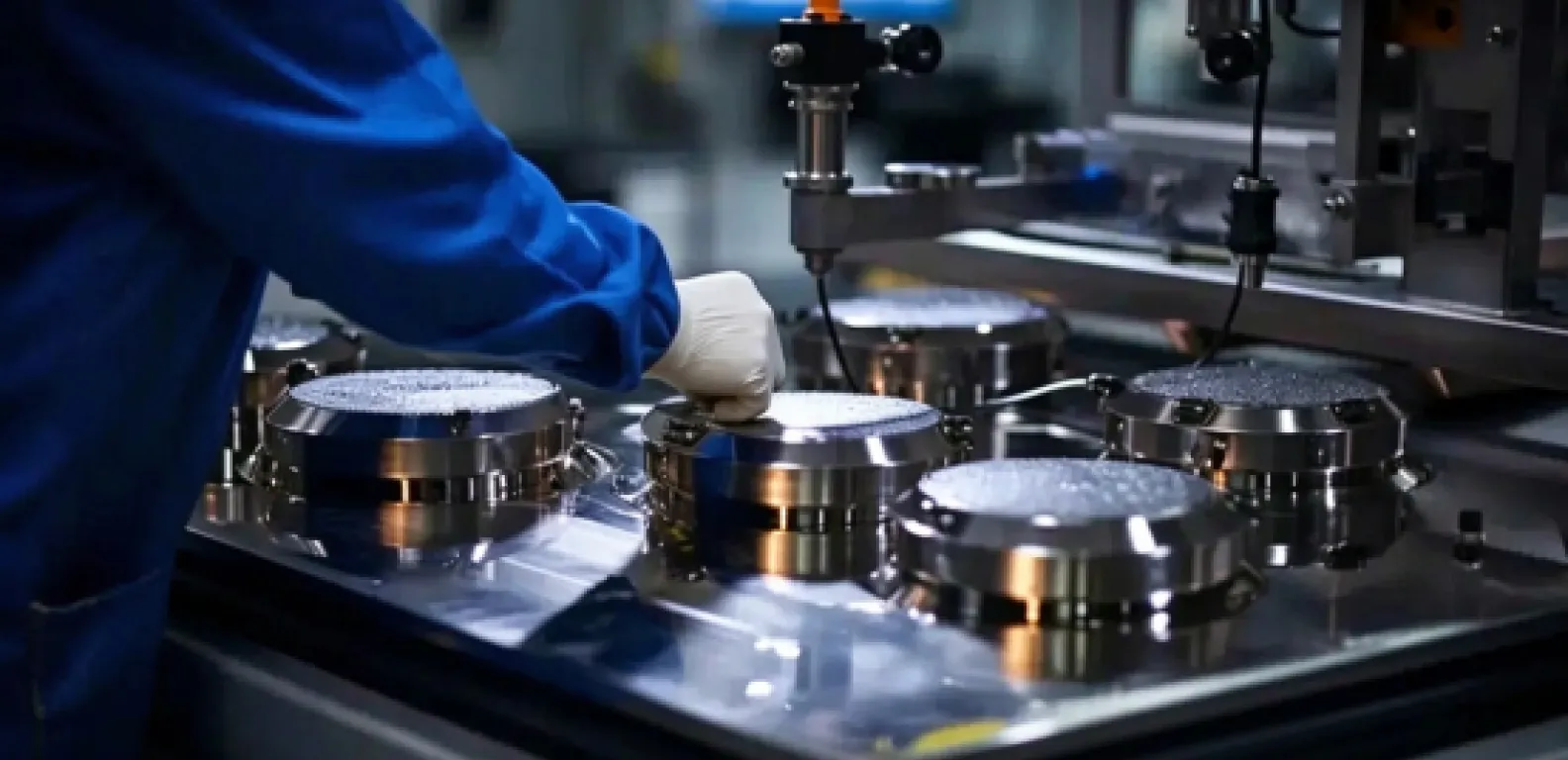
1. Manual Mechanical Grinding and Polishing
Operators grind and polish wetted surfaces step by step, from rough grinding through fine grinding to finishing, using grinding wheels, abrasive paper, and oil stones.
Chemical service fit: rough polishing and local defect repair on open impellers, outer pump casings, and large volutes; mostly applied to circulation pumps handling low-corrosivity clean media.
- Advantages: low capital investment with no dedicated equipment; flexible for targeted repair of local wear and casting defects; wide adaptability to impeller dimensions and profiles; compatible with cast steel, fluoroplastic lined, and stainless steel constructions.
- Limitations: most chemical pumps use closed impellers with three-dimensional twisted blades, where grinding force and direction are difficult to control manually and highly skilled fitters are required; narrow internal passages are hard to reach, giving low throughput unsuited to mass production; surface consistency depends heavily on the operator, and surface pits become pitting-corrosion initiation sites in corrosive media. Not suitable for high-demand services such as lithium battery electrolyte or pharmaceutical intermediate transfer.
2. Abrasive Flow Machining (AFM)
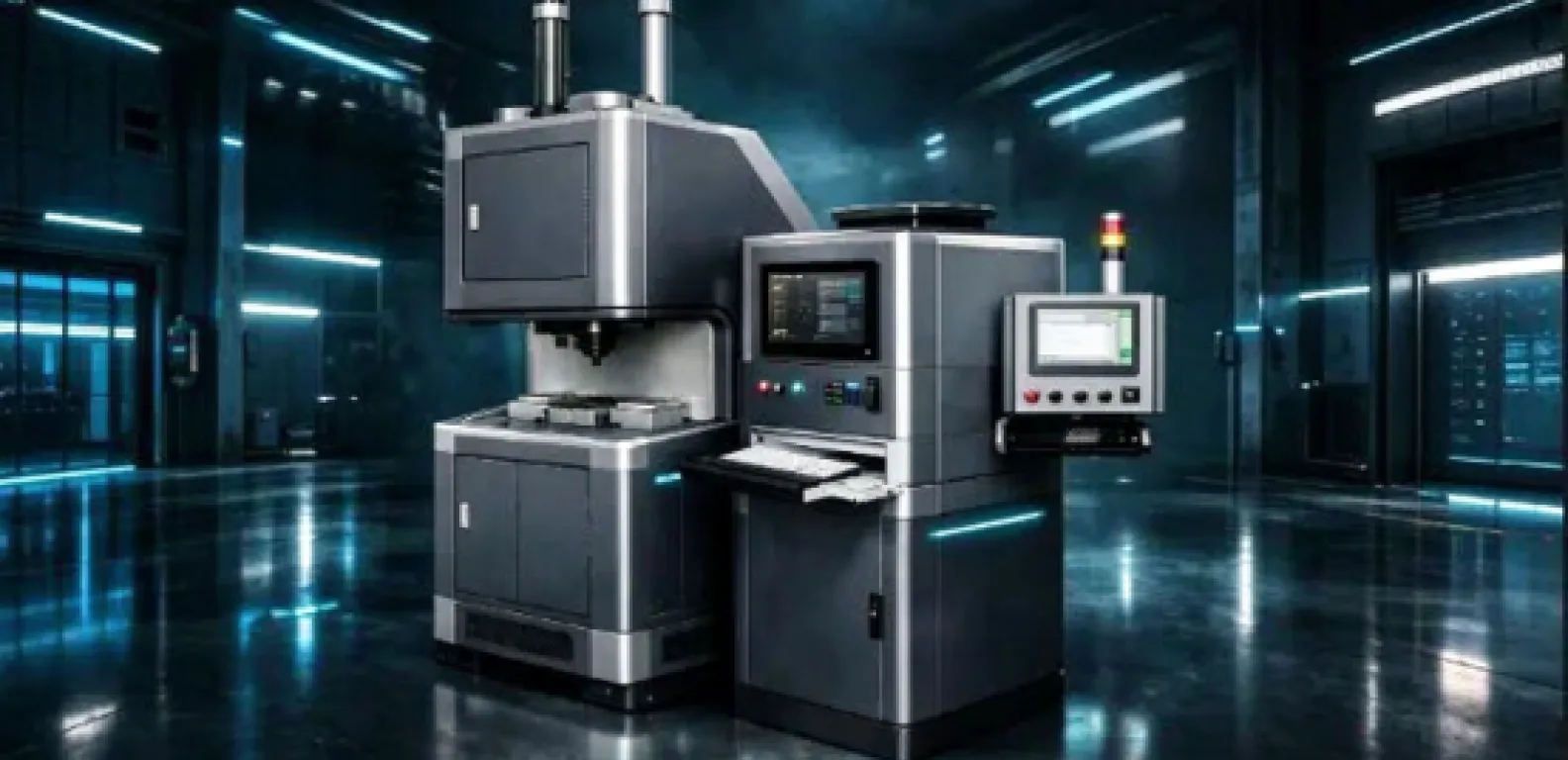
A viscoelastic polymer carrier mixed with abrasive particles is forced under controlled pressure to flow repeatedly through the internal passages of impellers and volutes. The micro-cutting action of the abrasive polishes curved inner surfaces, and the flexible medium reaches confined passages that rigid tools cannot access.
Chemical service fit: the preferred internal polishing solution for closed chemical centrifugal pump impellers and narrow-channel designs, including fluoroplastic lined and stainless steel corrosion-resistant pumps. Widely used in electrolyte transfer, acid and alkali leaching, and chemical wastewater carrying minor solids.
- Advantages: the flexible abrasive penetrates complex twisted passages of closed impellers, solving the long-standing internal polishing bottleneck; chemically inert, low-aggressiveness abrasives leave minimal residual stress, lowering stress-corrosion cracking risk; uniform material removal leaves no debris trapped in surface micropores, reducing crystallization and stagnation risk; one abrasive system covers 316L, 2205 duplex, cast steel, and other pump materials.
- Limitations: under constant pressure the inlet section tends to over-grind, a risk we control through pulsed pressure and custom fixture compensation; closed free-form impellers need custom fixtures and angular adjustment, so process debugging workload is high; equipment and consumable media are costly, and the machining cycle is relatively long.
For chemical pumps running 24/7 on electrolyte and waste electrolyte in lithium production, AFM is a cost-effective internal finishing option.
3. Electropolishing
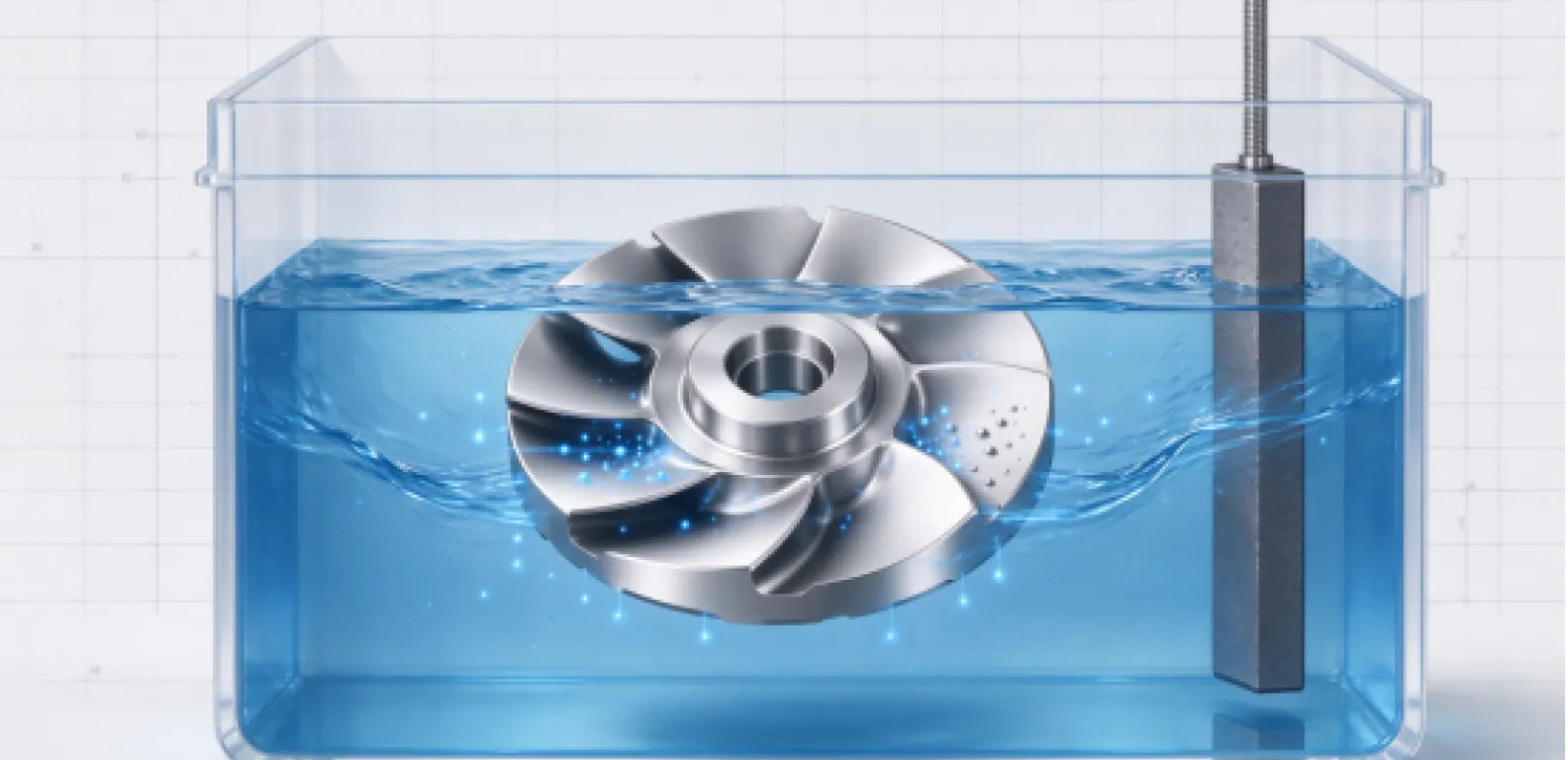
The metallic workpiece serves as the anode and an inert metal as the cathode. In a specialized electrolyte, micro-protrusions on the surface dissolve preferentially through electrochemical reaction, smoothing the surface.
Chemical service fit: limited to conductive corrosion-resistant metals such as stainless steel and duplex stainless steel, targeted at pharmaceutical intermediates, fine chemicals, sanitary-grade transfer, and high-purity reagent service. Not applicable to cast iron or non-metallic lined pumps.
- Advantages: not restricted by complex curved geometry, so all inner flow surfaces polish uniformly; high achievable finish, stable down to Ra 0.28 μm or finer, which reduces adhesion and fouling of high-viscosity media; thickens the passive film on stainless steel from roughly 3 nm to 6 nm, substantially improving resistance to pitting and intergranular corrosion in weak acid and salt solutions; uniform appearance suited to batch processing with good productivity.
- Limitations: strict material restriction to conductive metals, so fluoroplastic and FRP impellers cannot be electropolished; electrolyte management, waste treatment, and occupational safety require attention; minor material removal must be calculated into the hydraulic design allowance in advance; the process window for current density, temperature, and duration is narrow, and small parameter deviations compromise anti-corrosion performance.
4. Magnetic Abrasive Finishing and Magnetorheological Polishing
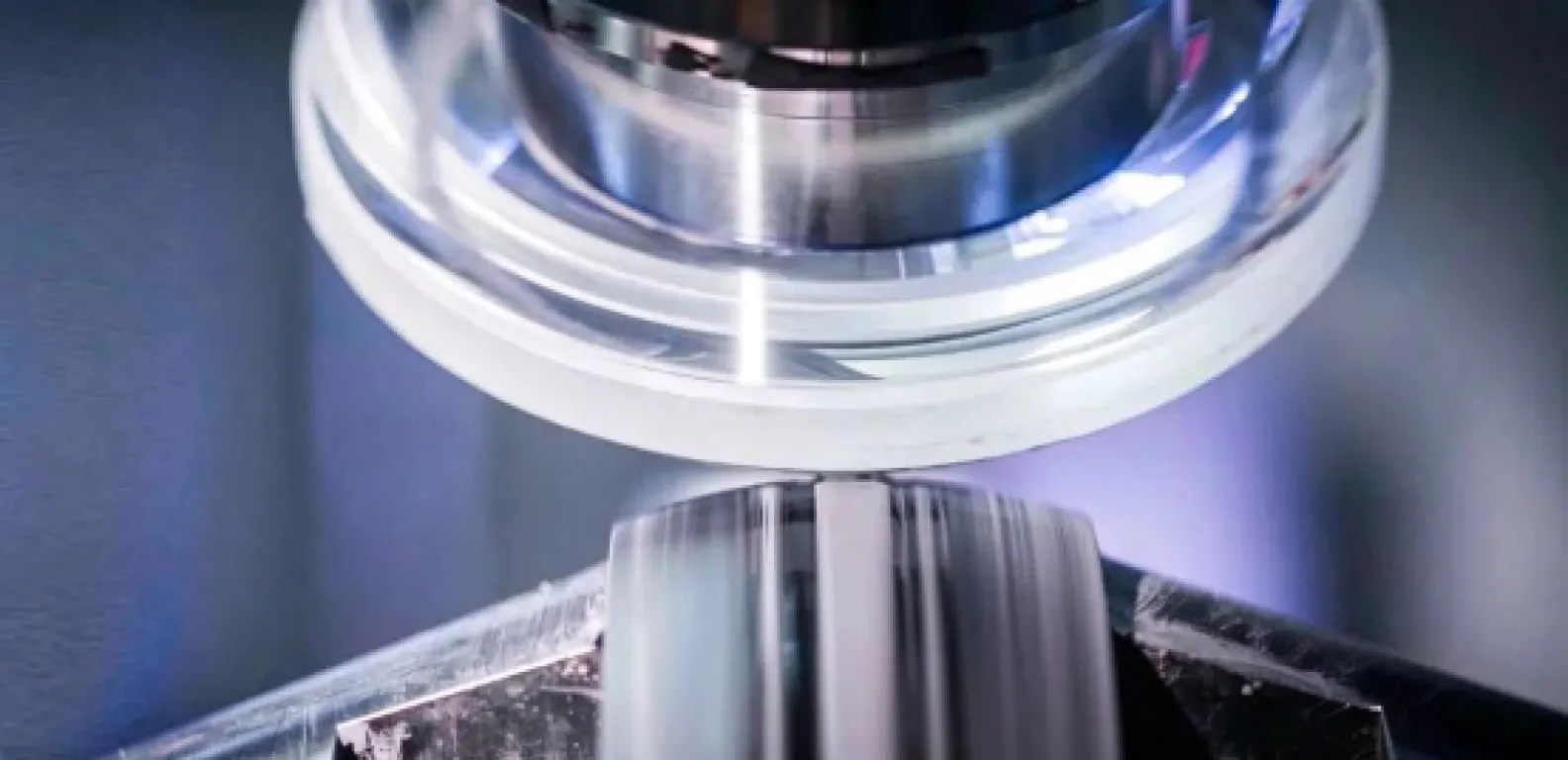
Magnetic abrasive finishing uses a magnetic field to organize magnetic abrasives into a flexible brush for micro-grinding. Magnetorheological polishing tunes the rheological behavior of a magnetorheological fluid through field gradients for ultra-precision finishing. Both are flexible polishing technologies.
Chemical service fit: ultra-precision finishing of impellers for high-end fine chemical pumps transferring special high-purity media, mainly small-batch custom parts rather than mass production.
- Advantages: the flexible magnetic brush conforms to curved profiles without scratching the base material or damaging anti-corrosion layers; ultra-precision mirror finishing is achievable; minimal thermal impact with no surface burning or new corrosion-sensitive layers; automated, repeatable process control.
- Limitations: magnetic abrasives have constrained motion zones in static fields, making uniform grinding of large volutes and large-diameter impellers difficult; magnetic field equipment carries high capital cost; abrasive performance and field control are demanding, and large-scale application on big-bore chemical pumps remains immature.
5. Ultrasonic Vibration Polishing
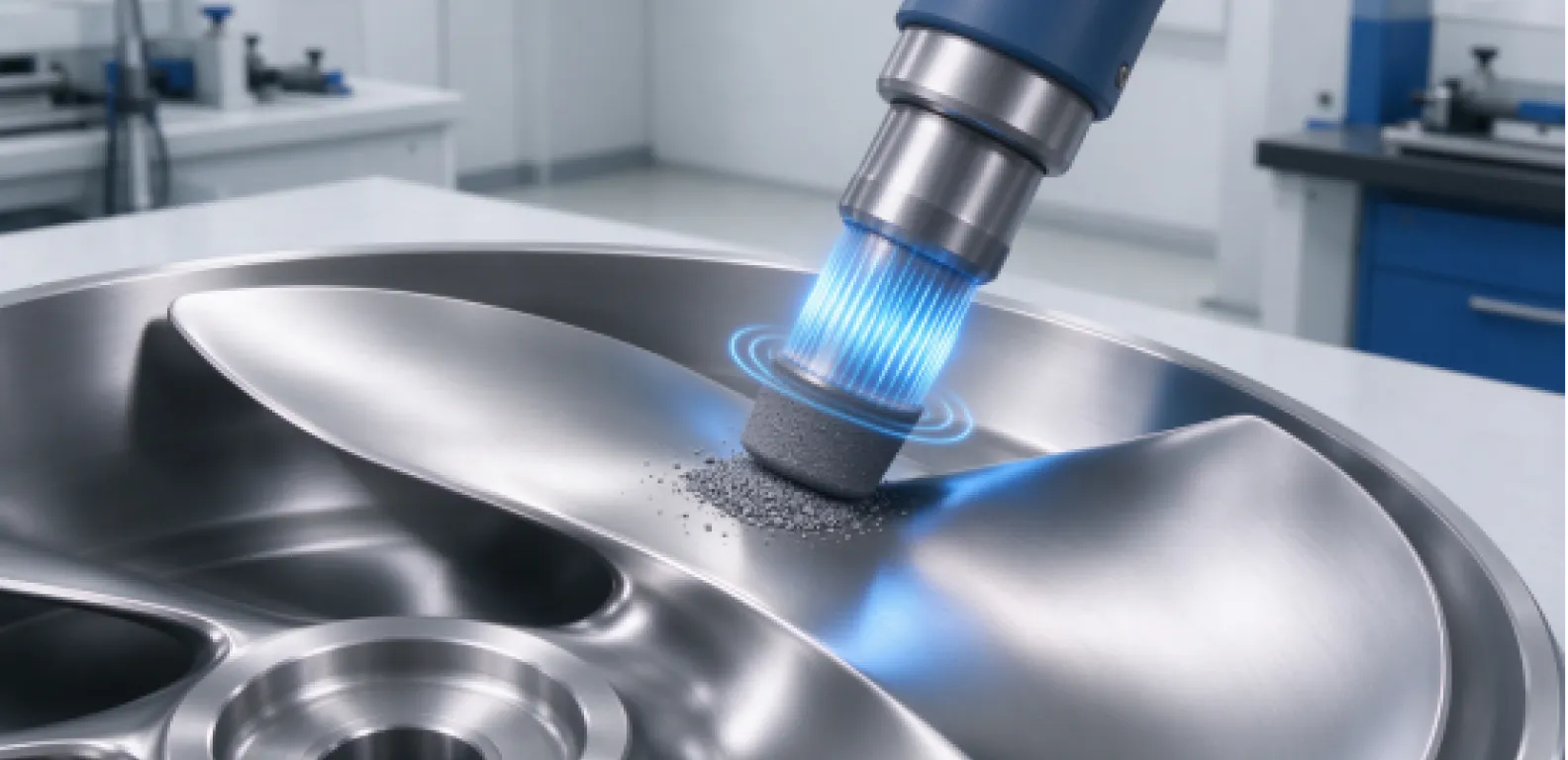
High-frequency ultrasonic vibration is superimposed on conventional polishing tools, so abrasives perform high-frequency micro-impact and micro-cutting that improve efficiency and surface quality. It is mostly deployed as a secondary step within combined polishing workflows.
Chemical service fit: precision finishing on accessible outer surfaces of chemical pump impellers, often paired with AFM for high-pressure chemical process pumps.
- Advantages: high polishing efficiency with roughness down to approximately Ra 0.2 μm after finishing; gentle cutting force with low surface-damage risk, suitable for thin-blade stainless steel impellers.
- Limitations: limited tool access, so it cannot independently polish deep cavities and narrow internal passages of closed impellers; dedicated ultrasonic equipment requires high investment; rarely used as a standalone process in chemical pump manufacturing.
6. Combined Polishing Processes
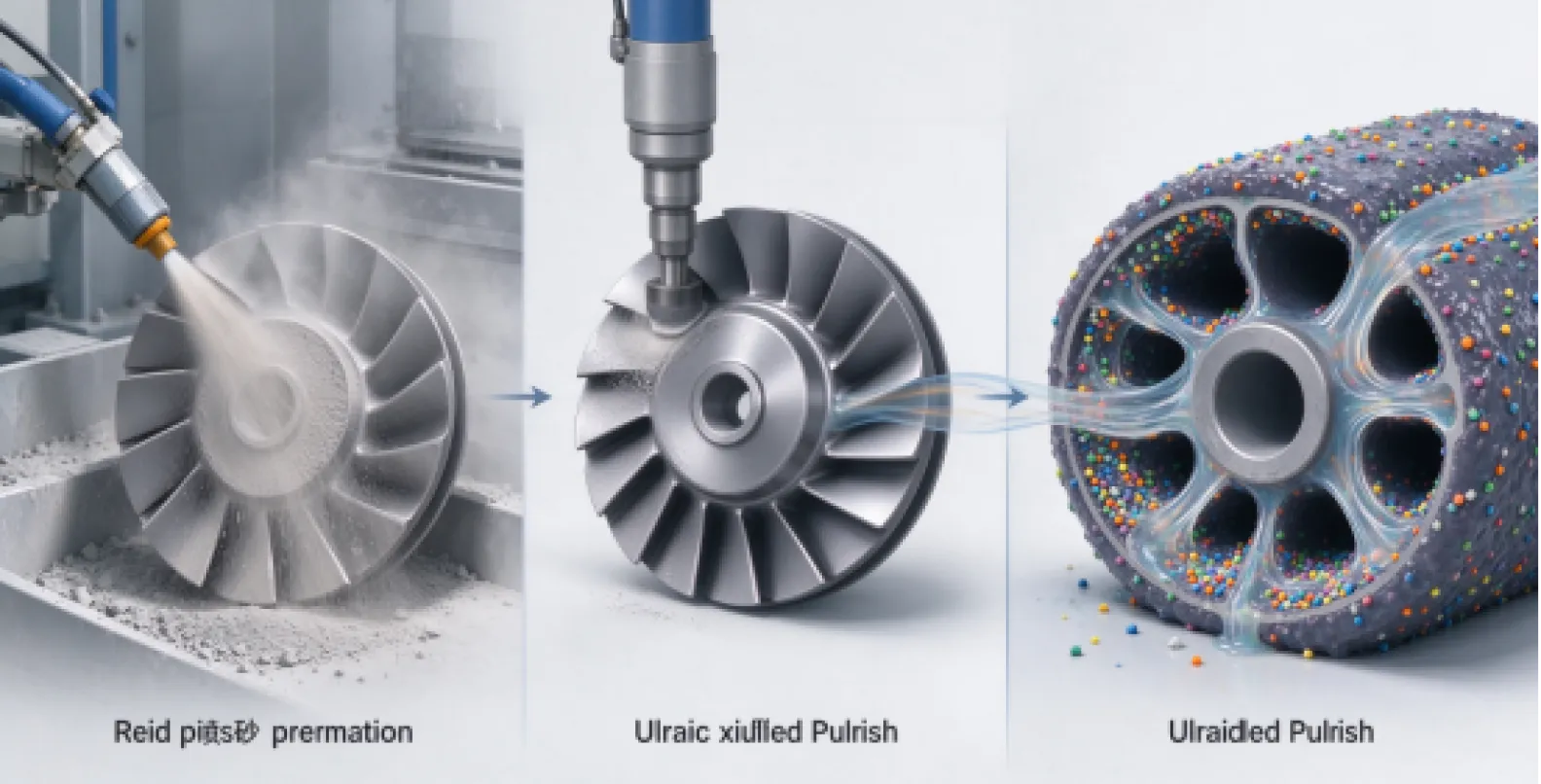
Two or more methods are combined to draw on their respective strengths and finish both outer surfaces and internal flow passages. This is the preferred solution for premium chemical centrifugal pumps. Typical workflows for chemical industry:
- Wet blasting pretreatment → ultrasonic polishing of outer impeller surfaces → AFM of internal passages: for high-pressure low-flow chemical pumps and corrosive media with trace solids.
- Mechanical rough polishing (400# → 800#) → electropolishing: for sanitary-grade stainless steel pumps in fine chemical and pharmaceutical intermediate service.
- Stepwise abrasive polishing, rough (1-10 μm abrasive) → fine (0.5-1 μm) → ultra-fine (0.05-0.1 μm): mirror finish for high-viscosity fluid transfer.
- Advantages: covers outer surfaces and internal passages in one scheme, balancing hydraulic efficiency, corrosion resistance, and anti-fouling performance; top-tier surface quality with a stable mirror finish below Ra 0.2 μm; balanced performance and throughput for custom pumps in high-end chemical projects.
- Limitations: long workflow with multiple sequential operations; high total investment across several equipment sets; strict control over process handover and parameter matching, demanding disciplined manufacturing management.
Selection Guide by Chemical Service
- Open impellers, simple geometry, cost priority: manual mechanical grinding or ultrasonic vibration polishing, for general neutral chemical wastewater circulation.
- Closed impellers, narrow flow channels, acid-alkali or electrolyte transfer: AFM is the mainstream choice for internal polishing of closed chemical impellers.
- Stainless steel construction, high-purity reagent, fine chemical and pharmaceutical service: electropolishing is recommended where corrosion resistance and cleanability dominate.
- High-viscosity media with anti-crystallization and anti-fouling requirements: adopt a combined polishing process for mirror flow surfaces.
- High-pressure low-flow chemical process pumps: wet blasting pretreatment plus ultrasonic outer polishing plus AFM internal polishing.
Important note: for chemical pumps, a brighter surface is not automatically better. In slurry service with hard abrasive particles, mirror polishing brings limited benefit while manufacturing cost rises sharply. For highly corrosive media, passivation and post-polishing corrosion resistance take priority over pursuing ultra-high finish. Slurry-duty UHB-ZK pumps, for example, rely on thick UHMWPE wetted surfaces rather than mirror-polished metal.
Closing Remarks
Polishing of wetted components is a critical manufacturing step that shapes hydraulic performance, corrosion resistance, and life-cycle energy consumption of chemical centrifugal pumps. No single process fits every application, and each technology carries inherent limits. Drawing on extensive chemical pump project experience, YFLK (Yftel) develops customized polishing solutions for wet lithium chemistry, electroplating, fine chemicals, hazardous waste, and wastewater treatment, balancing efficiency gain, corrosion life, and project cost against medium corrosivity, solid content, operating mode, and material. Share your medium, pump model, and duty conditions with our engineering team, and we will recommend the polishing scheme that fits your process and budget.
Frequently Asked Questions (FAQ)
- Will polishing a chemical pump impeller definitely improve efficiency?
Within a reasonable roughness range, polishing reduces hydraulic friction loss in the flow passages. Our tests show efficiency gains of around 5% after impeller polishing. However, when the medium carries large amounts of hard abrasive particles, the polished surface wears quickly and the long-term benefit is limited, so working conditions should be evaluated before investing in polishing. - Can electropolishing be applied to fluoroplastic lined pump impellers?
No. Electropolishing requires a conductive workpiece, and fluoroplastics and FRP are non-conductive. For internal polishing of fluoroplastic lined pumps, AFM or precision post-molding finishing is the preferred route. - Does AFM change impeller hydraulics and shift the performance curve?
Under a qualified process, AFM is a micro-removal method. Machining allowance is calculated in advance, and custom fixtures with pulsed pressure control prevent over-grinding at inlets, keeping passage geometry and the performance curve stable. Excessive removal would alter head and flow, which is why full process alignment matters at the initial stage. - Why does electropolishing improve the corrosion resistance of stainless steel pumps?
It flattens micro-pits that would otherwise initiate corrosion, and it promotes a denser, thicker passive film on stainless steel, improving resistance to pitting and chloride attack. This suits weak acid, salt solution, and high-purity reagent services. - Which polishing do you recommend for 24/7 electrolyte transfer in lithium production?
AFM is the first choice for internal polishing of closed impellers. Where superior corrosion resistance and cleanability are also required, a combined process of mechanical rough grinding plus AFM internal polishing is available. - Can a polished impeller be re-polished during maintenance and refurbishment?
Yes, after assessing remaining wall thickness and the extent of corrosion or cavitation damage. Re-polishing is feasible when sufficient wall thickness remains; if damage is severe and the wall is too thin, impeller replacement is recommended instead.
-

YFTEL Pumps
Fluid Engineers & Technical Support, YFTEL Pump
YFTEL is a chemical pump manufacturer based in Hangzhou, China, with a 26,000 m² production base in Hangzhou, China, with a 26,000 m² production base in Anhui. Using the CAS-patented Fluoroplastic Alloy material, we produce 300+ models of corrosion-resistant pumps, valves and piping, exported to 30+ countries.