
 English

The Engineering Physics of Viscous Fluid Transfer
In chemical processing, fluid viscosity fundamentally alters the hydraulic dynamics of pumping systems. Standard centrifugal pumps are engineered and tested using water at 20°C, which has a kinematic viscosity of 1 centistoke (cSt). When a plant attempts to transfer highly viscous media—such as polymer resins, concentrated syrups, heavy hydrocarbons, glycerin, or high-density slurries—the internal fluid mechanics deviate drastically from standard performance curves. Viscosity measures a fluid’s internal resistance to flow and shear. As viscosity increases, the fluid boundary layer thickens against the internal volute walls and the impeller shrouds. This elevated internal friction disrupts the conversion of kinetic energy into pressure energy, triggering a severe decline in hydraulic efficiency, a moderate reduction in total dynamic head (TDH), a slight drop in flow capacity, and an aggressive spike in required brake horsepower (BHP).
Understanding these performance penalties is mandatory for safe and efficient plant operation. Failing to apply the correct viscous derating factors results in undersized motors, frequent overload trips, severe overheating, and catastrophic mechanical seal failures. This technical whitepaper dissects the methods for correcting centrifugal pump performance curves for high-viscosity fluids, defines the operational limits for kinetic pumps, and outlines the system engineering requirements for transferring heavy chemical fluids.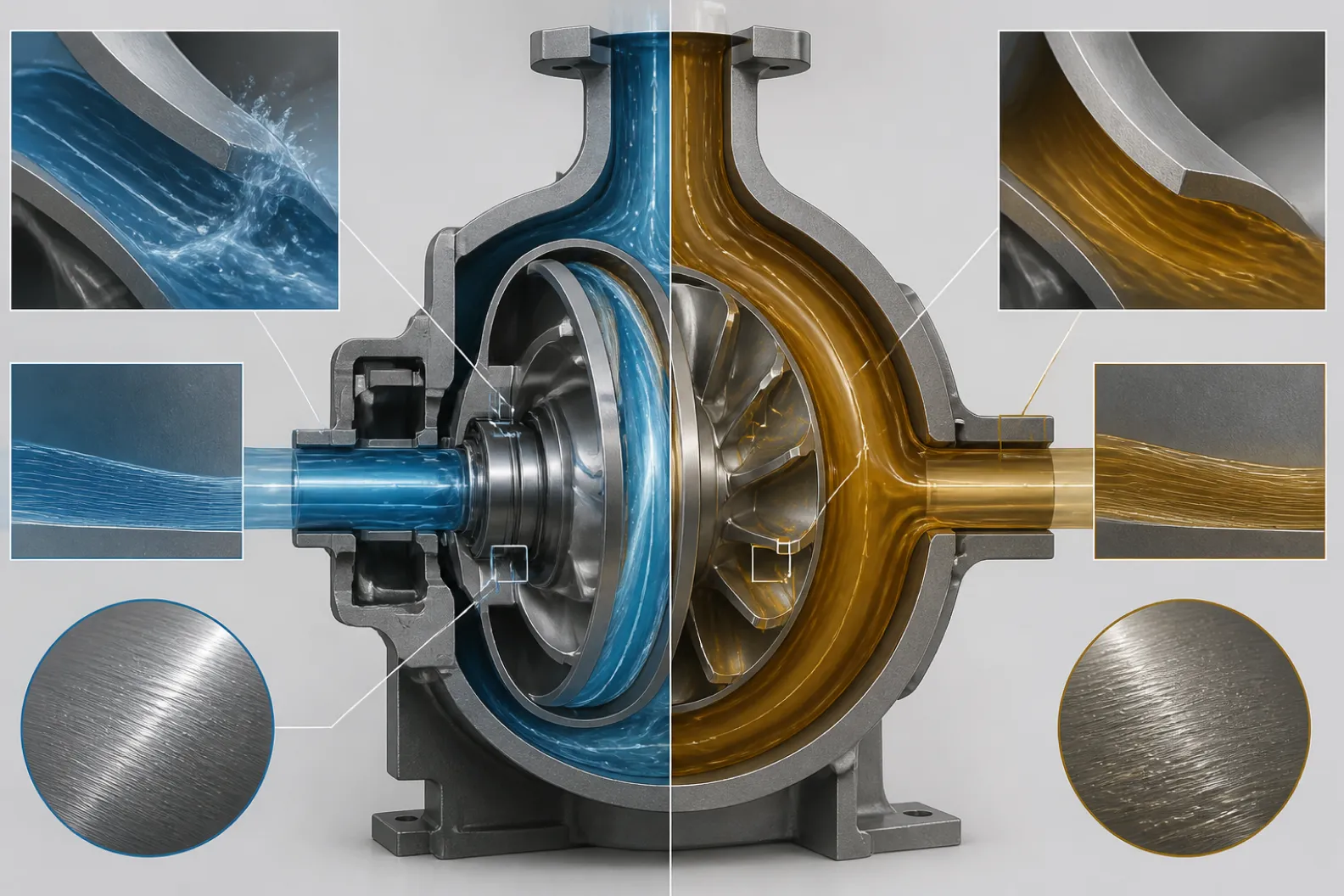
How Viscosity Degrades Centrifugal Pump Performance
The operational degradation caused by viscous fluids is not uniform across all hydraulic parameters. The impact is primarily driven by disk friction and increased fluid drag within the narrow impeller passages.
The Disk Friction Effect
Disk friction is the power consumed by the impeller rotating in a viscous fluid environment. It scales heavily with the fluid's kinematic viscosity and the impeller's outer diameter. In low-viscosity fluids like water, disk friction accounts for a negligible percentage of total power consumption. However, as viscosity exceeds 100 cSt, the viscous shear forces acting on the outside of the rotating impeller shrouds multiply. A substantial portion of the motor's shaft power is absorbed simply to overcome this liquid friction, rather than generating useful head and flow. This energy is converted directly into heat, which can raise the fluid temperature inside the casing—a critical hazard when handling temperature-sensitive chemicals or volatile solvents.
Impact on Flow, Head, and Efficiency
Extensive empirical testing by the Hydraulic Institute (HI) dictates how performance curves shift under viscous conditions. The changes are quantified by correction factors: $C_Q$ for flow, $C_H$ for head, and $C_{\eta}$ for efficiency.
- Efficiency Drop ($C_{\eta}$): The most severe penalty. For a fluid with a viscosity of 200 cSt, hydraulic efficiency can easily plummet by 30% to 50% compared to its water baseline.
- Head Reduction ($C_H$): The total dynamic head at the Best Efficiency Point (BEP) decreases moderately. The highest head losses occur at runout (high flow rates).
- Flow Reduction ($C_Q$): Flow rate at BEP is slightly reduced, typically by 5% to 15% at moderate viscosities.
- Power Consumption (BHP): Because efficiency plummets while head and flow drop only slightly, the required motor power spikes dramatically. A pump transferring 300 cSt resin may require a motor two to three times larger than the same pump transferring water.
Applying Hydraulic Institute (HI) Viscosity Corrections
Proper pump selection requires derating the manufacturer's published water performance curve to match the specified viscous operating point. The standard industrial methodology relies on the ANSI/HI 9.6.7 standard.
First, specify the required viscous duty point (viscous flow $Q_{vis}$ and viscous head $H_{vis}$). Next, utilize the HI viscosity correction charts or calculation algorithms, which depend on the pump's specific speed, flow rate, and the fluid's kinematic viscosity. The charts yield the correction factors ($C_Q, C_H, C_{\eta}$). By dividing the desired viscous performance by these factors ($Q_{water} = Q_{vis} / C_Q$ and $H_{water} = H_{vis} / C_H$), the engineer calculates the equivalent water performance. The pump is then selected based on this higher, equivalent water duty point.
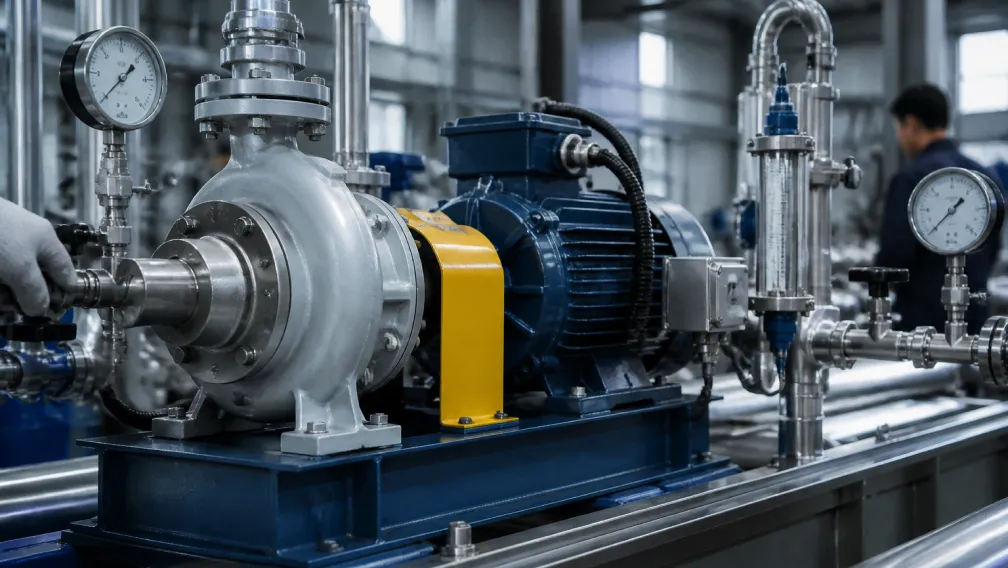
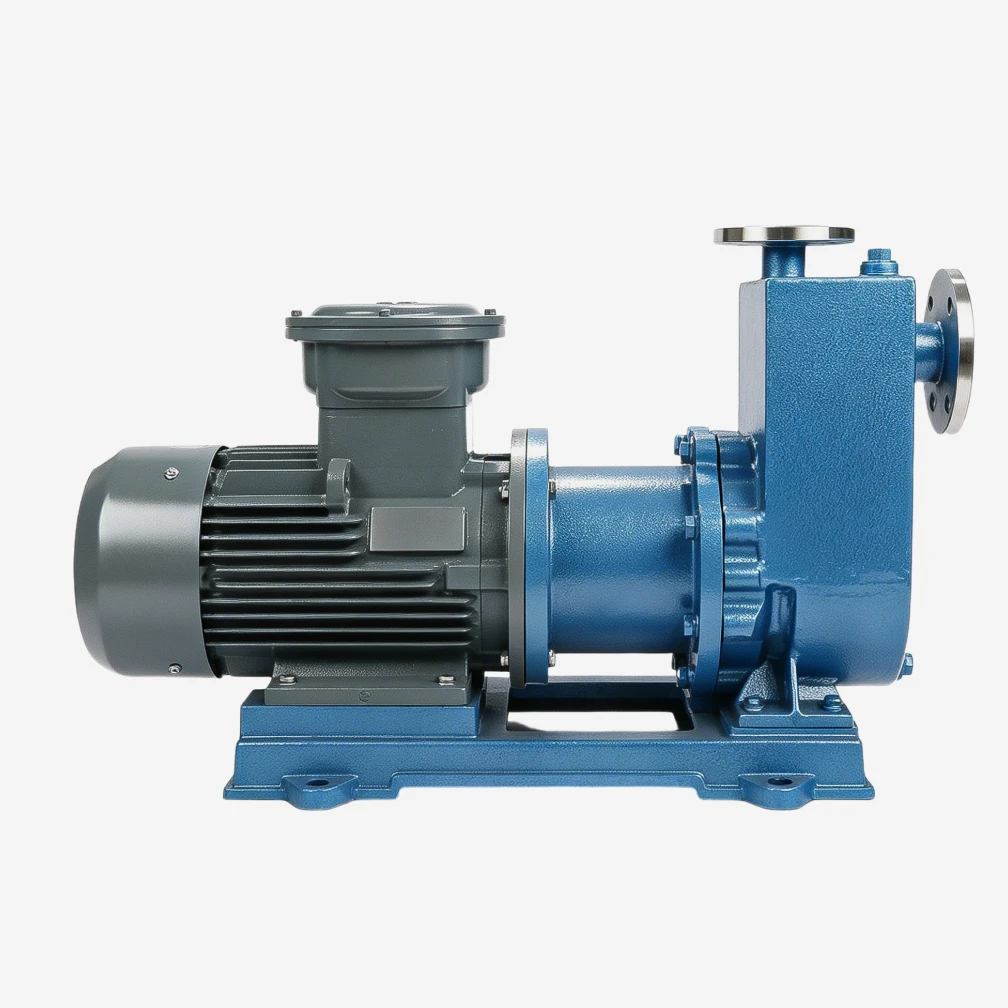
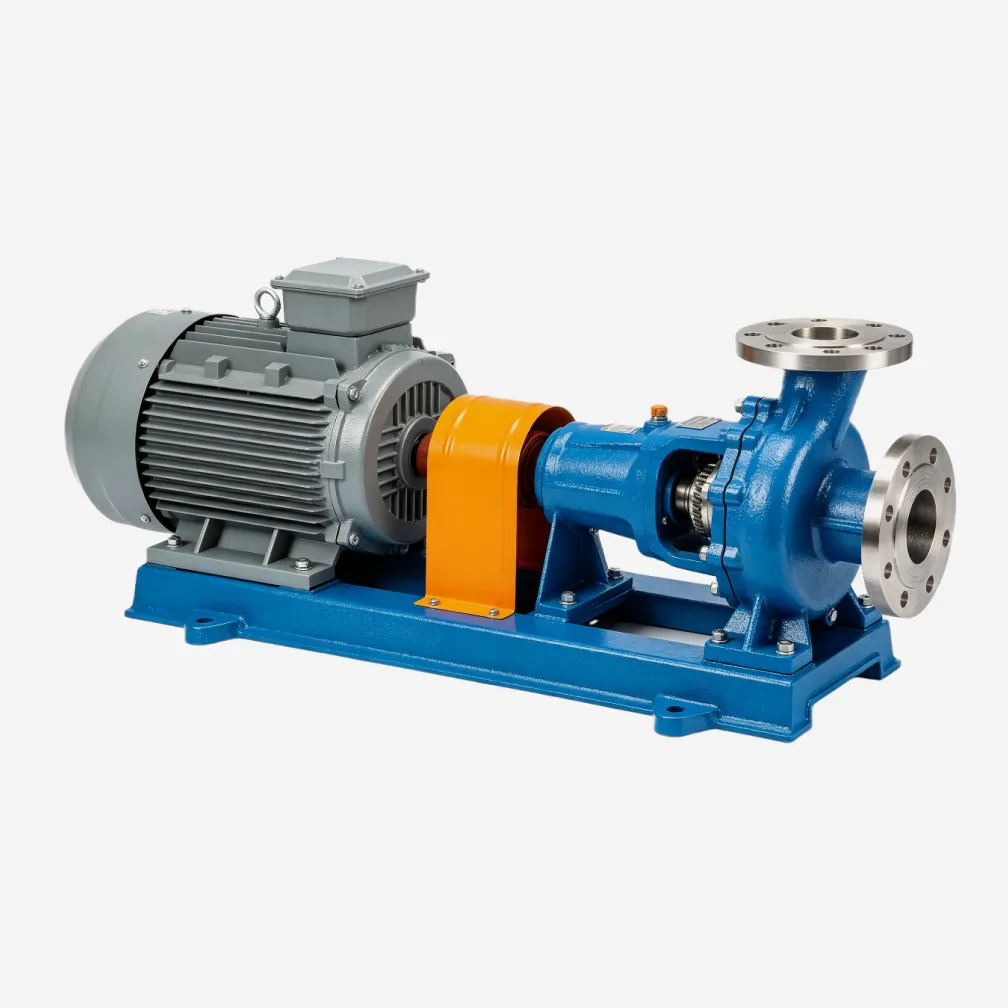
For example, to deliver $100 m^3/h$ of 250 cSt oil at 50 meters of head, the equivalent water performance might be $110 m^3/h$ at 55 meters of head. The engineer must specify a robust unit, such as the IH stainless steel centrifugal pump, capable of hitting the equivalent water point, and then install a significantly oversized electric motor to handle the viscous BHP load.
Technology Selection: Centrifugal vs. Positive Displacement Boundaries
While centrifugal pumps can be forced to handle viscous fluids by applying aggressive correction factors and installing massive motors, there is an absolute physical and economic threshold where kinetic pumping becomes unviable.
The 300 cSt Boundary for Centrifugal Pumps
Up to 100 cSt: Standard centrifugal pumps perform reliably with minor efficiency losses. Sizing up the motor is usually sufficient.
100 cSt to 300 cSt: Centrifugal pumps are still applicable, but efficiency drops sharply. Open or semi-open impellers are highly recommended to prevent clogging and reduce internal friction. The clearance between the impeller and casing must be optimized.
300 cSt to 500 cSt: This is the extreme upper boundary for centrifugal technology. Only heavy-duty process pumps with oversized shafts and reinforced bearings can survive. Energy costs will be extraordinarily high due to low hydraulic efficiency.
Above 500 cSt: The transition to Positive Displacement (PD) pumps (such as gear, progressive cavity, or lobe pumps) is mandatory. PD pumps operate on volumetric principles; their efficiency actually increases with viscosity because thicker fluids reduce internal slip (internal leakage).
Magnetic Drive Constraints for Viscous Media
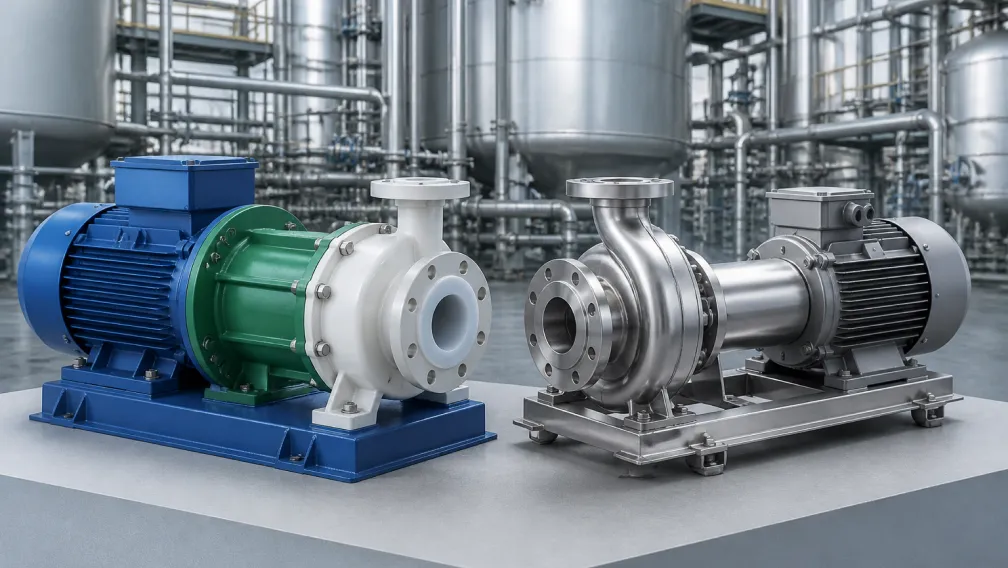
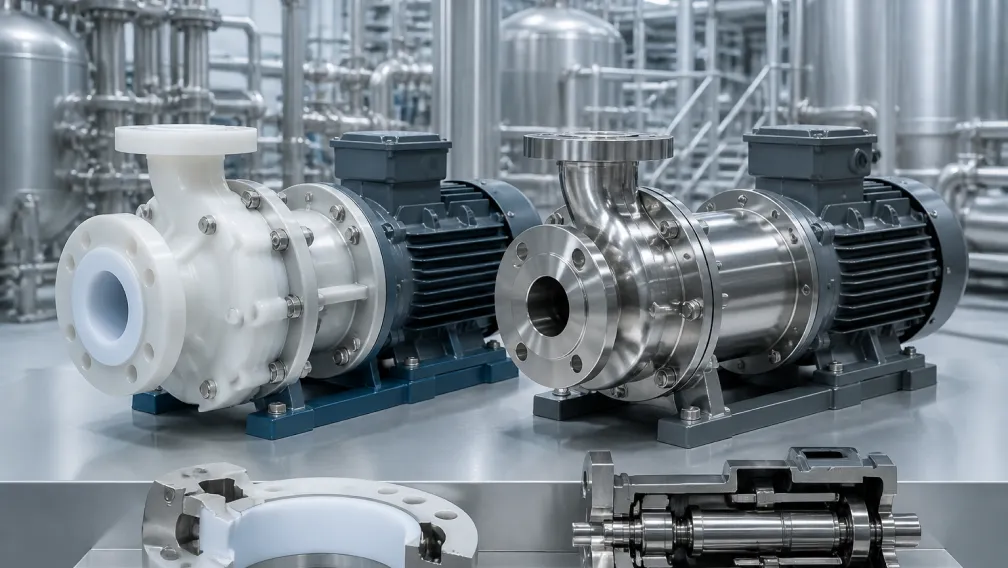
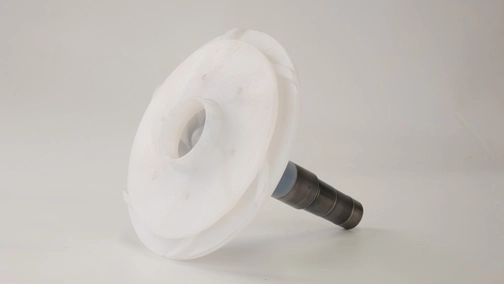
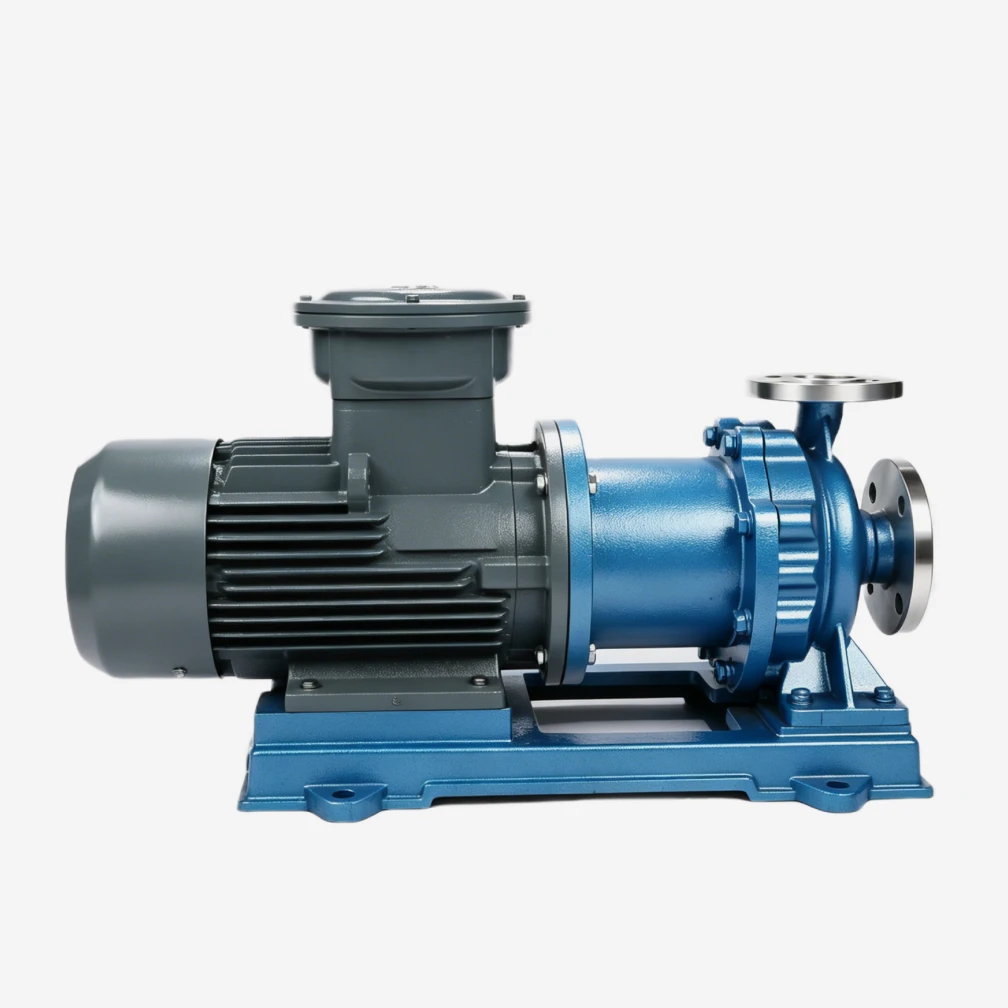
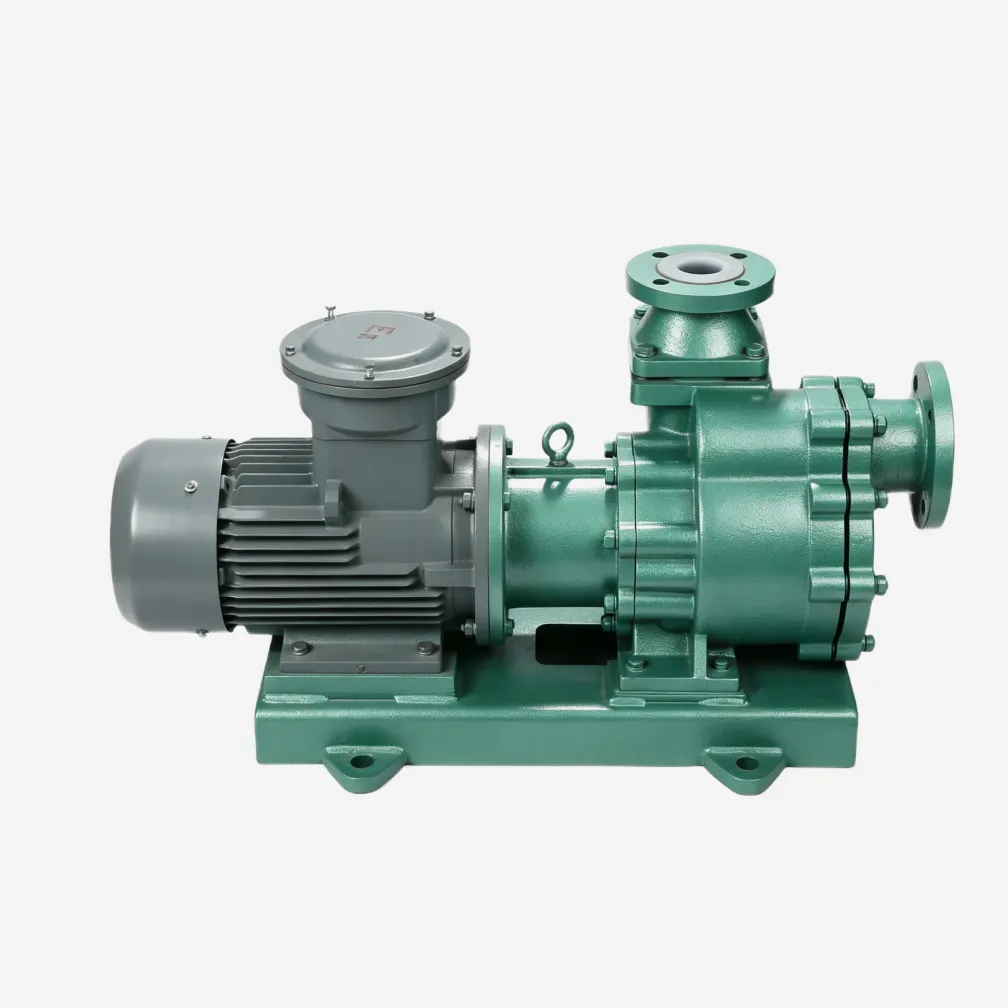
When handling highly hazardous, toxic, or high-purity viscous chemicals, plant safety demands zero-leakage fluid containment. However, specifying CQB fluoroplastic lined magnetic drive pumps for viscous fluids requires strict engineering oversight. Highly viscous fluids transmit massive torque loads from the impeller to the inner magnetic rotor. If the fluid drag exceeds the magnetic coupling's holding force, the pump will decouple (the outer magnet spins while the inner magnet stalls), leading to rapid bearing destruction.
Furthermore, standard magnetic drive pumps rely on the process fluid to lubricate their internal silicon carbide sleeve bearings. High-viscosity fluids struggle to penetrate the microscopic clearances of these plain bearings, leading to dry-running conditions, localized boiling, and thermal shock. For transferring hazardous viscous solvents at elevated temperatures, the CQL stainless steel magnetic drive pump can be utilized, provided the magnetic coupling is significantly oversized (typically selected to provide 150% of the calculated maximum torque) and external flush plans are implemented to cool the containment shell.
Managing Non-Newtonian Fluids
In the chemical sector, many viscous fluids are non-Newtonian, meaning their viscosity is not constant but changes under mechanical shear stress. The pump impeller is a high-shear device.
Shear-Thinning (Pseudoplastic) Behaviors
Many polymer solutions, resins, and pharmaceutical fine chemicals exhibit shear-thinning behavior. When resting in a tank, they appear as thick, high-viscosity gels. However, once they enter the pump casing and are subjected to the intense mechanical shear of the spinning impeller, their apparent viscosity drops dramatically. Centrifugal pumps actually perform better than calculated on shear-thinning fluids because the fluid thins out inside the volute, reducing disk friction and restoring hydraulic efficiency.
Shear-Thickening (Dilatant) Behaviors
Conversely, shear-thickening fluids (such as certain high-concentration solid suspensions) become thicker and more viscous when subjected to shear force. Applying a standard high-speed centrifugal pump to a dilatant fluid will cause the apparent viscosity inside the casing to spike exponentially, instantly overloading the motor and potentially fracturing the pump shaft. Dilatant fluids must be handled at very low velocities using specialized positive displacement technologies or low-speed, heavy-duty UHB-ZK centrifugal slurry pumps with generous internal clearances.
System Engineering for Viscous Chemical Piping
Optimizing the pump is useless if the attached piping chokes the system. High viscosity generates severe frictional pressure drops across the suction line, which exponentially reduces the Net Positive Suction Head available (NPSHa). If NPSHa drops below NPSHr, the viscous fluid will cavitate.
To combat this, the suction piping for viscous transfer must be oversized—often two to three pipe sizes larger than the pump's suction flange. Suction lines must be kept extremely short, with minimal elbows, and completely devoid of restrictive strainers. When utilizing lined pumps for corrosive viscous media, the internal polymer lining (PFA/PTFE) offers a smoother surface finish than cast metal, which provides a marginal but beneficial reduction in pipe friction.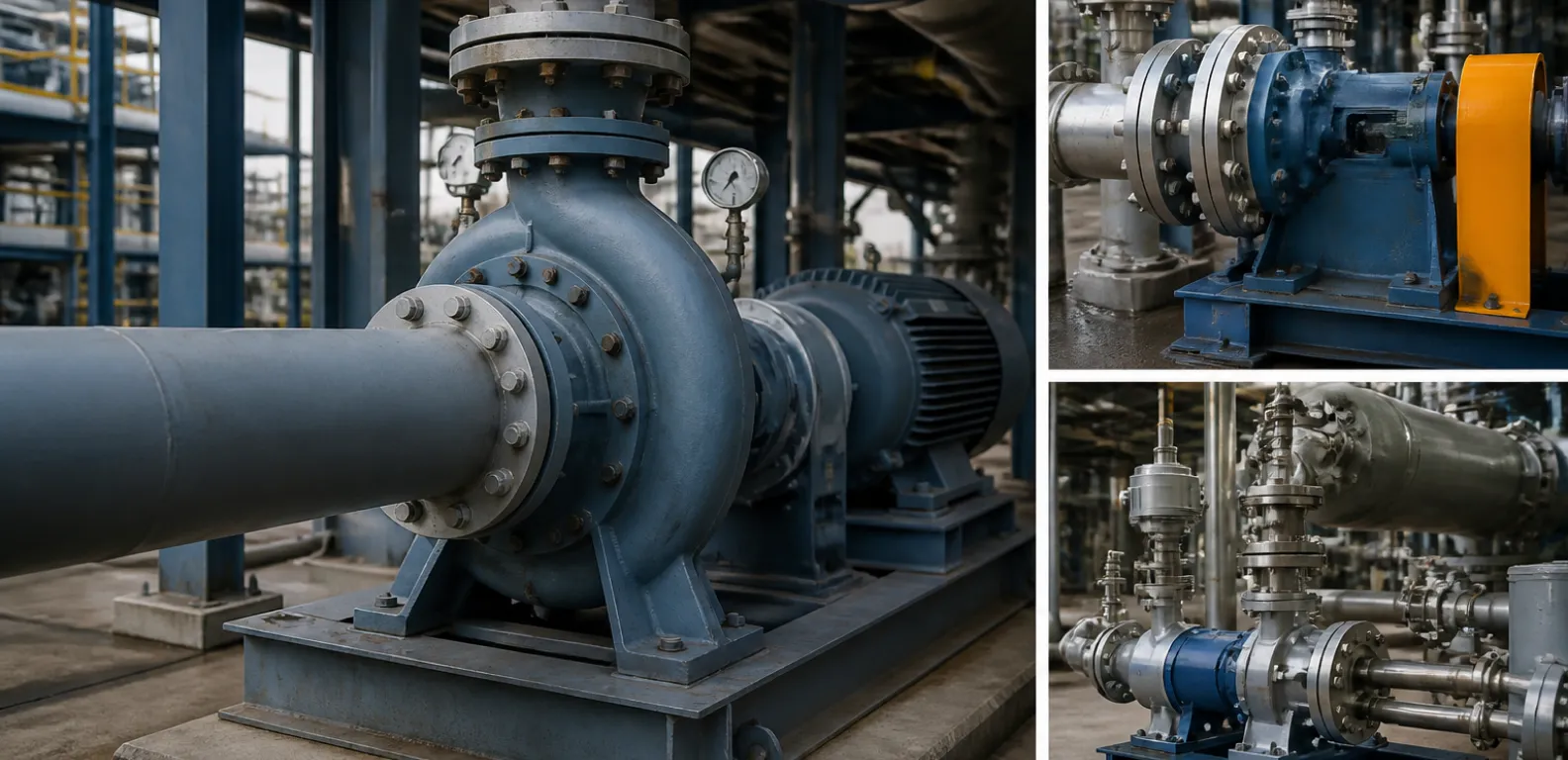
Conclusion and Engineering Support
Successfully pumping high-viscosity chemical fluids requires balancing thermodynamic fluid properties against mechanical pump limitations. Relying on baseline water curves for viscous media guarantees operational failure. Plant engineers must strictly apply Hydraulic Institute derating factors, specify heavy-duty open impellers where appropriate, oversize magnetic couplings for sealless containment, and drastically expand suction piping diameters. Submit your process fluid's dynamic viscosity profile, specific gravity, operating temperature, and required flow parameters to our technical department. We will architect a robust industrial pump solution matched exactly to your chemical viscosity demands.
Frequently Asked Questions (FAQ)
- At what viscosity does a centrifugal pump stop working efficiently?
Standard centrifugal pumps begin to experience measurable efficiency drops at 50 cSt. Above 100 cSt, the efficiency penalty becomes significant, requiring oversized motors. At 300 cSt, the hydraulic efficiency is often so compromised that operating costs spike. Above 500 cSt, positive displacement pumps are universally recommended over centrifugal designs. - How does fluid viscosity affect a pump's brake horsepower (BHP)?
Viscosity increases the fluid drag and disk friction inside the pump casing. Because the pump must consume significantly more shaft power to overcome this internal fluid friction, the hydraulic efficiency drops sharply. This combination causes the required brake horsepower to spike, necessitating a much larger electric motor than would be required for pumping water at the same flow and head. - Can magnetic drive pumps handle highly viscous resins or polymers?
Yes, but with strict engineering constraints. Highly viscous fluids transmit massive torque resistance. If the torque exceeds the holding force of the magnetic coupling, the pump will decouple. Therefore, magnetic drive pumps for viscous media must be specified with drastically oversized magnetic rotors (often 150% torque rating) and careful evaluation of the internal bearing lubrication. - What is the difference between shear-thinning and shear-thickening fluids?
Shear-thinning (pseudoplastic) fluids decrease in viscosity when subjected to mechanical stress (like the spinning of a pump impeller). Centrifugal pumps handle these well. Shear-thickening (dilatant) fluids increase in viscosity under mechanical stress. High-speed centrifugal pumps will cause dilatant fluids to solidify or become immensely thick, overloading the motor instantly. - Why do viscous fluids increase the risk of cavitation?
High viscosity creates massive frictional resistance as the fluid travels through the suction piping. This friction causes a severe pressure drop before the fluid even reaches the pump inlet, drastically lowering the Net Positive Suction Head available (NPSHa). If NPSHa drops below the pump's required NPSHr, cavitation occurs. - Do I need to oversize the piping for a viscous chemical pump?
Absolutely. To counteract the extreme friction losses and protect the NPSHa, suction piping for highly viscous fluids should generally be upsized by two to three nominal pipe diameters compared to standard water piping. The pipe runs should be as short and straight as physically possible.
-

YFTEL Pumps
Fluid Engineers & Technical Support, YFTEL Pump
YFTEL is a chemical pump manufacturer based in Hangzhou, China, with a 26,000 m² production base in Hangzhou, China, with a 26,000 m² production base in Anhui. Using the CAS-patented Fluoroplastic Alloy material, we produce 300+ models of corrosion-resistant pumps, valves and piping, exported to 30+ countries.