
 English

Sodium hypochlorite is the most widely used disinfectant chemical in municipal water treatment, wastewater plants, cooling towers, and food processing. Commercial bulk product is typically supplied at 10–15% NaOCl by weight with a pH of 11–13 and a specific gravity of 1.21–1.24. It is also one of the chemicals most likely to destroy an incorrectly specified pump. Pumps fail on hypochlorite duty for two independent reasons: the fluid continuously decomposes and releases oxygen gas that accumulates inside the pump until it gas-locks, and the fluid is a powerful oxidizer that strips the passive layer from stainless steel and attacks most metals outright. A correct specification must solve both problems at once.
The short answer: for transferring 10–15% sodium hypochlorite, the reliable specification is a pump with polypropylene, PVDF, or PTFE/PFA-lined wetted parts, flooded suction, a casing vent at the high point, and EPDM, FKM, or FFKM elastomers. Where leakage is unacceptable, a fluoroplastic-lined magnetic drive pump provides zero-leakage containment, provided the installation handles the off-gassing correctly. Stainless steel of any grade is unsuitable for wetted parts; titanium is the only common metal that resists hypochlorite. The rest of this guide explains why, and how to install and operate the pump so it survives.
Why Sodium Hypochlorite Degrades Inside Your System
Sodium hypochlorite is inherently unstable. It decomposes through two parallel reactions: the dominant path, 2 NaOCl → 2 NaCl + O2, releases oxygen gas directly into the liquid, while a secondary path, 3 NaOCl → 2 NaCl + NaClO3, converts the active ingredient into sodium chlorate. Four factors accelerate both reactions:
- Temperature. As a rule of thumb, the decomposition rate roughly doubles for every 10°C rise. Product stored at 35°C loses available chlorine several times faster than product at 20°C.
- Concentration. Higher-strength product degrades disproportionately faster, which is why many plants dilute 12–15% deliveries to 5–6% for storage.
- Light. UV exposure accelerates decomposition, so outdoor tanks and translucent piping age the chemical even at moderate temperature.
- Metal ions. Traces of iron, copper, and nickel catalyze the reactions — one reason corroding metallic pump parts make the problem worse the longer they stay in service.
The practical consequences are threefold: the chemical you paid for loses strength in storage, oxygen bubbles accumulate everywhere the flow slows down, and any metallic contamination speeds up both. Pump selection has to start from this chemistry, not from the flow and head alone.
Off-Gassing and Gas Locking: The Primary Pump Killer
Every parcel of sodium hypochlorite in a quiet line is generating oxygen bubbles. In a horizontal pump casing, those bubbles migrate to the high point around the volute and the impeller eye. Once enough gas collects, the impeller spins in a gas pocket and the pump gas-locks: it runs, it makes noise, and it moves nothing. Intermittent duty makes this worst, because gas accumulates during every idle period.
Magnetic drive pumps face an additional risk. The containment shell area is a natural high point, and if gas collects there, the product-lubricated silicon carbide bearings run dry and the coupling heats until it decouples — the same failure mechanism covered in our analysis of magnetic pump dry-run and decoupling. This does not disqualify magnetic drive pumps from hypochlorite service; it dictates the installation. The mitigation package that works in practice: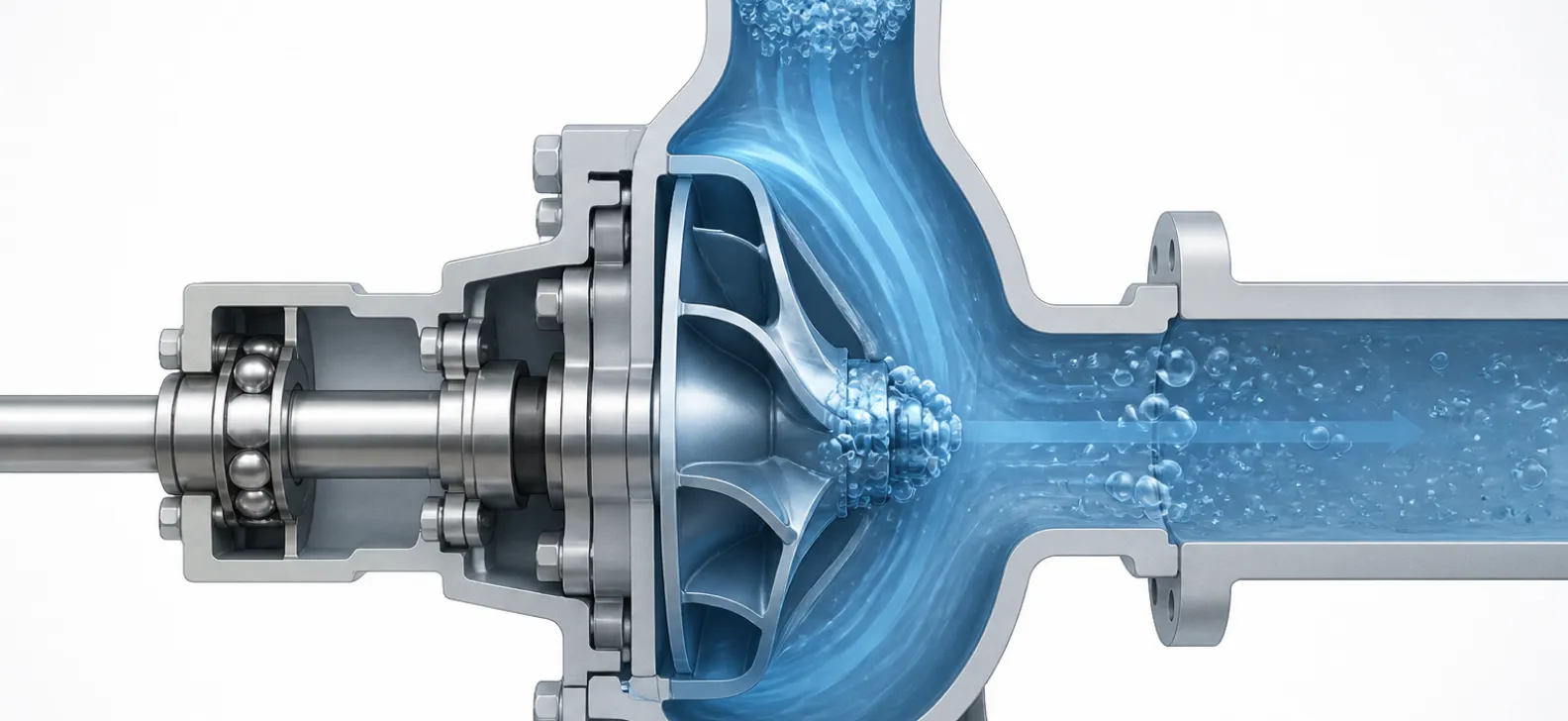
- Flooded suction, with the pump centerline below the minimum tank liquid level
- No high points in the suction line where gas can pocket
- A vent tap or automatic air-release valve at the top of the pump casing or discharge head
- Continuous or frequent operation rather than long idle periods with chemical sitting in the casing
- A minimum-flow provision so the pump never dead-heads, since trapped liquid heats and off-gasses faster
Material Selection for Hypochlorite Service
Hypochlorite combines a strong oxidizer with a high chloride content, which is the worst possible pairing for stainless steel: the hypochlorite oxidizes the chromium-rich passive layer, and the chloride ions then drive pitting and crevice corrosion at the exposed metal. The fluid turns brown with dissolved iron and the component fails in days to weeks. The materials that work:
| Component | Recommended | Avoid |
|---|---|---|
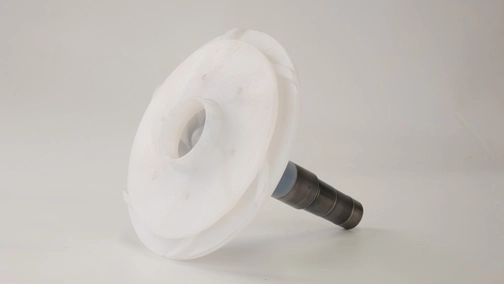
| Casing and impeller (wetted) | PP up to ~15% at ambient; PVDF for higher strength or temperature; PTFE/PFA lining for maximum margin; titanium Grade 2 where metal is required | 304/316 stainless steel, carbon steel, aluminum, bronze |
| Elastomers and gaskets | EPDM or FKM for standard duty; FFKM or PTFE envelope gaskets for concentrated product | NBR (nitrile) |
| Seal faces | Silicon carbide against silicon carbide | Carbon against metal faces |
| Magnetic drive internals | Samarium-cobalt (SmCo) magnets, which resist permeation corrosion in chlorine service | Uncoated ferrite or neodymium magnets |
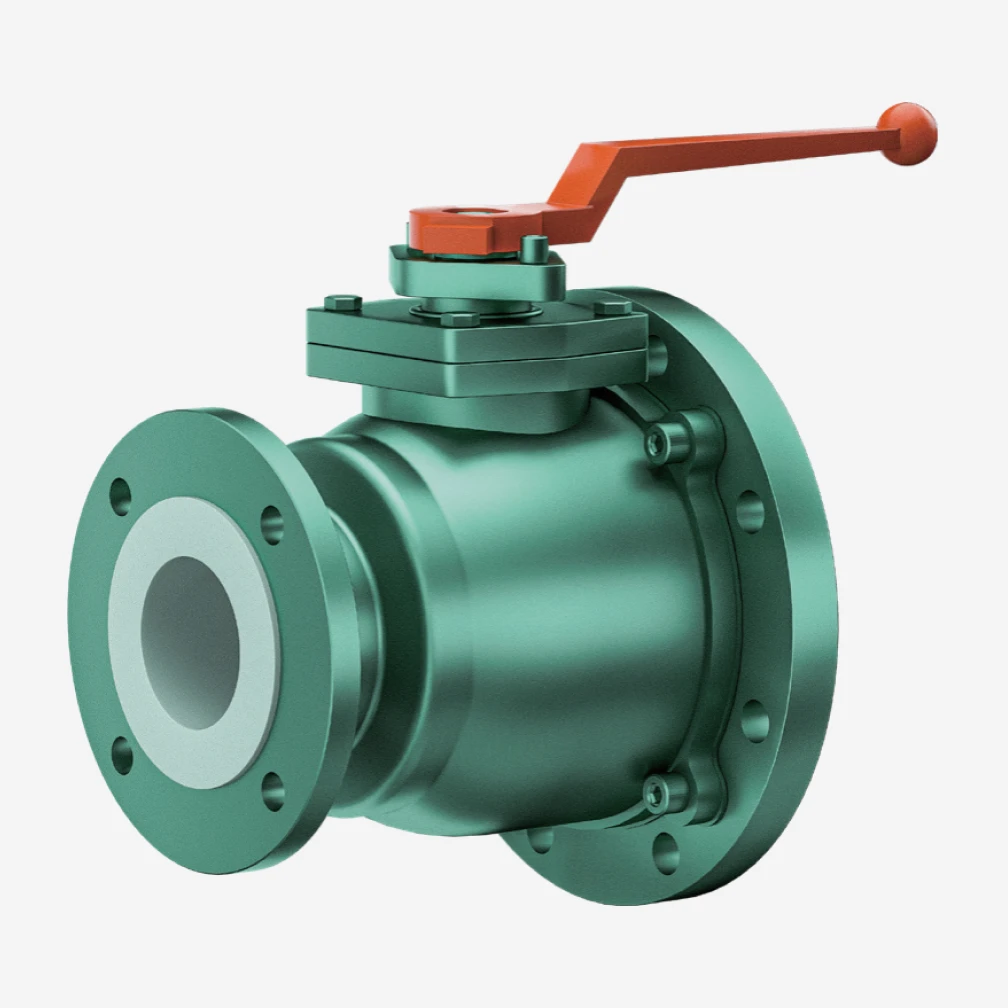
PVDF deserves a specific mention: it combines full hypochlorite resistance with better mechanical rigidity than PP, which is why it is the preferred material for pump heads and valve components at concentrations above 10%. Rigid PVC is acceptable for static piping but ages and cracks under long hypochlorite exposure and should stay out of dynamic pump components.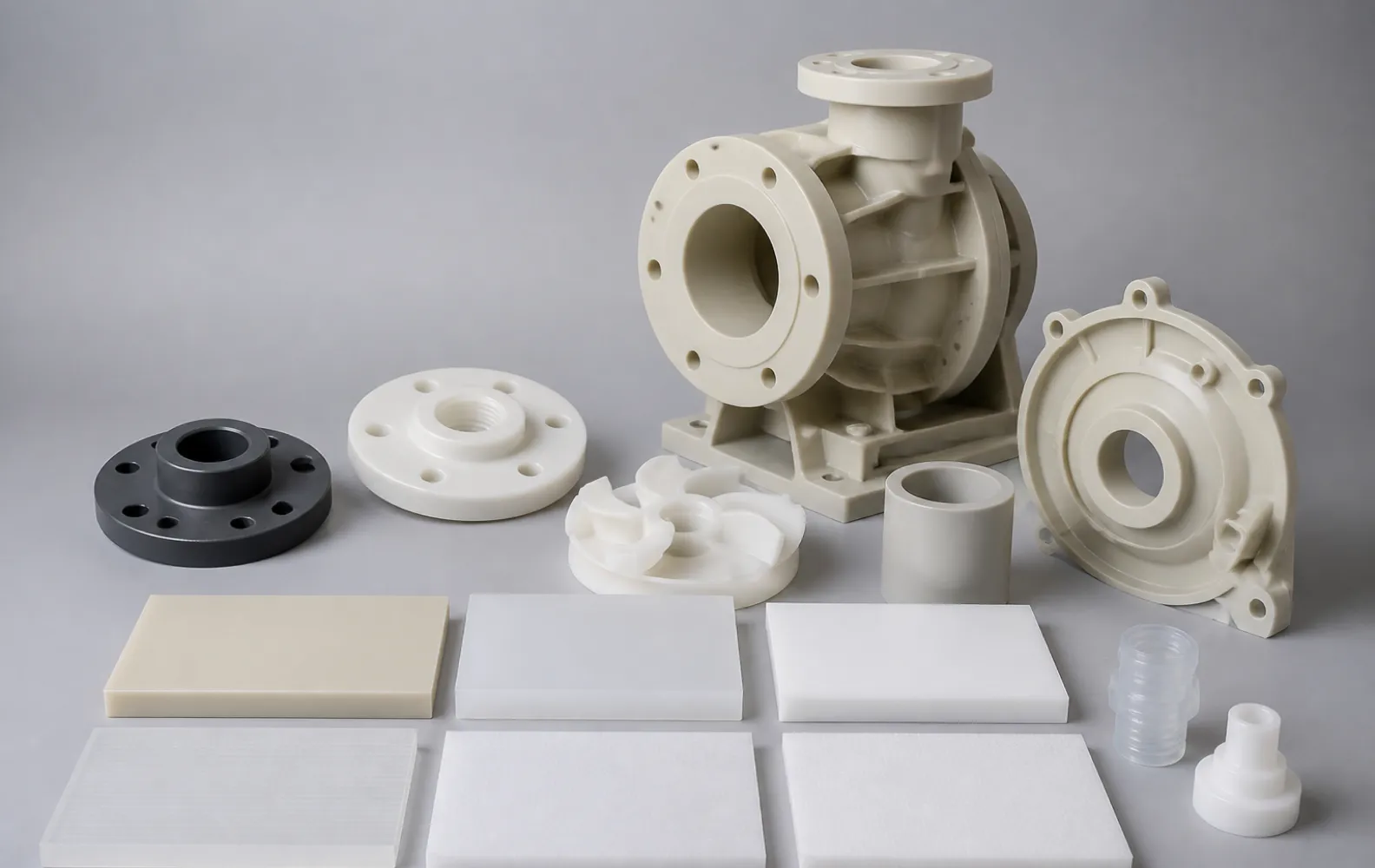
Pump Types for Sodium Hypochlorite
Magnetic Drive Pumps: The Zero-Leakage Choice
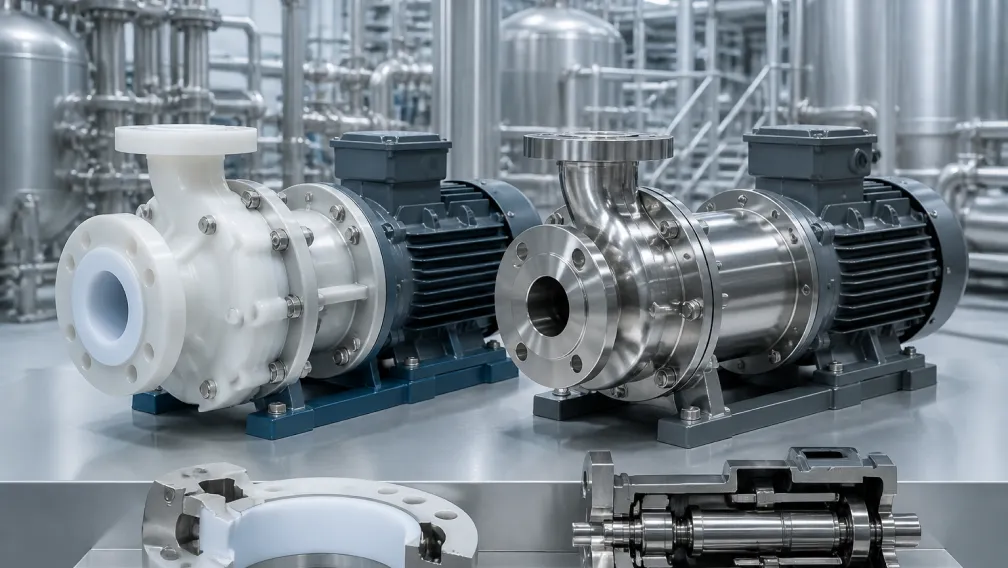
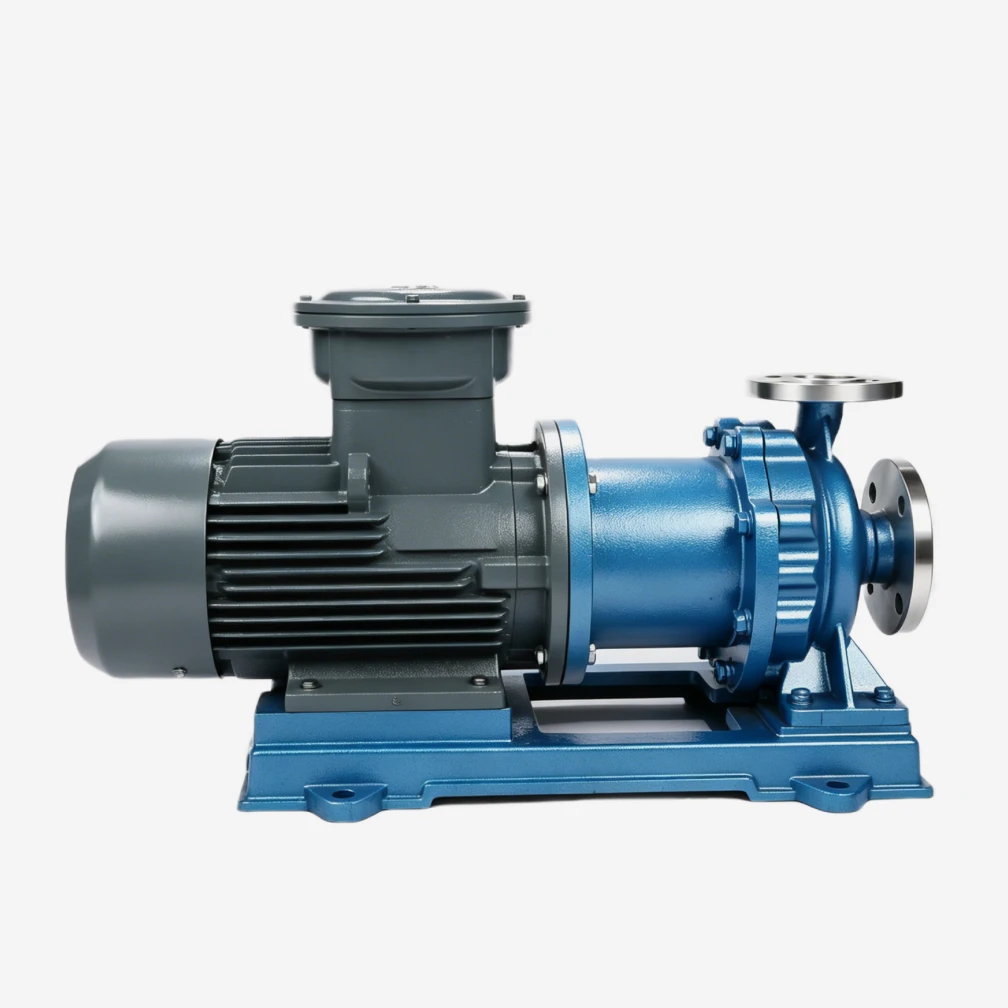
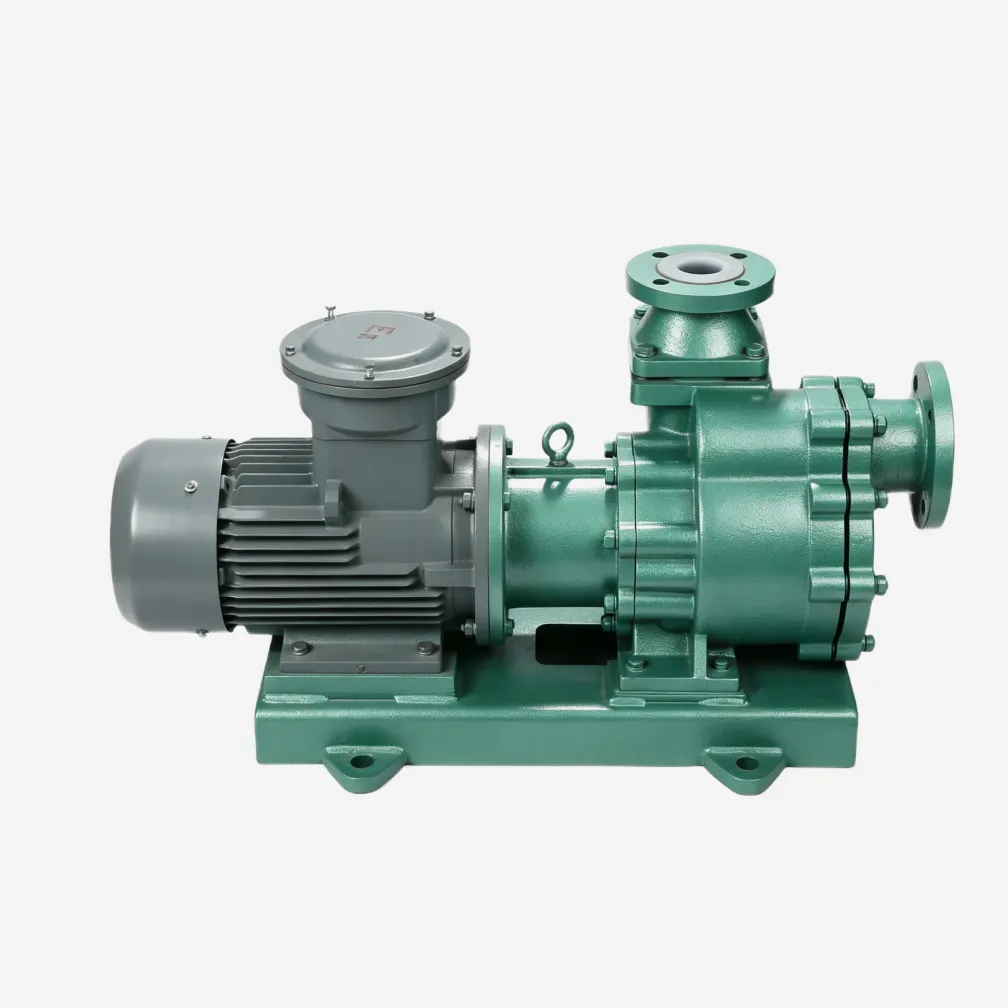
Hypochlorite leaks are safety and compliance events, and the mechanical seal is the most likely leak path on a rotating pump. Magnetic drive pumps remove the seal entirely, which is why they dominate hypochlorite transfer in modern water treatment plants. Specify a design with a casing vent, SmCo magnets, and silicon carbide bearings, install it with flooded suction, and add dry-run protection. With those conditions met, a lined magnetic drive pump is the longest-lived option in this service.
Fluoroplastic-Lined Centrifugal Pumps: Bulk Transfer
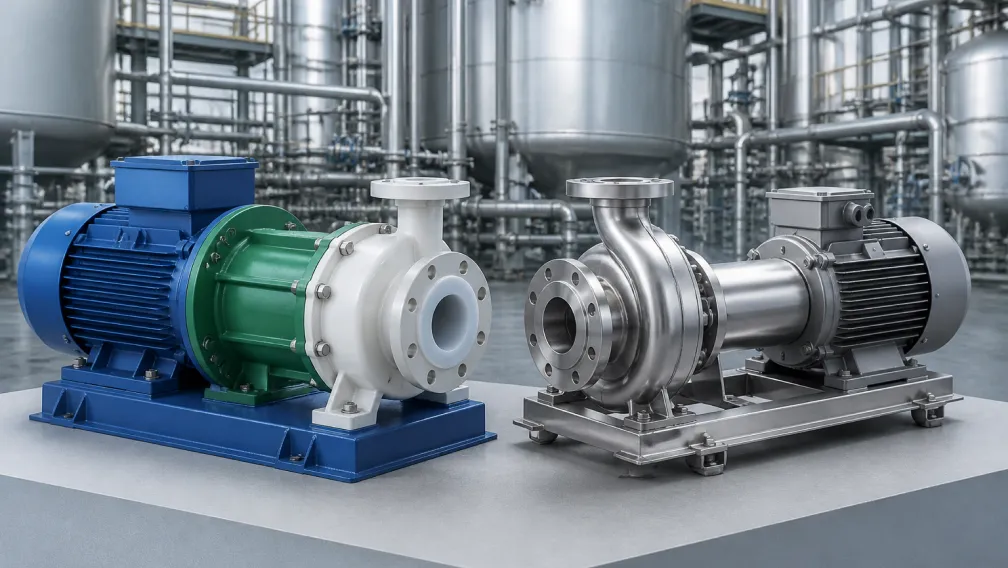
For bulk unloading and circulation duties at higher flows, a PTFE/PFA-lined centrifugal pump with a silicon carbide mechanical seal handles hypochlorite reliably, and the FSB fluoroplastic pump covers smaller transfer flows. The seal faces tolerate the chemistry; the installation rules above still apply, because gas locking is a hydraulic problem, not a sealing problem.
Self-Priming Pumps: Use With Caution
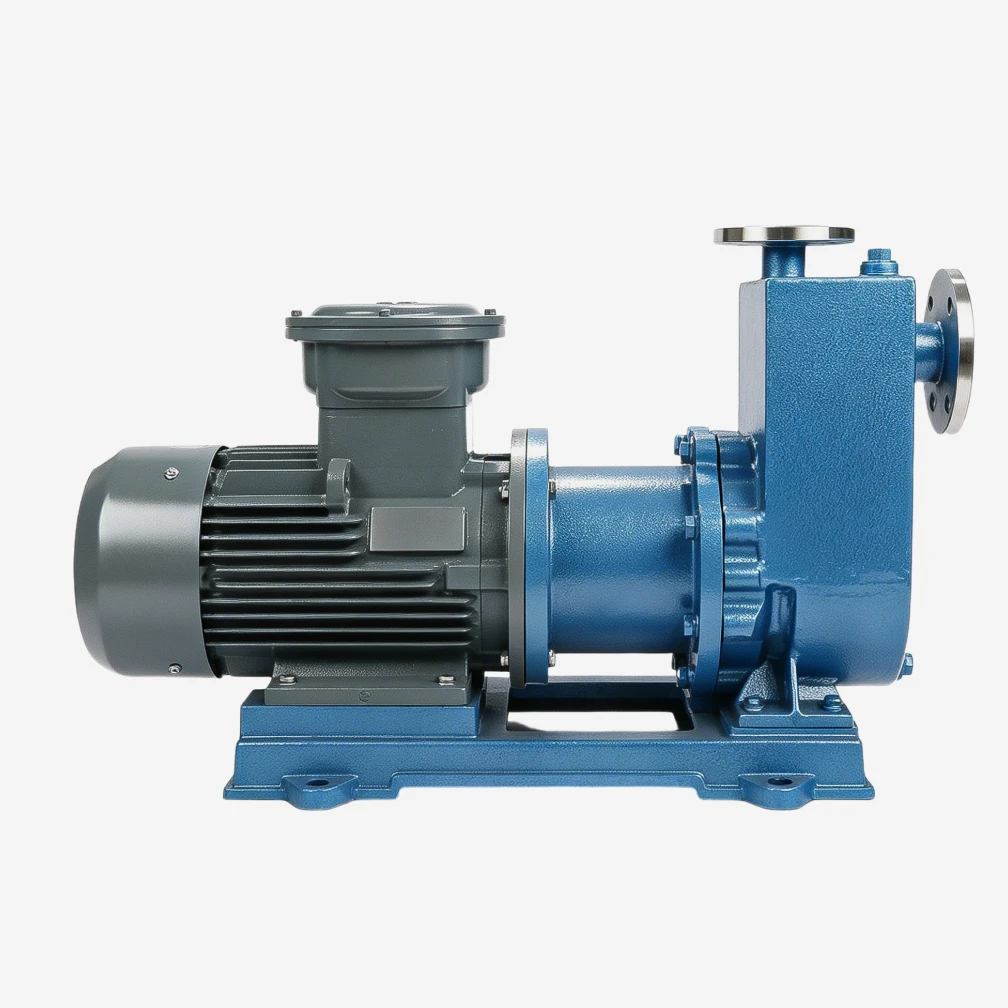
Suction lift and off-gassing work against each other: a self-priming pump must evacuate air from the suction line, and hypochlorite continuously adds gas to that line. Where suction lift is unavoidable, a fluoroplastic-lined self-priming pump can do the job if the lift is short, the suction line is oversized, and the casing is vented — but flooded suction remains the preferred layout. If a self-priming hypochlorite pump repeatedly fails to prime, the root cause analysis in our guide on self-priming pump priming failures applies directly.
Installation and Piping Practices
- Install the pump below the minimum tank level for a flooded suction at all times.
- Keep the suction line short, large-bore, and continuously rising toward the tank; use an eccentric reducer flat-side-up at the pump inlet to avoid gas pockets.
- Fit an automatic air-release valve or manual vent at the casing high point.
- Provide a clean-water flush connection at the pump and flush after every shutdown; residual hypochlorite crystallizes salts that seize seal faces and clog small passages.
- Avoid throttling the pump below minimum flow — trapped liquid heats, decomposes faster, and generates more gas.
- Shield outdoor piping and tanks from direct sunlight to slow decomposition of the stored product.
Operating Practices That Extend Pump Life
Run the chemical inventory first-in, first-out, because aged product carries more gas and more chlorate. Where the process allows, dilute 12–15% deliveries to roughly 5–6% for storage: decomposition slows sharply at lower concentration, and the pump sees less gas. Keep storage below 25–30°C in summer. Schedule a quarterly inspection of the vent valve, seal flush line, and gaskets, and treat any brown discoloration in the product as an alarm for metallic corrosion somewhere upstream.
Specifying a Hypochlorite Pump
A hypochlorite pump quotation should state the delivered concentration and any on-site dilution, the storage and ambient temperature range, the duty pattern (continuous circulation or intermittent transfer), the suction arrangement, and the required flow and head. Our pump duty data sheet guide lists the full parameter set. Send your duty data through the contact page, and our engineers will return a material and pump-type recommendation sized for the off-gassing behavior of your specific product — or review the chemical pump range for the lined and magnetic drive series built for this service.
-

YFTEL Pumps
Fluid Engineers & Technical Support, YFTEL Pump
YFTEL is a chemical pump manufacturer based in Hangzhou, China, with a 26,000 m² production base in Hangzhou, China, with a 26,000 m² production base in Anhui. Using the CAS-patented Fluoroplastic Alloy material, we produce 300+ models of corrosion-resistant pumps, valves and piping, exported to 30+ countries.