
 English

Hydrofluoric acid (HF) is pumped every day in refinery alkylation units, stainless steel pickling lines, semiconductor fabs, glass frosting plants and fluorochemical production. It combines two hazards that rarely appear together: it dissolves glass, ceramics and most metals, and it is one of the few industrial chemicals that can kill through skin contact alone, because absorbed fluoride ions bind calcium in tissue and blood. Pump selection for HF is therefore a safety decision first and a hydraulics decision second.
Why Hydrofluoric Acid Is a Category of Its Own
HF is chemically a weak acid, yet it reacts with silicon dioxide to form silicon tetrafluoride and water. That single reaction removes glass, porcelain, most ceramics and silicon carbide from the materials list. On the health side, contact with concentrated HF destroys deep tissue and can trigger fatal hypocalcemia and cardiac arrhythmia; dilute acid may cause no immediate pain, so exposures are discovered late. Anhydrous HF boils at 19.5°C and is handled as a liquefied gas, and even aqueous grades at 49% and 70% fume when warm. The practical consequence for pump engineering: any leakage path, however small, is unacceptable, and every wetted component must be verified against the actual concentration and temperature.
Material Selection by Concentration and Temperature
HF selection has a well-known inversion: carbon steel resists the concentrated acid and fails in the dilute acid. Above roughly 60–65% concentration, cold and at low velocity, carbon steel forms a protective calcium-fluoride-style film and is widely used for storage tanks and piping. Below that boundary, or wherever velocity, turbulence or heat strips the film, the choices are Monel or fluoropolymers.
| Material | Suitable Range | Notes |
|---|---|---|
| PTFE / PFA lining | All concentrations, to 150–180°C in pump construction | Universal choice; PFA preferred for permeation resistance and high-purity service |
| PVDF | All concentrations, to ~90–100°C | Rigid fluoropolymer for lined and solid-plastic pumps |
| Monel 400 / M35-1 | All aqueous concentrations | The standard HF alloy for pump shafts, impellers and valves; loses resistance in aerated acid and at stressed welds |
| Carbon steel | AHF and >60–65% aqueous, below ~65°C, low velocity | Storage and piping duty; film seizure rules it out for wetted moving parts |
| FFKM (perfluoroelastomer) | O-rings and secondary seals | The only elastomer class accepted in HF alkylation practice |
| Titanium, glass, ceramics, silicon carbide, FKM, nitrile | Prohibited | Dissolve or degrade in HF; details below |
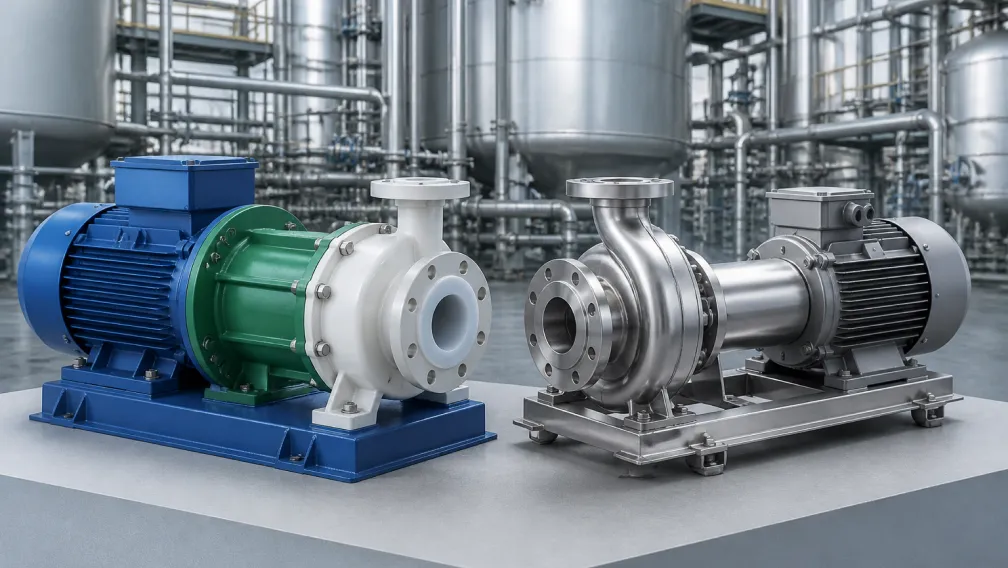
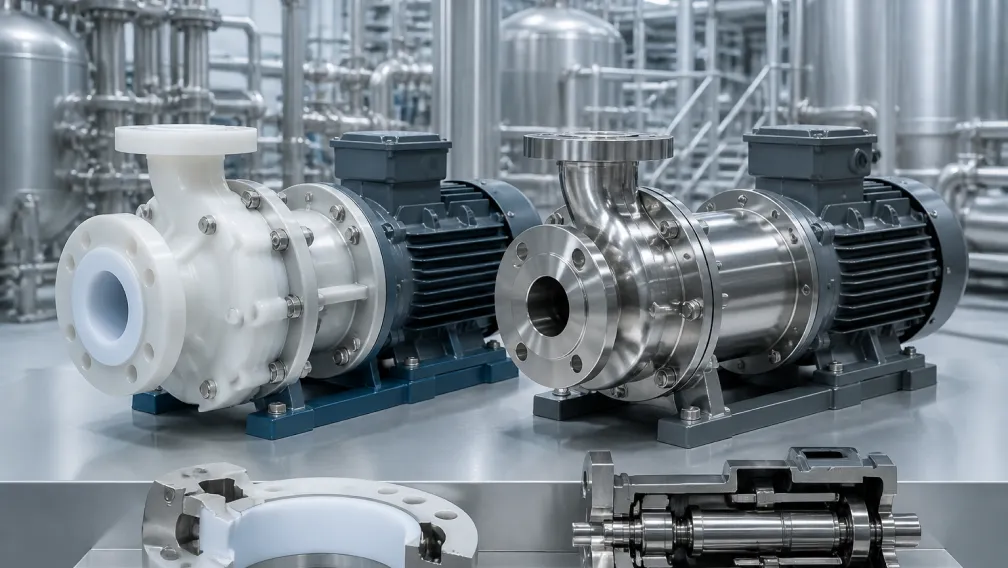
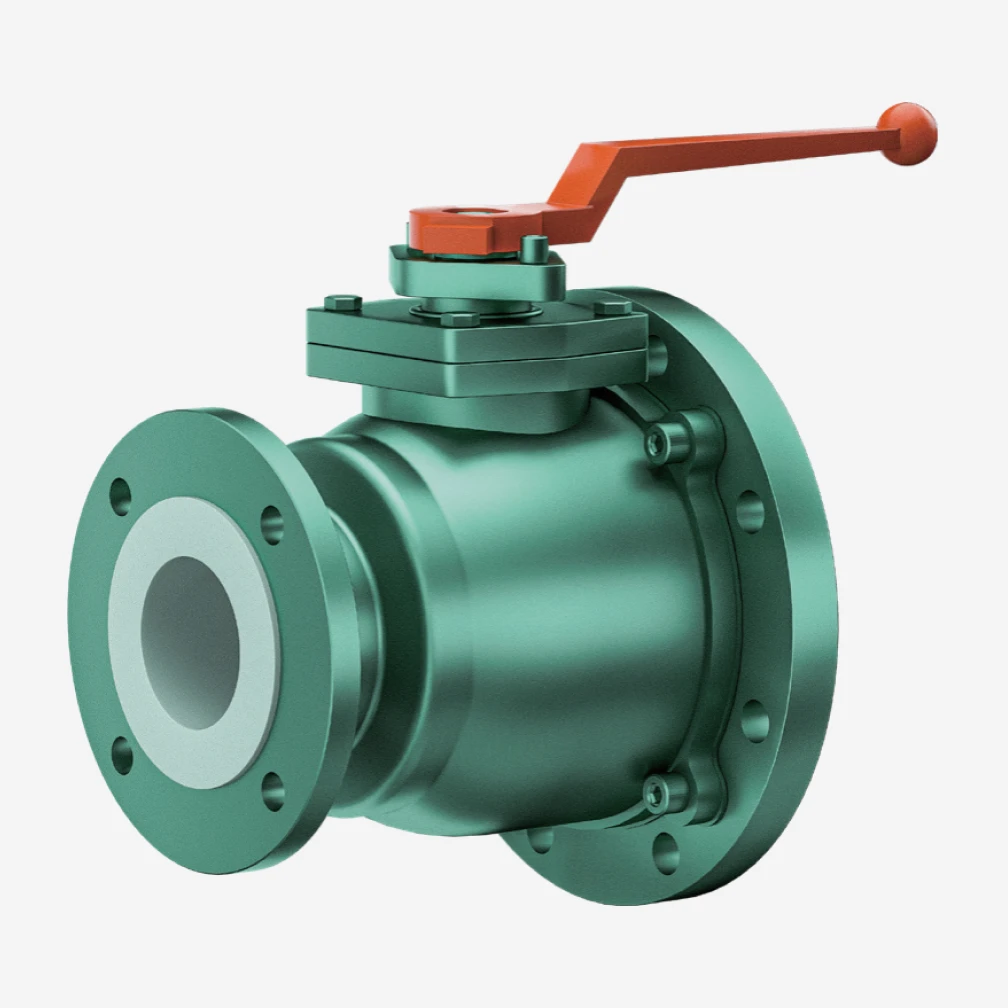
For most chemical-plant transfer duties the answer is a PTFE- or PFA-lined pump, which isolates all wetted metal from the acid. Monel construction appears where refinery practice or pressure rating demands metal. The comparison of lining materials in our fluoroplastic pump materials guide and the chemistry background in our fluoropolymer overview help with the final call between PTFE, PFA and PVDF.
The Bearing and Seal Problem in HF Pumps
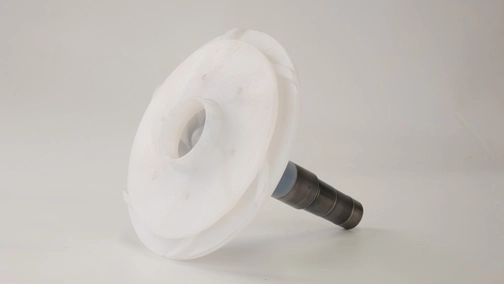
Two failure mechanisms catch engineers who treat HF as just another acid. The first is bearing attack. Most fluoroplastic-lined magnetic drive pumps run on silicon carbide slide bearings, and HF dissolves the ceramic matrix: clearances open, the bearing seizes, and the containment shell fails. For HF service, specify non-silicon bearing systems such as carbon graphite or filled PTFE, and confirm the bearing material with the pump manufacturer in writing before order. The second is elastomer degradation: standard FKM and nitrile O-rings swell and age in HF. Perfluoroelastomer (FFKM) secondary seals are the accepted solution where a mechanical seal is present.
On sealing philosophy, the refinery standard is explicit. API RP 751, the recommended practice for safe operation of HF alkylation units, states that pumps in HF service should preferably have dual seals or be of sealless design; single seals are tolerated only with auxiliary systems that limit leak rates to atmosphere, alongside vibration and bearing-temperature monitoring. Our comparison of ASME B73.1, ISO 2858 and API 685 explains how the sealless standard builds the same containment logic into procurement specifications.
Pump Types for Hydrofluoric Acid Service
Magnetic Drive Lined Pumps: The Default Choice
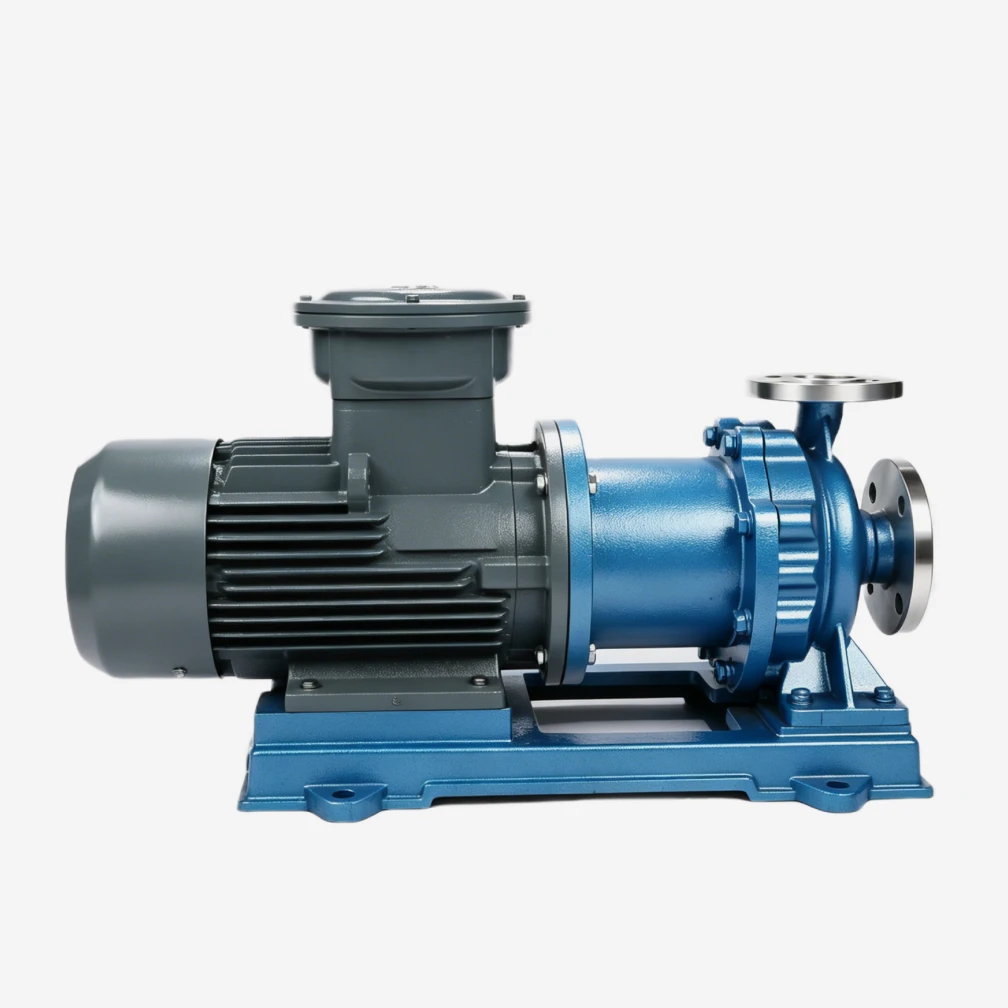
A fluoroplastic-lined magnetic drive pump removes the shaft seal entirely and drives the impeller through a static containment shell, so the only remaining leak paths are static PTFE gaskets. With HF-specified bearings, this construction covers transfer, circulation and reactor feed duties up to several hundred cubic meters per hour. Browse the magnetic drive pump range for available sizes, and see our zero-leakage pump solutions for system layouts around toxic media.
Lined Centrifugal Pumps with Double Seals
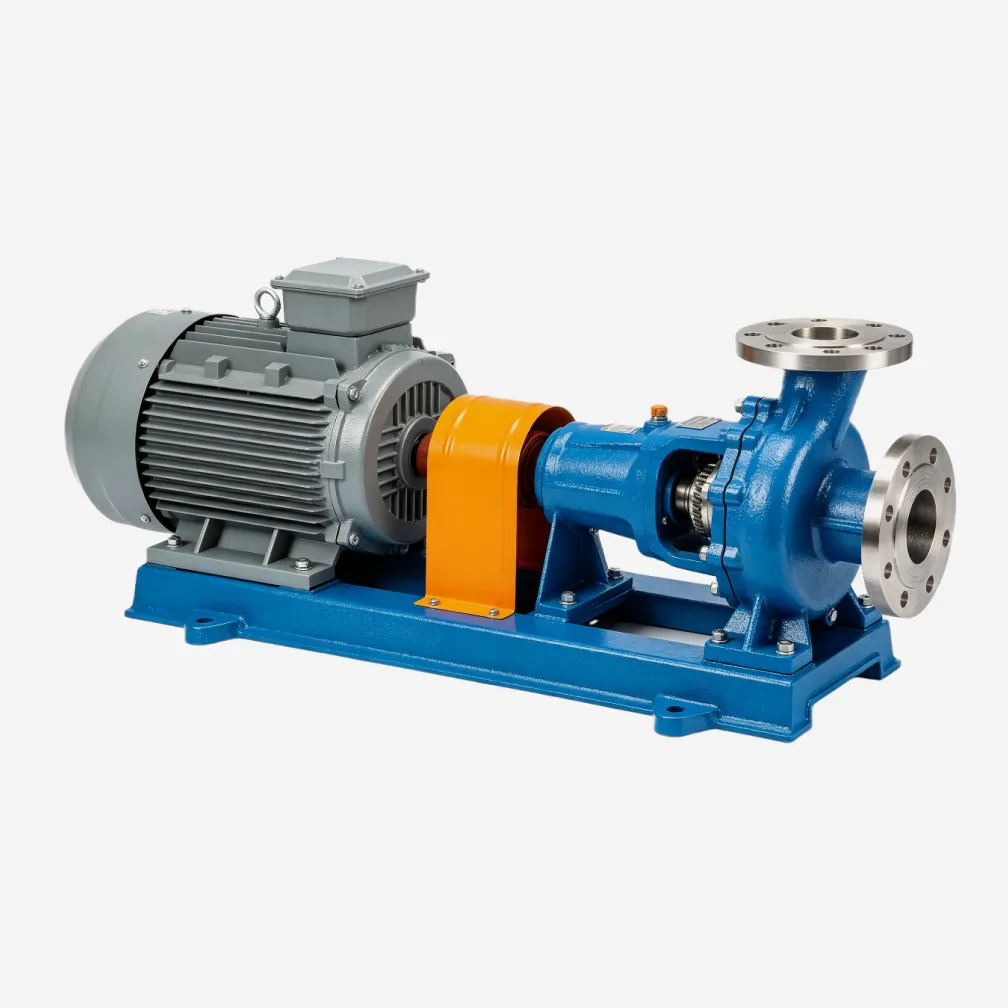
Where hydraulics exceed the magnetic drive envelope, a lined centrifugal pump such as the IHF series with a double back-to-back mechanical seal, a compatible pressurized barrier fluid and FFKM secondary seals meets the dual-seal intent of API RP 751. Single seals with a quench are a fallback for dilute, cold acid in well-ventilated areas, and only where site rules permit.
Metal Pumps in Alkylation Service
Refinery HF alkylation follows its own materials regime: carbon steel for qualifying cold concentrated sections, Monel 400 or cast M35-1 for pump shafts, impellers, wear rings and seal parts wherever the acid is wet, warm or turbulent. These pumps are engineered to the unit licensor's specification and procured as project equipment.
Unloading and Dosing
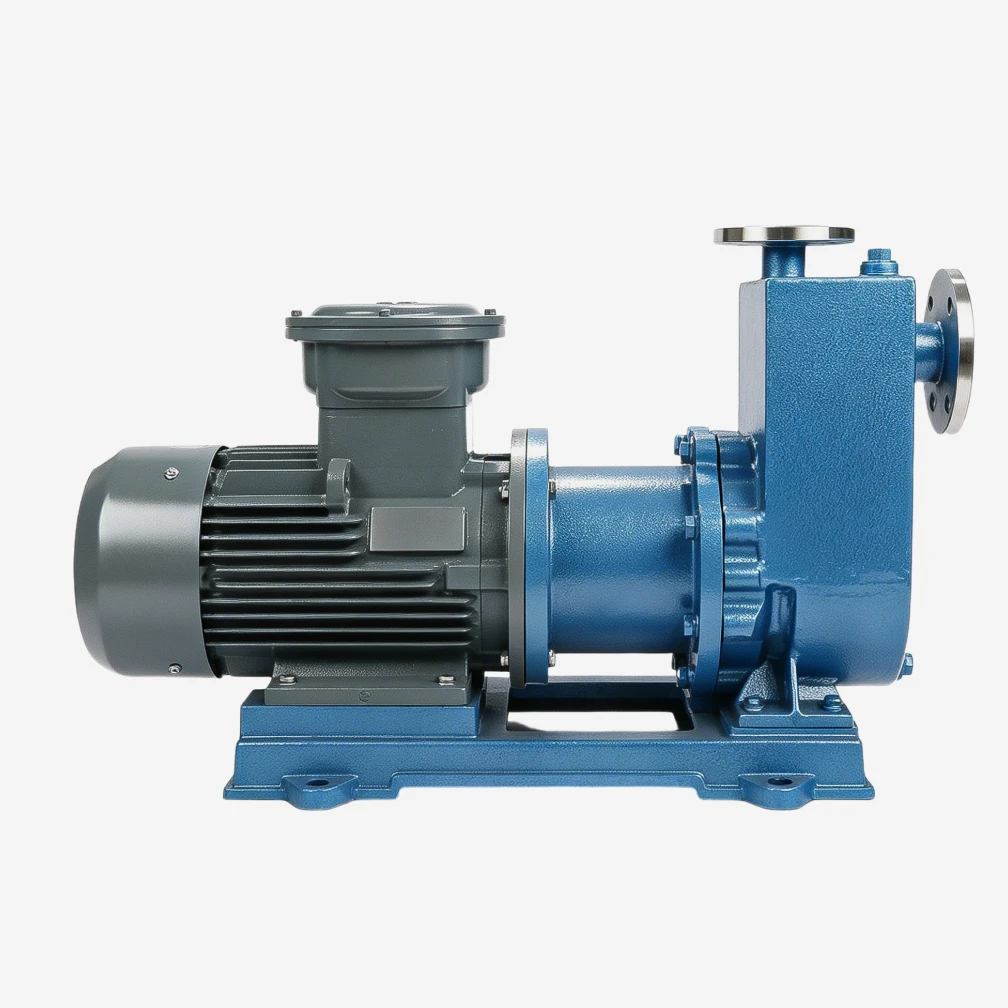
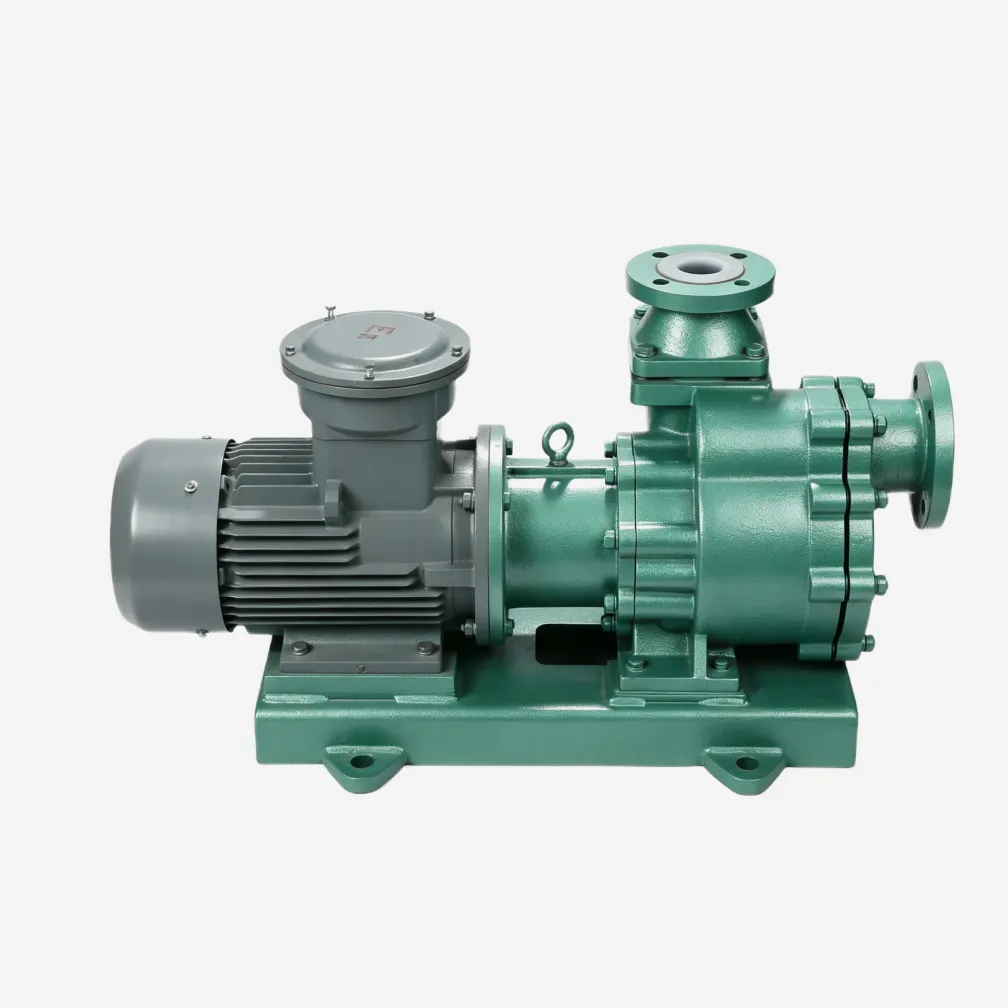
A magnetic self-priming lined pump combines sealless containment with the ability to evacuate a dry suction line, which suits HF tanker unloading. For water-treatment fluoridation and etch-bath make-up, PTFE-diaphragm metering pumps handle the small flows; keep the pump head and valves free of glass and ceramic components.
Safety Design Around the Pump
- Secondary containment. Mount the pump in a lined bund sized for the largest connected inventory, drained to neutralization, never to open floor.
- Detection and response. HF leak detection with alarm, an emergency shower and eyewash within immediate reach, and calcium gluconate gel stocked at the work area — it is the standard first-aid treatment for HF skin exposure.
- No glass anywhere. Sight glasses, gauge glasses and rotameters are excluded from HF service. Use magnetic level indicators and diaphragm-protected instruments with PTFE or Monel wetted parts.
- Venting. Route vents and casing drains to a caustic scrubber; HF vapor released at grade forms a dense, low-lying cloud.
- NPSH and vapor pressure. Treat anhydrous HF like a liquefied gas — it boils at 19.5°C — with a pressurized, flooded suction. For warm aqueous HF, calculate NPSH available with the acid's actual vapor pressure, since water values will flatter the installation.
- Operating protection. Magnetic drive pumps depend on the pumped liquid for bearing lubrication, so fit dry-run and low-flow protection and monitor bearing temperature as API RP 751 directs.
Typical Applications and What They Demand
Refinery alkylation circulates anhydrous HF catalyst at high flow under the API RP 751 regime: Monel wetted parts, dual or sealless containment, continuous monitoring. Stainless steel pickling uses mixed nitric-hydrofluoric acid at 40–60°C; PVDF- and PTFE-lined pumps handle the mixture, with the nitric fraction ruling out PP. Semiconductor and solar etching pumps high-purity 49% HF where PFA is preferred for its low permeation and cleanliness. Fluorochemical production transfers HF feedstock between storage and reactors, where lined magnetic drive pumps with scrubber-connected vents are standard. Glass frosting and metal treatment meter dilute acid on intermittent cycles.
Selection Checklist: What to Specify
Assemble the duty data before requesting a quotation — our duty data sheet guide gives the full list. For HF specifically, pin down:
- Concentration and form: anhydrous, 70%, 49% or dilute, with temperature range and upset maximum
- Flow, head and minimum flow at the duty point
- Suction condition: flooded pressurized, lift, or tanker unloading
- Bearing material confirmation for any magnetic drive pump
- Seal philosophy against site rules: sealless, dual seal, or justified single seal
- Containment, detection and emergency equipment already on site
Conclusion
HF service forgives nothing: the wrong bearing ceramic fails in days, a generic elastomer swells in weeks, and a weeping seal is a reportable exposure event. The proven route is PTFE- or PFA-lined construction with verified non-silicon bearings, magnetic drive containment wherever the hydraulics allow, and a safety envelope — containment, detection, showers, calcium gluconate and scrubber venting — built around the pump. Explore the chemical pump product range or contact our engineering team with your concentration, temperature and duty point for a verified HF selection.
-

YFTEL Pumps
Fluid Engineers & Technical Support, YFTEL Pump
YFTEL is a chemical pump manufacturer based in Hangzhou, China, with a 26,000 m² production base in Hangzhou, China, with a 26,000 m² production base in Anhui. Using the CAS-patented Fluoroplastic Alloy material, we produce 300+ models of corrosion-resistant pumps, valves and piping, exported to 30+ countries.